

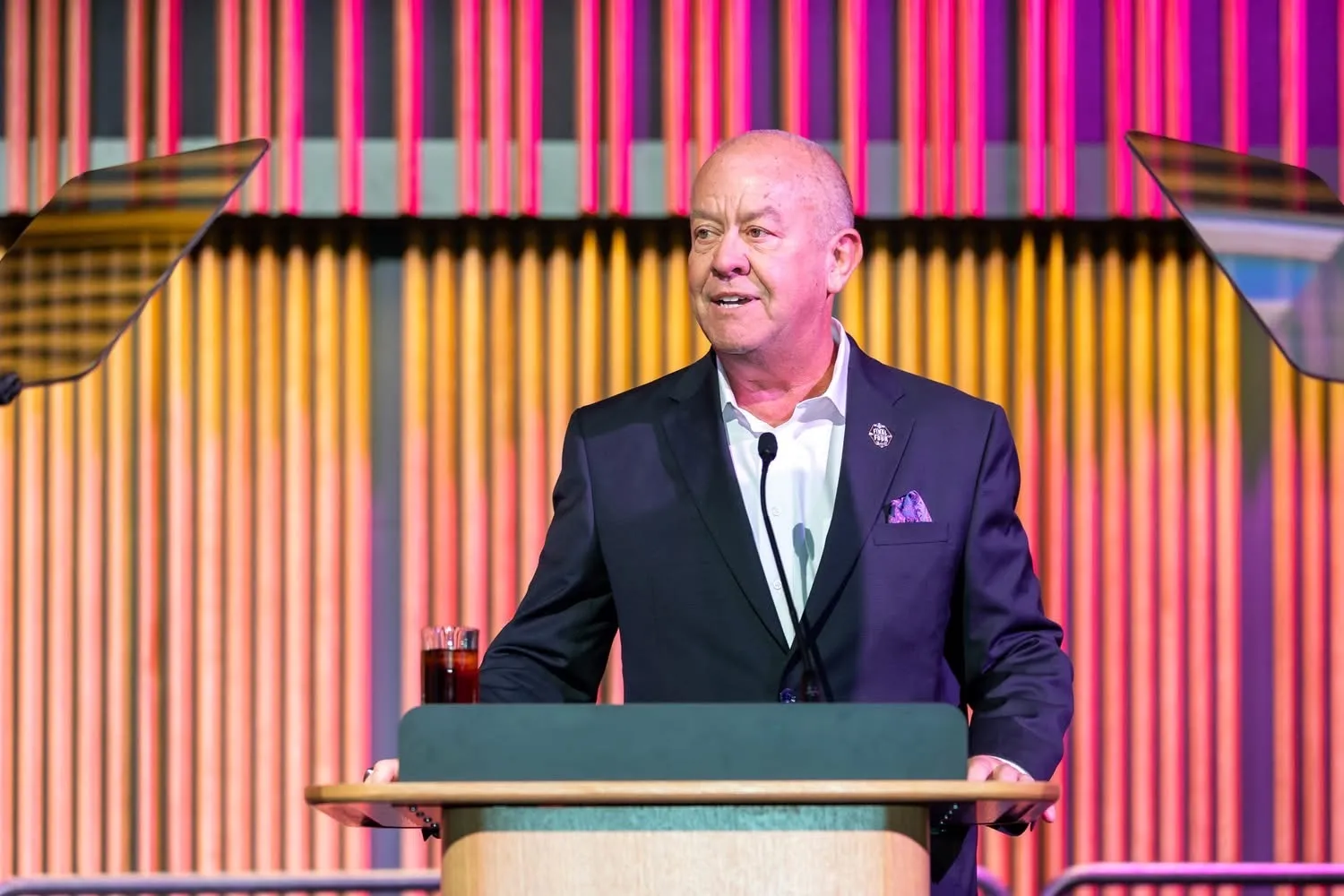
A Conversation with Mark Hollis: The man who left Michigan State and the lessons he’d bring back
Eight years after leaving East Lansing, Hollis discusses MSU’s leadership vacuum, the future of college athletics, Spartan Ventures, NIL, donor trust, Detroit, and why he believes he can still help the university move forward
When Michigan State athletic director J Batt announced he was leaving for Kentucky, Mark Hollis’ phone began filling with messages from influential donors, former colleagues, athletic directors, former Big Ten commissioner Jim Delany, and longtime Michigan State supporters asking the same basic question.
Would you do it?
For most of the past eight years, Hollis says, that answer would not have required much thought.
“I’ve never thought about even getting back into college sports until just recently,” Hollis told Spartans Illustrated. “A lot of significant donors, a lot of folks that are part of the strategies that are going on up there in the athletic department right now reached out and just said, ‘Would you be willing to help? Would you even consider it? Would you come back?’”
Hollis says he is willing to answer that question in the affirmative.
“I am very comfortable with myself in that I could deliver high value in where they’re headed,” Hollis said. “It could be anything. It could be anything from consultant to jumping back into the role of AD.”
That answer lands at a complicated moment for Michigan State.
There are times when a university searches for a new leader. Then there are times when it searches for a new direction.
Michigan State is currently attempting to do both.
Its president has accepted another job. As has its athletic director. A new commercial model has been launched through Spartan Ventures. Donors are being asked to embrace a different vision for the future. Coaches are recruiting through uncertainty. Trustees continue to battle over the university’s direction. Fans are trying to understand who is actually in charge. And through all of it, the university is still attempting to project stability while so much of the ground beneath it continues to shift.
The result is a university caught between eras. The old leadership has not fully exited. The next leadership has not arrived. And the people who care most about Michigan State are left staring at a vacuum.
Hollis sees it from the outside now, but he does not sound detached from it.
“As an outsider who has no knowledge or who has no ability to directly impact other than listening to Tom (Izzo), or encouraging Pat (Fitzgerald), Adam (Nightingale) - and some of the other coaches who reach out quite often - you just want positivity and you want forward movement,” Hollis said. “And you can’t move forward when you’re treading water the way we are right now.”
That sentence may be the clearest description of Michigan State’s current position.
It is treading water.
Nearly eight and a half years after he walked away from Michigan State, Hollis finds himself in an unexpected place – willing to come back to East Lansing if he is asked to do so, but also careful not to campaign for a job he does not control.
That is why, on Independence Day Weekend 2026, Hollis took an hour to sit down with Spartans Illustrated for a wide-ranging conversation about why he is open to helping Michigan State again, what his years in Detroit taught him about leadership, how he views Spartan Ventures, NIL, donor confidence, and the future of college athletics - and how he reflects on the chapter that ended his time in East Lansing.
For many younger Spartan fans, Hollis is remembered primarily as the athletic director who resigned during the darkest chapter in university history. For others, he remains the visionary who transformed Michigan State athletics through ideas nobody else would attempt – staging hockey games in football stadiums, putting basketball aboard an aircraft carrier, moving football to Ford Field, aggressively partnering with television networks, and convincing the rest of college athletics that Michigan State could become one of the industry’s most innovative brands.
Both versions of Mark Hollis exist.
Neither fully explains the person sitting in downtown Detroit today.
When Hollis left Michigan State in January 2018, he was an emotional leader, an institutional loyalist, and a highly creative athletic director who took things personally. He admits that now. He says he absorbed criticism too deeply, carried too much internally, and tried too hard to please too many people.
Detroit changed some of that.
After leaving Michigan State, Hollis stepped into one of the most ambitious private redevelopment efforts in America, joining businessman Dan Gilbert as Detroit attempted to reinvent itself. What began as a consulting role evolved into something much larger, placing Hollis at the center of projects ranging from the NFL Draft and the NCAA Men’s Final Four to downtown entertainment districts, corporate development, and civic partnerships.
If his years at Michigan State taught him how to operate inside college athletics, Detroit forced him to think beyond it.
“Dan Gilbert didn’t bring me down here just to do sports,” Hollis said. “He brought me down here to revitalize what’s going on in Detroit.”
The projects became increasingly diverse.
One day it meant helping land national sporting events. Another day it meant coordinating COVID-era manufacturing efforts to produce masks for health systems. Another involved collaborating with professional sports franchises, developers, and city officials on entertainment districts and economic development. Eventually, the work stretched into the NFL Draft, the Final Four, PGA Tour projects, Cosm, entertainment venues, and downtown activation projects that all carried a similar underlying purpose: bring people together, create something that did not previously exist, and use the event to change how people see a place.
Looking back, Hollis believes those experiences changed him as a leader in ways college athletics never could.
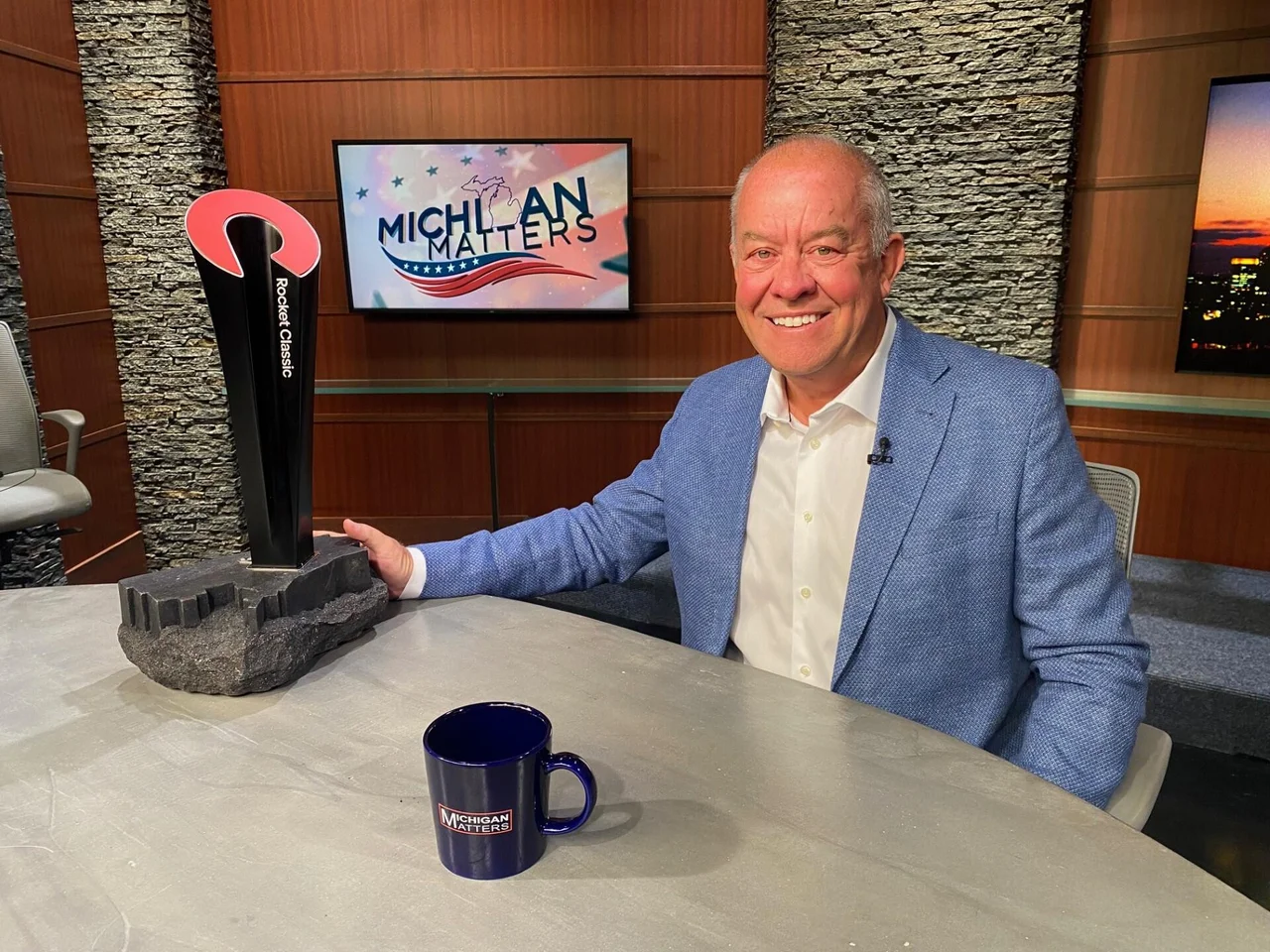 (courtesy photo)
“(Things would be different coming in) with the knowledge of the university, the way it works, the importance of certain colleges and the academic side and how important that is,” Hollis said. "I also have been working for a guy that is a multi-billionaire and he expects good decision making, expects it now. And if it’s not done, you make changes, and you get better.”
That is the central argument for Hollis.
Not that he once knew Michigan State. Not that he once built memorable events. Not that he once had relationships with donors, coaches, and alumni. Those things are true, but they are not enough by themselves.
The argument is that he knows Michigan State and has spent the last eight years outside of it, learning how to move faster, communicate more directly, make harder decisions, and operate in a more business-driven sports environment.
“In my time as MSU’s AD, I was very deliberate in decision-making,” Hollis said. “I wanted to make sure things were perfect. I’ve learned now that things are never going to be perfect. You have to make a decision and get going.”
That philosophy came directly from Gilbert, whose management style challenged many of Hollis’ long-held instincts.
At Michigan State, Hollis often viewed every decision through the lens of every possible constituency. Students. Faculty. Coaches. Donors. Sponsors. Alumni. He even kept a chart listing roughly 40 different stakeholder groups and mentally worked through how each might react before making major decisions.
Today, he still believes in listening. He simply no longer believes listening requires paralysis.
“I took every word to heart at MSU,” Hollis admitted. “I’m a very emotional guy. That’s probably what really hurt me."
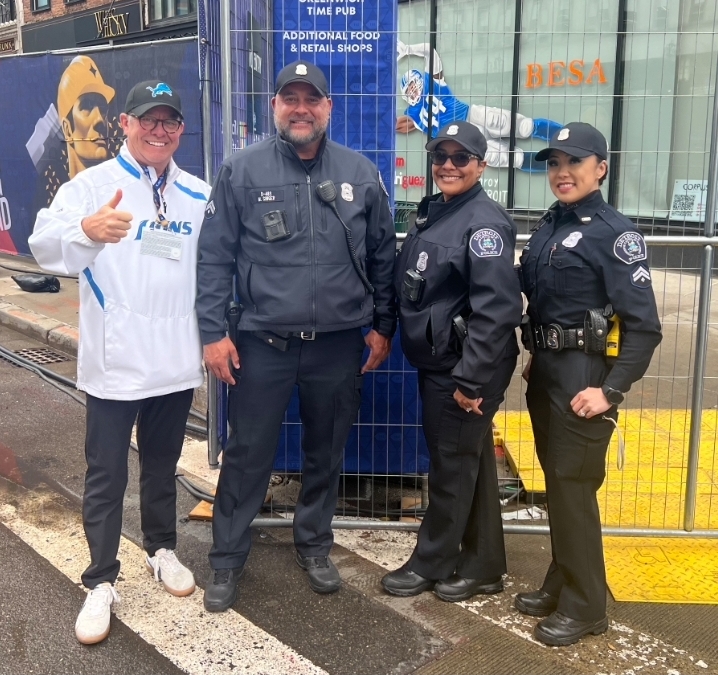 (courtesy photo)
Age helped. Experience helped. Detroit helped even more.
Working for Gilbert meant operating inside an environment where difficult decisions were expected rather than avoided. Hollis recalls one exchange shortly after Detroit failed in an early bid to land a Final Four in the city. Gilbert blasted him in a group text, reminding him he had been hired to bring major events to Detroit.
Years earlier, Hollis admits, he probably would have internalized the criticism. Instead, he replied with a simple request.
“Build me some hotel rooms,” he told Gilbert.
Gilbert answered just as simply.
“Okay. Let’s get after it.”
To Hollis, that brief exchange became symbolic of an entirely different leadership philosophy. Less worrying about criticism, more solving problems.
“(In the past), I was always trying to find a way to say yes to everybody,” Hollis said. “Now I’m much more direct. I’m not worrying about having to please every person that I come into contact with.”
That evolution may explain why Hollis sounds different today than the athletic director Michigan State fans remember from 2018.
He seems less interested in defending his resume than explaining what he has learned since building it. Perhaps most notably, he repeatedly returns to one word throughout nearly an hour of conversation: listen.
Not because listening avoids difficult decisions, but because listening leads to better ones.
“I think people need to listen more than talk right now in order to take action,” Hollis said.
That is the framework he would bring back to East Lansing if Michigan State ever asked.
What exactly that role might look like remains unclear.
Hollis says he has advised university leaders informally over the past several years and insists he is open to whatever role the institution believes would create the most value. That could mean consulting. It could mean advising. It could even mean serving as athletic director again.
“It really comes down to what does the school want, need, and who’s going to be doing the asking,” he said.
He is careful not to campaign.
In fact, throughout the interview, Hollis repeatedly resists opportunities to make the conversation only about himself. Asked what Michigan State needs from its next generation of leadership, he answers by discussing donor confidence, institutional relationships, the future of NIL, expanding the university’s fundraising footprint beyond its traditional base, and helping the average Spartan understand where college athletics is headed.
The answers sound less like someone seeking a position than someone who has spent years thinking about Michigan State’s challenges from the outside.
Whether Michigan State ultimately calls him or not, Hollis no longer views himself as someone whose relationship with the university ended in 2018.
Instead, he sees himself as someone who spent the last eight years preparing differently than he ever expected.
And before anyone can fairly judge whether that preparation matters, Hollis believes they first have to understand the experiences that reshaped him after leaving Michigan State.
If there is one theme that runs through nearly every answer Hollis gives, it is not innovation. It is not fundraising. It is not even college athletics.
It is trust.
For all of the discussion surrounding Michigan State’s next athletic director, NIL, conference realignment and the business of college sports, Hollis repeatedly comes back to something much simpler. Institutions function best when the people who care about them believe in them.
That belief, he argues, has to be earned.
“The one that jumps to the front,” Hollis said of Michigan State’s immediate priorities, “is reassuring that group of donors and supporters.”
But he is equally quick to point out that reassurance alone is not a long-term strategy.
Michigan State cannot continue asking the same people to carry increasingly larger financial burdens.
“You can only go back to certain donors so many times before it wears thin,” he said. “Having a bigger pool ... that’s where the future is.”
To Hollis, that means looking well beyond East Lansing. Well beyond Michigan. Even well outside the Midwest.
Michigan State graduates live in New York. Dallas. Atlanta. Florida. California. Every corner of the country where Spartan alumni built careers and businesses. He believes the university has only begun to tap that network.
He talks about turning “the marginal Spartan” into “an enthusiastic Spartan.”
He understands there are Spartans with capacity who are not yet emotionally activated, not because they do not care, but because nobody has explained the vision in a way that makes them want to join. That is a leadership challenge. It is also a communication challenge.
Michigan State does not just need someone to raise money. It needs someone who can explain why the money matters, where it is going, how it fits into the university’s mission, and why people should trust the people managing it.
That philosophy reflects perhaps the biggest difference between the administrator who left Michigan State in 2018 and the executive who now works in Detroit.
College athletics once represented the center of Hollis’ professional universe. Today, it is one part of a much broader ecosystem. His conversations no longer revolve exclusively around television contracts and coaching searches. They involve private investment, downtown redevelopment, professional sports franchises, technology companies, and civic partnerships.
He has spent years watching how large-scale organizations attract capital, communicate vision, and convince people to invest in projects whose returns are measured over decades rather than seasons.
Those experiences inevitably shape how he views Michigan State’s future.
One example is Spartan Ventures.
Since the university announced its new commercial structure, reactions have ranged from excitement to skepticism. Some see it as an overdue modernization. Others remain uncertain about exactly what it is designed to accomplish.
Hollis falls somewhere between those positions.
He likes the model. He believes the people building it are capable. He also believes Michigan State has not adequately explained it.
“I think there’s some very good components to it,” Hollis said. “The people that are there on that board from Phil Hickey all through are very good thinkers, very good business people, and they haven’t built a bad model.”
He points to the business leaders involved on the board of directors and says the overall structure resembles models that have existed successfully elsewhere, particularly in the Southeastern Conference, where commercial partnerships and private fundraising have long played a larger role than they traditionally have in the Big Ten.
“The model works,” he said.
But successful models still require public understanding.
“The chatter that’s going on at Michigan State right now ... it’s been the issue that’s divided the school in a way,” Hollis said. “Part of that is because publicly, nobody really knows what it’s about.”
He pauses before describing the perception problem.
“People are told, ‘It’s Spartan Ventures. It’s going to raise a lot of money. It’s going to make us successful.’ Well ... what is it?” he said.
He makes it clear that his criticism is not aimed at the concept itself. It is aimed at the communication surrounding it.
“When things appear to be under cloak and dagger, it’s not a very attractive thing for folks to want to donate to.”
The solution, in his mind, is remarkably straightforward: explain it.
Not with slogans. Not with assumptions. With education.
“It needs to be a little bit better known what the Spartan Ventures strategies are all about,” Hollis said. “Then people can decide if it’s a good business decision. If it’s a good donation decision.”
That observation reaches beyond Spartan Ventures. It reflects Hollis’ broader philosophy about leadership.
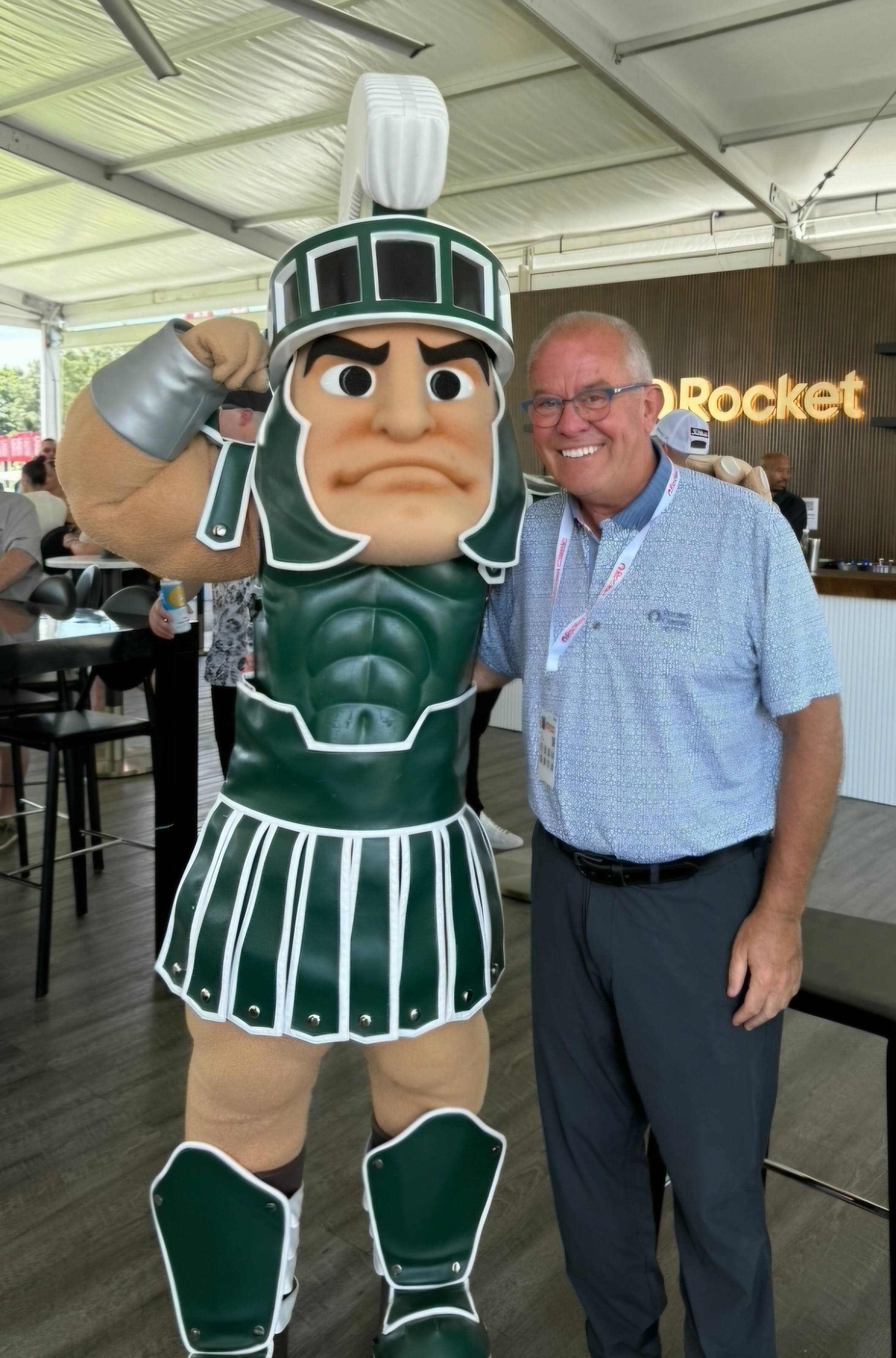 (courtesy photo)
Throughout the interview, he drew a distinction between selling and explaining. Selling asks people to trust leadership, while explaining gives them reasons to. That distinction becomes especially important as college athletics continues evolving at breakneck speed.
Spartan Ventures may ultimately prove to be one of the most important structural changes Michigan State athletics has made in years. But it has arrived during a leadership vacuum, amid donor questions, board tension, and public confusion. To many fans, it still sounds like a phrase rather than a plan.
That does not mean every detail should be public. Donor strategy is sensitive. Business structures require discretion. Competitive advantages should be protected. But Hollis is right when he says that mystery carries a cost. When people do not understand a model, they fill in the blanks themselves.
The same need for clarity applies to NIL, revenue sharing, and the broader future of college athletics.
Michigan State’s next athletic director, whether interim or permanent, will inherit a job that barely resembles the one Hollis left. NIL has changed everything. Revenue sharing is changing everything again. The transfer portal has changed roster management. Donor strategy has become more complex. The Big Ten has expanded coast to coast. Football and basketball remain the financial engines, but Olympic sports are now fighting for relevance and resources in a more ruthless economic structure.
Hollis is not pretending the job is the same.
“The game’s changed since I stepped away significantly,” he said. “I mean, that’s an understatement.”
But he pushes back on the idea that he would be outdated.
One criticism occasionally directed toward older athletic administrators is that they simply do not understand today’s environment. Hollis rejects that notion almost immediately.
“I kind of argue I was on the front end of all of it,” he said.
He points to his involvement with Score, an NIL platform he has helped advise since its founding, and says the industry still has not settled on what the future should look like.
“We’ve kind of gone from nothing to everything,” Hollis said. “I think it’s going to come back into some sort of a leveling.”
That uncertainty, he argues, is precisely why experienced leadership still matters.
College athletics has become increasingly transactional. Roster turnover accelerates every offseason. Revenue sharing is reshaping athletic department budgets. Players have unprecedented freedom. Schools are adapting almost in real time.
Hollis does not oppose those changes. In many ways, he welcomes them. Years before NIL became reality, he publicly supported greater opportunities for student-athletes to benefit from their own value.
But he worries about the shape of the industry, too. He speaks about college athletics almost the way longtime commissioners once did – less concerned with quarterly wins than with preserving the health of the enterprise.
“I just think we need to keep working on it,” Hollis said. “And the industry needs leaders in this area to help get it to where it needs to be.”
That philosophy also informs how he thinks about Michigan State’s athletic department.
Asked what he would do differently if he became an athletic director today, Hollis does not begin with facilities or fundraising.
He begins with people.
When he first became athletic director in 2008, nearly everyone around him had already been a colleague. Many were friends. Rather than making immediate personnel changes, he chose continuity.
Looking back, he believes that instinct may have been one of his biggest mistakes.
“I took an approach that everybody who was there was going to stay there,” Hollis said. “In hindsight, I wish I had made some moves in some of those areas.”
Today’s Hollis would begin with a comprehensive assessment. Listen. Evaluate. Determine whether everyone shares the same vision. And if they do not, make difficult decisions more quickly.
“I’m better prepared to make those today than I was when I stepped in there in 2008,” he said.
It is a striking admission. Not because Hollis is criticizing his younger self. Because he is acknowledging that leadership itself evolves. The administrator who once measured every decision against dozens of possible stakeholder reactions now believes decisiveness is just as important as consensus. The executive who once struggled to separate professional criticism from personal criticism now views difficult conversations as part of the job.
Hollis also remains a broad-based athletics believer.
Revenue sharing and NIL will place even more pressure on athletic departments to prioritize football and men’s basketball. That is unavoidable. Football drives the bus. Men’s basketball matters enormously. The money has to work. But Hollis said he still believes the value of college athletics is tied to opportunity across sports.
“I’m a broad-based program guy,” Hollis said. “It’s how I grew up. It’s where I believe the value is in sport.”
That will matter in the next era.
Michigan State’s next athletic director will have to make hard decisions about resources. The job will require business instincts, donor relationships, media understanding, facility strategy, coach management, and political awareness. It will also require someone who can explain why the athletic department exists inside a university, not above it.
Hollis praised Kevin Guskiewicz on that front, saying he viewed athletics as a tool to strengthen the school. Hollis said that once athletics stops being a successful tool and becomes too big for itself, it can become destructive quickly.
That is the line Michigan State has to walk.
Spartan Ventures cannot look like athletics separating itself from the university. The athletic department cannot become a private kingdom. Donor strategy cannot become a mystery club. The university cannot treat fans and alumni as people who should simply trust whatever comes next. There has to be a voice. There has to be explanation. There has to be leadership.
The athletic director once celebrated primarily for creativity now speaks just as passionately about organizational clarity, communication, and institutional trust. Those lessons, he believes, have made him more prepared than ever to lead.
Whether Michigan State ultimately agrees remains an unanswered question.
But before that question can even be asked, it is worth remembering that Hollis’ creativity was never really about spectacle in the first place.
One of the biggest misconceptions about Mark Hollis is that he spent his career chasing big ideas. He insists that is not actually true.
The outdoor hockey game at Spartan Stadium. Basketball aboard the USS Carl Vinson. Football at Ford Field. The television partnerships. The aggressive push to make Michigan State visible in ways other schools had not tried. Looking back, those moments can appear to be a collection of disconnected spectacles, each remembered for its novelty more than its purpose.
Hollis sees them differently.
To him, they were all answers to the same question, one he began asking himself years before he ever occupied the athletic director’s office.
How does Michigan State become impossible to ignore?
“When I took the job, we were surrounded by Michigan, Ohio State, and Notre Dame,” Hollis said.
He was not talking just about geography. He was talking about identity.
Michigan State occupied one of the most difficult positions in college athletics. It shared a region with three of the biggest brands in the sport, institutions whose traditions had been built over generations and whose names already carried enormous national weight. During his years as an assistant athletic director, Hollis heard the same conversations repeated over and over again.
Michigan has this. Ohio State has that. We need one too.
To him, that line of thinking guaranteed Michigan State would always be chasing someone else’s standard. The moment he became athletic director, he decided that had to change.
“One of my lines was, ‘Be aware, but don’t compare,’” he recalled.
It became more than a slogan. It became the philosophy that shaped nearly every significant decision he made.
Michigan State was not going to out-Michigan Michigan. It was not going to out-Notre Dame Notre Dame. It was not going to out-Ohio State Ohio State. If those schools owned tradition, Michigan State needed to own something else. It needed to become the school willing to imagine ideas nobody else was attempting, because originality had a way of creating attention that money and history sometimes could not.
That philosophy explains why Hollis smiles when people remember the events themselves.
To him, the events were never the point.
“The overarching theme was an assessment of where we were geographically and what we were surrounded by,” Hollis said. “We wanted people to notice us that otherwise wouldn’t.”
Viewed through that lens, the outdoor hockey game was not really about hockey. The Carrier Classic was not really about basketball. Each became another opportunity to place Michigan State at the center of a national conversation that otherwise might have revolved around someone else.
Those moments generated headlines, but Hollis was always thinking about what happened after the headlines disappeared.
Would television executives remember Michigan State differently? Would recruits? Would corporate partners? Would alumni? Would people who otherwise never paid attention begin associating Michigan State with creativity?
That was the real objective.
“We wanted to be relevant at something,” Hollis said. “Because if you don’t, you become irrelevant again.”
That sentence may explain his tenure better than any championship banner hanging inside Spartan Stadium or the Breslin Center.
Hollis points to the university’s evolving relationships with television partners as an example. Michigan State invested heavily in relationships with ESPN during a period when the network was becoming the unquestioned leader in college sports. Later, as media rights shifted, Michigan State aligned itself with Fox at precisely the moment Fox was expanding its commitment to the Big Ten. At a time when radio really mattered, the Spartan brand took over the “Great Voice of the Great Lakes” – WJR 760 radio in Detroit.
Those were not isolated business decisions. They were extensions of the same philosophy: Relationships create opportunities; attention creates relationships; originality creates attention.
“We built a relationship with ESPN that was second to none,” Hollis said. “When we sold our multimedia rights, we sold them to Fox. Fox happened to own the Big Ten Network. Fox happened to be getting the Big Ten rights. By us being a partner ... it helped the school dramatically.”
He is careful not to suggest Michigan State received favorable treatment because of those relationships. Instead, he describes something subtler and perhaps more important. When organizations consistently bring value to a partnership, people remember.
It is a lesson he says extends far beyond television.
Throughout the interview, Hollis returns repeatedly to the idea that successful leadership is built less on individual brilliance than on assembling people who can accomplish more together than separately. Whether discussing downtown Detroit, the NFL Draft, the Final Four, or Michigan State athletics, he rarely describes himself as the architect. More often, he describes himself as the person asking questions long enough to figure out how someone else’s idea could actually become reality.
“What I love is it’s not me,” Hollis said. “Many of the ideas aren’t my ideas. It’s my drive to try and bring them to life.”
He offers the outdoor hockey game as an example.
The original concept belonged to longtime Michigan State hockey administrator Dave McAuliffe. Hollis’ contribution, he says, was the relentless pursuit of making it possible. If the question became whether ice could survive inside a football stadium, the next question became where the refrigeration equipment would come from. If logistics became the obstacle, then the next conversation centered on solving logistics.
Every problem simply led to another question.
“Can we do it? Can we get ice? Where do we get a freezer? How do we ... ?” Hollis' voice trails off. The questions never really stopped. Neither did the listening.
That may be the most surprising aspect of hearing Hollis describe his leadership philosophy. Despite a reputation built on boldness, his own description of success rarely begins with vision. It begins with curiosity.
Listen first. Understand the problem completely. Then gather the people capable of solving it.
That approach followed him to Detroit, where projects often involved dozens of stakeholders whose interests do not naturally align. It also shapes how he views Michigan State’s future. The irony, he believes, is that college athletics once again finds itself in a period where everyone is chasing the same things. Every school is trying to maximize NIL. Every school is pursuing new revenue streams. Every school is building premium seating. Every school is exploring private investment.
Those initiatives matter, of course, but none of them, by themselves, create identity.
Michigan State, he believes, still faces essentially the same challenge it did when he became athletic director nearly two decades ago. The names of the competitors have changed. The financial models have changed. The business has changed. The fundamental question has not: how does Michigan State separate itself?
For Hollis, the answer has never been to imitate institutions with more resources or longer traditions. It has been to understand what makes Michigan State different, embrace it unapologetically, and then build around that identity with enough confidence that the rest of the country has no choice but to notice.
“Innovation is what Michigan State’s known for,” Hollis said. “Then family.”
That second word can be overused. At Michigan State, it can also be real. Hollis points to relationships with former athletes such as Kirk Cousins, Draymond Green, Steve Smith, and Anson Carter as examples of connections that lasted beyond wins, losses, and job titles. He talks about MSU people as family, not as a slogan but as a lived network.
The institution still has passionate alumni. It still has elite coaches. It still has major donors. It still has national relevance. But the connectedness has been weakened by scandal, governance battles, leadership turnover, public mistrust, and too many moments where the people in charge seemed disconnected from the people who care most.
Hollis’ case, at its strongest, is that he knows how to rebuild that connectedness. He understands the emotional language of Michigan State in a way an outsider would not. He also now works in a business environment where urgency, development, entertainment, major events, and private capital are daily realities.
That does not make him the obvious answer. It does make him relevant to the conversation. Because there remains another chapter neither Hollis nor Michigan State can avoid. It is the chapter that continues to define public perception of his tenure, even as he insists it does not define the entirety of his career.
There is one subject Hollis knows he cannot discuss without first acknowledging the weight it still carries: January 2018.
Even now, closing in on a decade later, the conversation physically changes when it arrives.
His cadence slows. His answers become more deliberate. For much of the interview, Hollis speaks comfortably about leadership, innovation, and the future. Here, he chooses every sentence carefully, not because the memories have faded, but because they have not.
“I think people love to shorten down challenges as much as they can and then (form) an opinion,” Hollis said. “It was horrific. There’s no question.”
Not only because of what happened to the survivors. Not only because of what happened to Michigan State. But because, in his view, an unimaginably complex institutional failure gradually became distilled into a series of assumptions that many people still hold today.
Chief among them, he says, is the belief that Larry Nassar was an athletic department doctor.
“He wasn’t a sports doctor,” Hollis said. “He wasn't. But that became the moniker.”
He wanted to push back on that narrative, but he says the university’s legal team would not allow it. Hollis explained that under Big Ten policy - and Michigan State’s organizational structure at the time - sports medicine operated separately from athletics. It was required, he said.
Nassar, he said, was not an athletic department employee, and Hollis insists he never met him, never spoke with him, and never even laid eyes on him.
“The Big Ten was very strict in separation of the medical area in athletics,” Hollis said.
As allegations expanded and investigations intensified, the phrase “Michigan State athletic department doctor” became deeply embedded in the national narrative.
For Hollis, there was little opportunity to push back. Not because he wanted to avoid accountability, he says, but because he was repeatedly told he could not speak. That frustration remains evident.
“It was quickly something that you couldn’t touch in any way,” Hollis said. “(In my job), I was driven to make people happy, to have good lives, to have great opportunities. And all of a sudden you’re put into a box for a long period of time where you can’t do that. I was so stressed about the inability to do anything during those times.”
He is careful to explain what he means.
Not the inability to defend himself. The inability to communicate. The inability to answer questions. The inability to reach people.
“The inability to explain what was being done,” Hollis said.
That admission becomes central to how he now reflects on Michigan State’s institutional response. Unlike some former leaders who defend every decision made during that period, Hollis offers a more nuanced assessment.
He believes the university often made decisions based on the information available at a particular moment. He also believes those decisions frequently failed to account for the human side of the crisis. His biggest complaint at the time was that legal strategy won out over common sense and compassion.
It is one of the strongest statements he made during the interview. Not because he criticizes the legal strategy itself. Because he believes compassion should never have been secondary to it.
Hollis believed negotiating a legal settlement was worthless if the institution lost its heart in the process - and that perspective has only strengthened with time.
Hollis repeatedly returned to the survivors throughout the conversation. He says he wished he could have spoken with more of them. He wished he could have listened. He wished he could have understood more fully what they experienced.
There is no attempt to equate his own suffering with theirs. In fact, he does the opposite.
“But that doesn’t come close to the experiences that not only the survivors, but their families ... went through,” Hollis said.
Still, he acknowledges that the experience permanently altered his own life.
“It changed my life in many, many ways,” he said.
One of those changes, he says, involved learning to accept that history often remembers people through a single defining event.
For years afterward, nearly every article mentioning his name contained some variation of the same description: the athletic director who resigned in the wake of Larry Nassar.
“I’ve learned that’s going to be attached to anybody that was in a leadership role on that campus,” Hollis said.
He no longer fights that reality. What he hopes people will understand, however, is that the public narrative and the lived experience were not always the same thing.
“There were a lot of really good people at Michigan State that got hurt through that whole process,” Hollis said. “I don’t believe anybody was trying to cover anything up.”
Instead, he believes leaders were reacting to an avalanche of new information as events rapidly unfolded. Hollis says he learned about the university’s 2014 Title IX investigation involving Nassar only after it became public years later. Because Nassar was not within the athletic department reporting structure, Hollis says those matters never came to his office.
Whether that organizational separation was itself appropriate has been debated extensively over the years. Hollis does not attempt to relitigate those questions. Instead, he returns once again to leadership.
If there is one lesson he believes institutions should take from that period, it is that legal strategy cannot become institutional identity. Organizations have lawyers. Organizations also have hearts. Lose the second while protecting the first, he argues, and trust disappears.
That lesson informs much of how Hollis now thinks about leadership generally.
Whether discussing the Nassar crisis, Spartan Ventures, or the future of college athletics, he consistently argues that leaders must explain difficult decisions rather than simply expect people to accept them. Transparency builds trust, he says, and silence breeds suspicion.
The irony, of course, is that Hollis now finds himself discussing these issues at precisely the moment Michigan State once again finds itself navigating extraordinary institutional uncertainty.
A departing president. A departing athletic director. An evolving business model. A divided Board of Trustees. Anxious donors. Restless fans.
It is a university once again searching for stable ground.
Perhaps that is why conversations about Hollis have resurfaced with surprising speed. Not everyone believes he should return. Many undoubtedly never will.
The events of 2018 remain too painful, too consequential, and too deeply embedded in Michigan State’s history for universal consensus ever to emerge.
Hollis appears to understand that. At no point during the interview does he ask for forgiveness. He never argues that people should forget. He never suggests history should be rewritten. Instead, he offers something much simpler.
The opportunity to judge him as the person he has become, not only the moment in which his Michigan State career ended.
“I know who I am,” Hollis said.
It is no doubt tempting to read this interview as an argument for Mark Hollis to become Michigan State’s next athletic director.
It is not that.
At no point in the conversation does Hollis campaign for the position. He never criticizes those currently leading the university. He never suggests Michigan State owes him another opportunity. Hollis does not speak like someone trying to convince people he deserves another chance. He speaks like someone who has spent the better part of a decade rediscovering who he is after the most difficult chapter of his professional life.
Detroit gave him a different perspective. Time softened some of the sharpest edges of 2018 without diminishing the pain of it. Experience taught him to make decisions more quickly, to absorb criticism differently and, perhaps most importantly, to separate his identity from the position he once held.
The result is a version of Mark Hollis that feels simultaneously familiar and different.
The creativity remains. The optimism remains. The instinct to bring people together remains. But the urgency has changed. The need to prove something has given way to a desire simply to be useful.
Michigan State is asking very different questions today than it was when Hollis first became athletic director. Back then, the challenge was how to elevate Michigan State into the national conversation. The university wanted to compete with larger brands, attract greater attention, and establish itself among the country’s elite athletic departments. Success was measured in championships, facilities, fundraising campaigns, and moments that captured national headlines.
Today’s challenge is different.
Michigan State is trying to restore stability during one of the most consequential leadership transitions in modern university history. Those challenges cannot be solved by a clever marketing campaign or another signature event. They require trust. They require communication. They require leadership.
Whether Mark Hollis is the right person to provide that leadership is a question only Michigan State can answer. Reasonable people might reach very different conclusions.
For some, the events of 2018 will always make a return impossible. Others will look at the accomplishments that preceded that moment, the lessons that followed it and conclude that experience should not be discarded simply because it was forged during difficult circumstances.
Hollis appears to understand both perspectives. He does not ask Spartans to forget. He does not ask them to rewrite history. He simply asks to be evaluated as the person he is today.
Perhaps that is why one answer from early in the interview continued to echo long after the conversation ended.
When Batt’s move to Kentucky became public and Hollis began receiving calls and text messages from people across the Michigan State community asking whether he would ever consider helping again, he realized that he wanted to do what he could.
“The more I hear,” Hollis said, “the more I want to help.”
Whether that help ever comes as Michigan State’s athletic director, an adviser, a consultant, or simply a trusted voice behind the scenes remains to be seen.
Perhaps it never happens at all.
But after this conversation, one conclusion becomes difficult to escape.
Eight years ago, Mark Hollis left Michigan State carrying the weight of one of the darkest periods in the university’s history. Today, he is no longer asking people only to remember what he accomplished before he left. He is asking a much simpler question.
Can the lessons learned after leaving still be valuable to the university he never stopped calling home?
That question now belongs to Michigan State.
And regardless of how it is answered, he believes it is a conversation worth having.