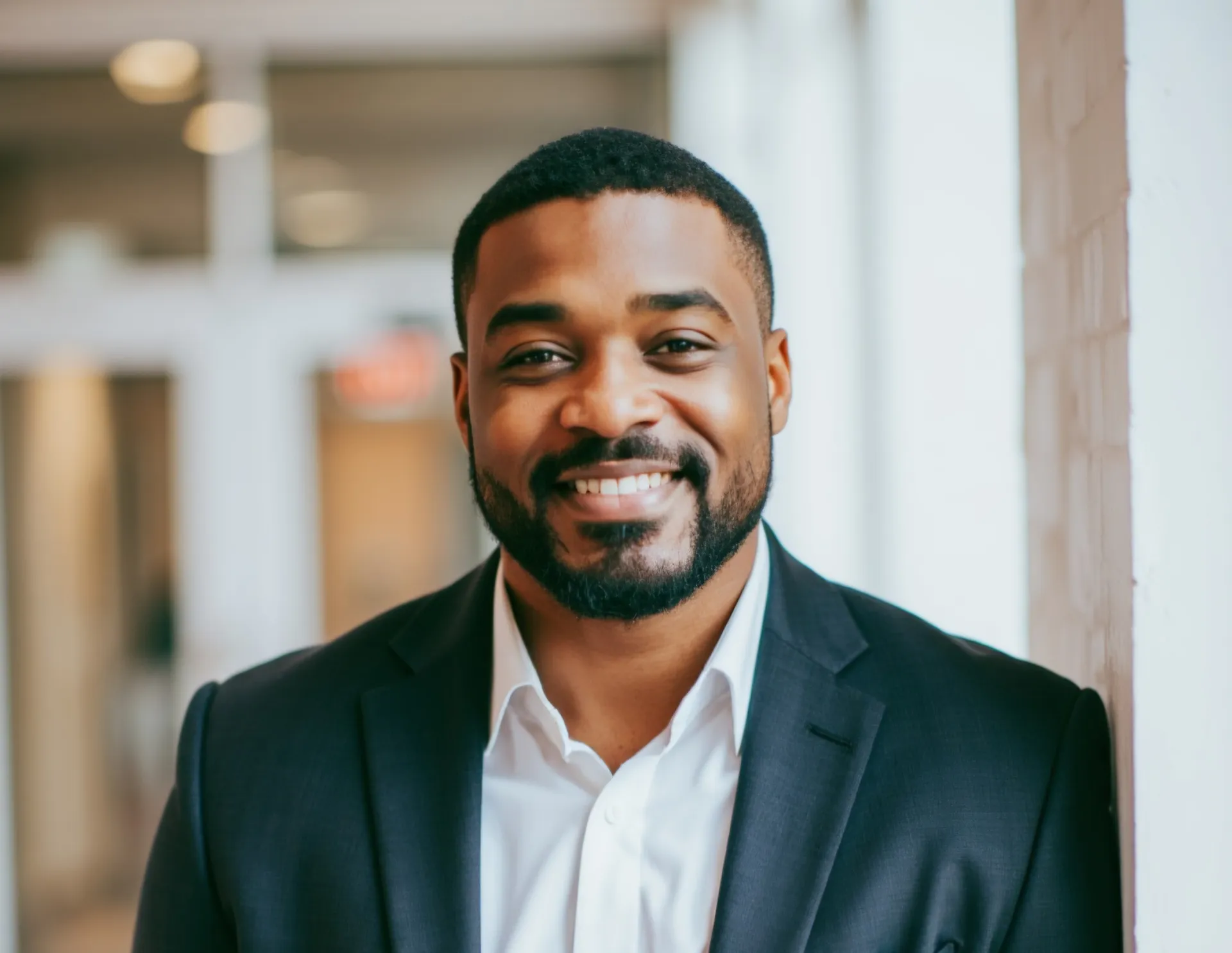
Back home in Detroit, Ashton Henderson begins a new chapter centered on family and sports
A family health scare brought the former Spartan home to help build the Athletech Academy
Ashton Henderson was in the middle of basketball season at George Mason when a phone call from one of his closest friends abruptly changed his perspective.
The friend, a physician in Tallahassee who had been supporting Henderson’s family through his father’s health challenges, did not need to say much.
“He immediately said, ‘Hey, Ashton, I think you should come home,’” Henderson recalled. “It hit me like a ton of bricks.”
George Mason had a major Atlantic 10 home game approaching, and Henderson, then the university’s senior deputy athletic director and chief operating officer, had no shortage of responsibilities waiting for him. The tone of the conversation, however, made the decision clear.
Henderson boarded a flight the following day, missed the game, and returned to Florida to be with his father and support his family through what he feared could be their final days together.
“I really thought I was going to lose my father,” Henderson said. “You have to look yourself in the mirror and say what’s most important and where you need to be.”
His father has since improved, although he has spent much of the year moving in and out of rehabilitation facilities. Henderson and his family now hope to bring him to Michigan after his release.
The experience also helped set in motion Henderson’s own return home.
Henderson and his wife, Chloe Barnes-Henderson, recently moved to Detroit, settling approximately seven minutes from downtown and beginning a new chapter that combines family, entrepreneurship, education, and the sports industry in which he has spent much of his adult life.
“This has always been home,” Henderson said. “We love it, and it’s always something we wanted for our family. I’m grateful to be back.”
Leaving George Mason was not easy.
Henderson had developed a close relationship with athletic director Marvin Lewis, whom he described as a mentor, brother, friend, and one of the best leaders for whom he has worked. Lewis gave Henderson the flexibility to travel between Virginia and Florida as his family navigated his father’s health concerns, and the two have remained close since Henderson’s departure.
“I loved George Mason,” Henderson said. “I learned so much about myself.”
Henderson’s work at George Mason also earned national recognition. Shortly before leaving the university, he was selected for "Silver Waves Media’s 2026 Top 100 Rising ADs/Future ADs list", which recognizes emerging leaders in athletics administration.
Ultimately, however, Henderson reached a point at which family had to come first.
At the same time, Barnes-Henderson was building an ambitious vision of her own.
For approximately 18 months, she has worked to develop the Athletech Academy, a 501(c)(3) nonprofit organization for which she serves as founder and executive director. Henderson described the concept as their version of a Midwestern IMG Academy, although with a different emphasis.
Rather than focusing solely on elite athletic development, the Athletech Academy would use sports as a pathway toward education, professional preparation, and long-term career opportunities.
“Our approach is more so to leverage the business and culture of sport to help students prepare for the future of work,” Henderson said. “Think about this as a private sports vocational high school.”
The academy plans to offer boarding opportunities and national exposure while establishing a presence that extends beyond Detroit. Its broader goal is to help students who are passionate about athletics understand that their opportunities do not begin and end on the field.
Sports organizations increasingly require professionals in business operations, communications, technology, finance, marketing, analytics, event management, health care, and numerous other fields. Henderson believes the relationships he and his wife have developed throughout the industry can provide students with exposure to those possibilities while helping them identify where their interests and abilities intersect.
Barnes-Henderson has worked to raise capital, develop the organization’s financial structure, and assemble a board that includes several C-suite executives. After watching that progress, Henderson decided it was time to more directly support the vision they had developed together.
He now serves as executive vice president of Athletech LLC, one of the academy’s subsidiary companies, with responsibilities that include fundraising, strategic consulting, work with professional teams and leagues, and education surrounding name, image, and likeness opportunities.
“I’ve just been empowered by what she’s been doing,” Henderson said.
In the near term, much of the work will involve continuing to develop relationships throughout Detroit, including with city officials, business leaders, community partners, and other key stakeholders.
Soon, though, the family hopes the academy will be fully operational, serving students in Detroit while also developing campuses and a broader footprint outside the city.
The work represents another chapter in a career that has taken Henderson through college athletics, professional sports, and some of the nation’s most prominent athletic departments.
Before joining George Mason, Henderson spent three years as a senior athletics administrator at Michigan State. He also worked at Florida State and Clemson, contributing within two nationally recognized football programs and gaining experience inside championship-level athletic departments.
Those opportunities grew from his own years as a Michigan State football player during a transformative period in the program’s history.
Henderson arrived in East Lansing after being recruited by John L. Smith and experienced the transition to Mark Dantonio, whose arrival helped establish the foundation for one of the most successful eras in Michigan State football history.
Nearly two decades later, Henderson remains close with Dantonio and continues to apply lessons learned during those years to his own approach to leadership.
“I was very fortunate to be around Coach Dantonio every single day,” Henderson said. “The things he taught us as men have translated to business and how I impact teams and lead.”
His memories include Brett Swenson’s game-winning field goal against Wisconsin in 2008, earning his first career start as a sophomore at Notre Dame, competing in bowl games, and developing friendships that have continued long after his playing career ended.
There was also the comeback.
As a freshman in 2006, Henderson was part of the Michigan State team that rallied from 35 points behind to defeat Northwestern, 41-38. The 2026 season will mark the 20th anniversary of one of the most memorable victories in program history.
“That is insane to even bring up,” Henderson said with a laugh. “I still feel young at heart.”
Henderson remembers the relationships formed inside the program as much as any individual victory or accomplishment.
“There are so many awesome memories – bowl games, lifelong friendships, and brothers that Michigan State and the football program gave me,” Henderson said. “We could be on all day talking about all the best things that happened while I was there.”
Those experiences helped launch a career Henderson has approached with an emphasis on continued growth.
His work at football-centered institutions such as Michigan State, Florida State, and Clemson gave him extensive experience around some of the largest programs in college athletics. His move to George Mason allowed him to deepen his understanding of basketball operations, scheduling, resource allocation, revenue generation, and the challenges of competing with a smaller athletic department budget.
Working within different institutions also forced Henderson to become more creative and collaborative, particularly when trying to generate additional resources and maintain competitiveness.
His career has since expanded into consulting and advising athletic administrators throughout the country, allowing him to remain closely connected to an industry undergoing rapid changes in revenue sharing, athlete compensation, private investment, media, and the broader business of college sports.
For now, Henderson’s focus is centered on his father’s recovery, supporting Barnes-Henderson’s vision, reconnecting with the state of Michigan, and helping build an academy designed to create opportunities for students in Detroit and beyond.
After years spent working across college athletics and professional sports, Henderson believes those experiences have prepared him to help young people see the full range of possibilities available within the industry.
The move back to Michigan was prompted by family, but it also has given Henderson and Barnes-Henderson the opportunity to build something of their own – one that brings together sports, education, career preparation, and the relationships they have developed throughout their careers.
“This has always been home,” Henderson said. “I’m grateful to be back.”