

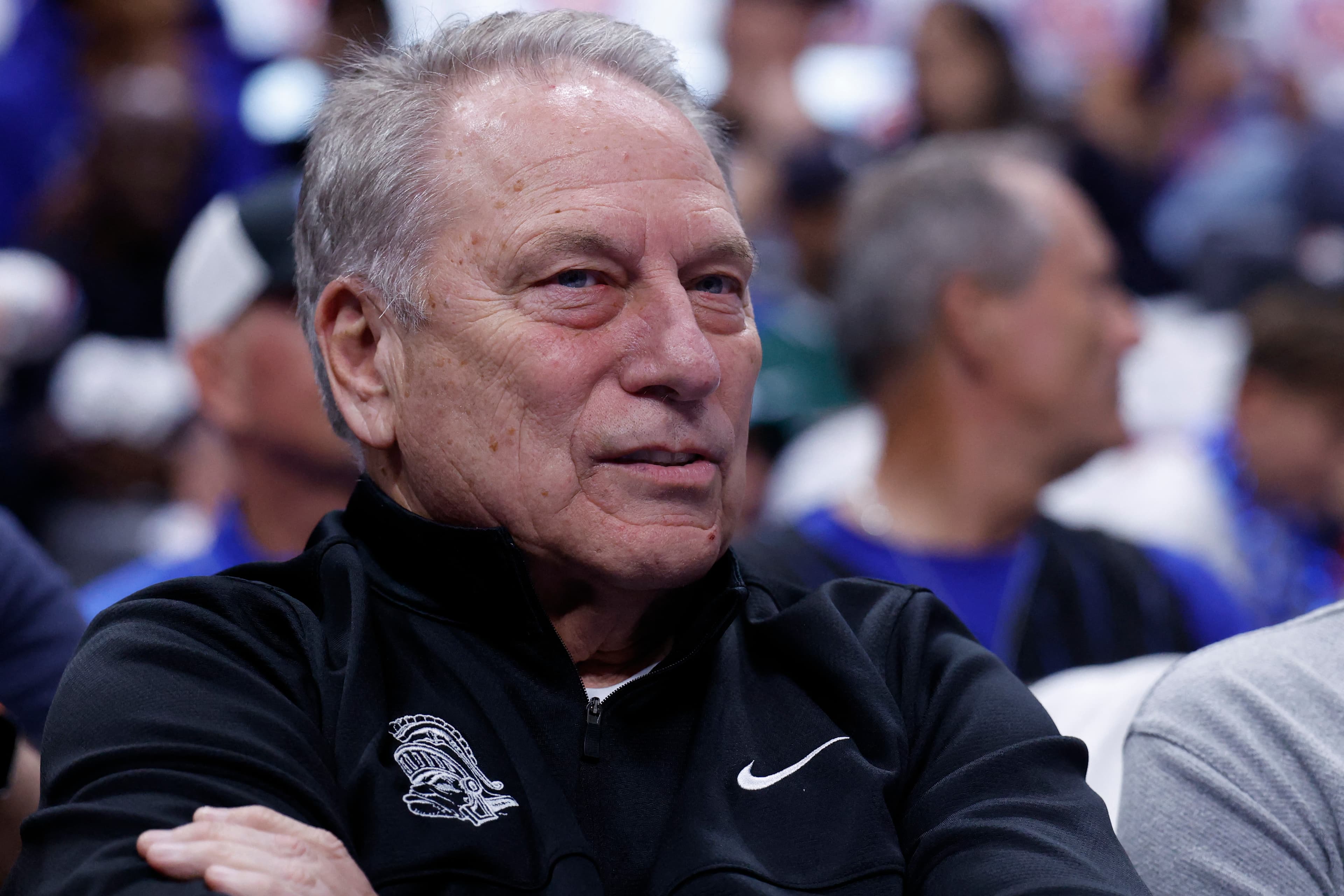
College basketball is truly testing Tom Izzo - but these Spartans are giving him a reason to stay
The sport’s dysfunction is wearing on Izzo, but his current players - and those on the horizon - continue to outweigh it
Tom Izzo finally said the quiet part aloud: the disorder surrounding college basketball could eventually drive him into retirement.
The more revealing part about his statement is that it has not done so yet.
After more than 40 years at Michigan State, including 31 as the program’s head coach, Izzo knows exactly how much the sport has changed. He sees decisions being made after rosters have been constructed. He sees lawyers, agents, administrators, and outside interests influencing programs. He sees rules altered without sufficient concern for the players and coaches who must live with the consequences.
Some of it, Izzo acknowledged during a recent interview with Jon Rothstein, has driven him “a little crazy.”
He has privately expressed versions of that frustration before. Those closest to Izzo have heard him wonder during particularly aggravating moments whether continuing to deal with everything surrounding the sport is worth it.
Until now, however, Izzo had not publicly identified that frustration as something that could actually determine when he retires.
“The day that I feel like I’m cheating this university would be the day I hang it up,” Izzo said on the podcast. “Or, to be blunt and honest, if the problems outside get magnified above the enjoyment inside, that might be the time, too.”
The most important part of that quote may not be Izzo’s acknowledgment that the problems outside the program could eventually push him out - it is his admission that the enjoyment inside the program continues to outweigh them.
That says something about how much Izzo must love the players he is coaching right now.
It says something about the group that just completed Michigan State’s second consecutive season among the nation’s best teams. It says something about Jeremy Fears Jr., Coen Carr, and the returning players who chose to remain at Michigan State rather than pursue other opportunities.
It says something about the incoming freshman class Izzo has spent years assembling.
And it may say something about the players still on the horizon, including the possibility that Izzo could someday coach Mateen Cleaves Jr., the son of the point guard who helped define the first great chapter of his career.
The outside of Izzo’s profession may be wearing him down.
The people inside his program appear to be keeping him in it.
That was the deeper message running through Izzo’s conversation with Rothstein.
Izzo sounded exasperated when discussing the governance of college athletics, particularly the possibility of another eligibility ruling arriving - and being clarified - in August, months after coaches recruited players and athletes made decisions about where they would play.
Izzo was not necessarily opposed to providing another year of eligibility. His objection was to the timing.
Coaches had advised decision-makers that any such change needed to occur in April, before teams filled their available scholarships and players chose programs based on the rosters in front of them.
Instead, another change could arrive immediately before the start of the academic year.
“There’s going to be kids leaving campus next week thinking that they’ve got their team together,” Izzo said. “They’re going to come back in two weeks from their little mini-break before school starts and might have two new teammates. And shazam, some of them might be at the position they’re at.”
Izzo then delivered one of his strongest condemnations of the way the sport is being managed.
“And then we’re going to blame the kids?” Izzo said. “No, no, no, no, no. The stupidity and the way we’ve handled things is ridiculous.”
He did not blame the players for taking advantage of the opportunities placed in front of them. He blamed the people responsible for constructing a system that repeatedly changes after decisions have already been made.
“The adults are worse than the kids,” Izzo said. “The adults have caused most of these problems, not the kids.”
Izzo pointed toward lawyers, agents, and others who have benefited financially from college athletics’ upheaval. He predicted that the consequences will become even more apparent over the next several years.
He also acknowledged that his efforts to help influence the direction of college basketball had begun to consume him.
Izzo spent years working through the National Association of Basketball Coaches and other committees, carrying forward the lesson he learned from Jud Heathcote that coaches should consider themselves guardians of the game.
Eventually, Izzo began to believe no one was listening.
“I guess it was driving me a little crazy,” Izzo said. “Some of it didn’t make sense to me, and it didn’t seem like anybody was listening.”
Izzo stepped away from much of that committee work two years ago.
You've reached the paywall. Please subscribe to finish reading this article - and to support the independent storytelling of Spartans Illustrated.
