

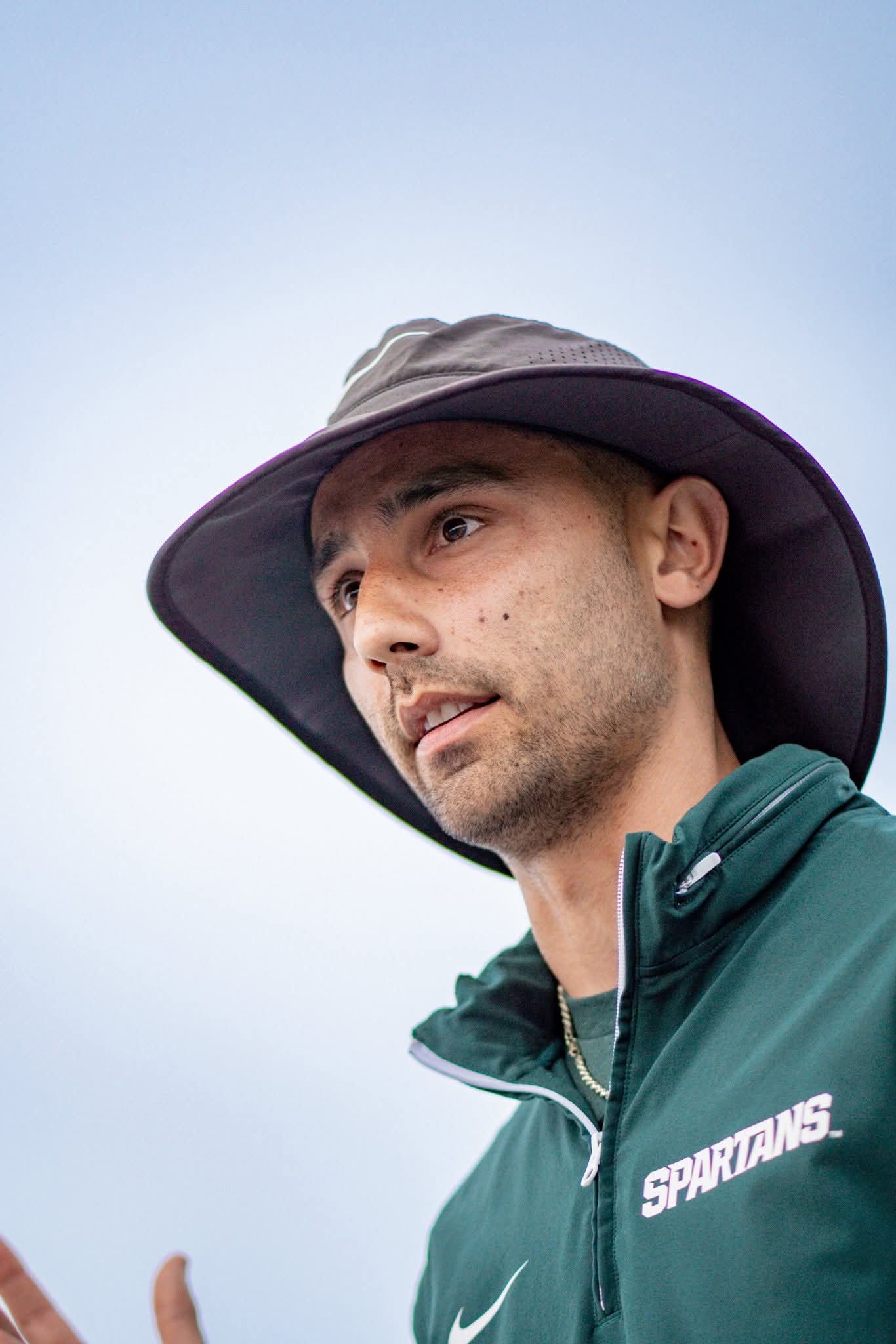
EXCLUSIVE: Harry Jadun walked away from coaching, not from being a Spartan
The former MSU coach is starting a new career and spending more time with family while remaining closely tied to Spartan tennis
Harry Jadun might have stepped away from Michigan State tennis.
But he didn't go very far.
Three months after leaving the program he grew up dreaming about – one he later played for, coached, and ultimately led to its greatest season in nearly six decades – Jadun is back around the courts this week.
Only now, he isn't wearing the title of Michigan State men's tennis coach.
The 2026 Capital City Tennis Classic, an ITF World Tennis Tour event running Aug. 10-16 at Michigan State, has brought professional players from around the world to East Lansing. The tournament started in 2019 and has developed into something much larger than a week of high-level tennis, with host families, youth clinics, ball kids, community events, and connections between international players and the mid-Michigan tennis community.
For Jadun, who remains involved through the Mid-Michigan Tennis Association, that's exactly the point.
"It's been a great bridge from the team to the community in East Lansing," Jadun said. "But also because this tournament, I think, in any given year, there's probably players from 20 different countries coming here in East Lansing. They stay in host housing. They have a really good time. So it's like, it bridges the tennis community to the team, but it also bridges the team and the tennis community out to the world."
That bridge matters to Jadun, maybe more now than ever.
Because if the last year taught him anything, it's that life doesn't always fit neatly onto a tennis schedule.
The phone call at 2 a.m.
Jadun and his wife, Rachel, thought they had timed things perfectly.
Their first child was due June 7, 2025, a few weeks after the NCAA Championships would be finished. For a Division I head coach whose calendar revolves around recruiting, matches, practices, travel, and postseason tournaments, it seemed almost ideal.
"Season ends, hopefully we win NCAA championship, and then baby comes two weeks later," Jadun remembered. "We kind of have the summer to catch our breath and regroup, and then roll it back for the fall."
Their son, Rami, apparently wasn't interested in the plan.
Michigan State was in Columbus for the Big Ten Tournament on April 24, preparing to face USC. Jadun was asleep in the team hotel when his phone rang around 2 a.m.
Rachel was 33 weeks pregnant, and her water had broken.
"She said, 'Harry, my water broke. You got to get home.'"
Jadun got in his car and drove back to East Lansing. Later that day, while Michigan State was playing doubles against USC, his son was born.
The Spartans won, giving Jadun his 50th victory as a head coach.
"I wasn't even there," Jadun said, laughing. "I didn't even watch it. I texted afterwards, 'How'd we do?'"
The story is funny now, but what it represented to Jadun wasn't.
Before becoming a father, he could move almost anything around the demands of coaching. Dinner could wait, celebrations could be delayed, and trips could be rescheduled. There was always another recruiting phone call to make, another player to evaluate, another problem to solve.
A child changed that equation.
 (courtesy photo)
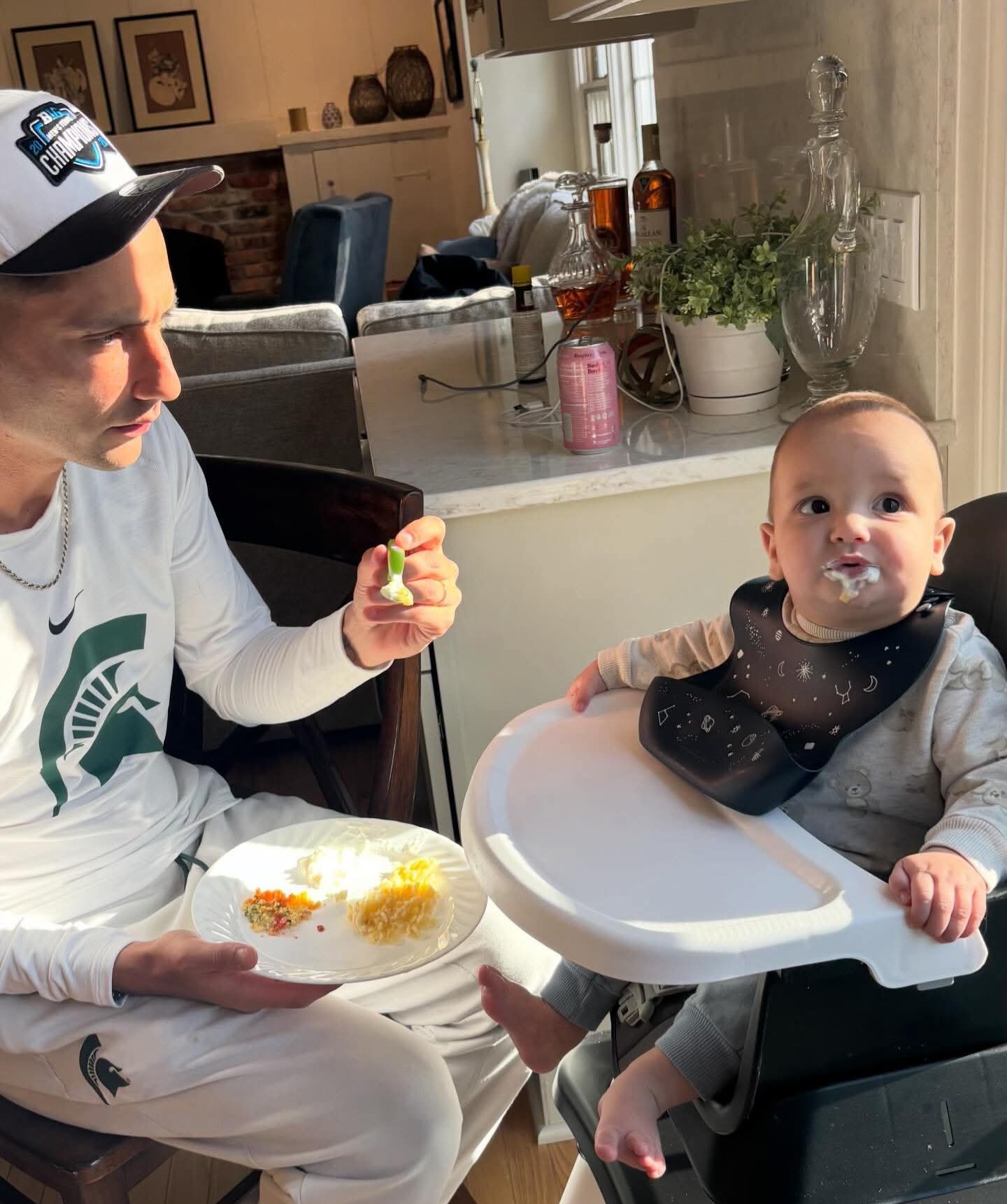
"That was a real eye-opener," Jadun said. "Before you have a family, everything can be moved around. You can work the recruiting schedule or the match schedule or you can push things to later. But when you have kids, it's not your time anymore. It's their time."
Over the following months, Jadun and Rachel began discussing a possibility that would have seemed almost unthinkable not long before: He might leave coaching.
By January, they had decided. Whatever happened during the 2026 season, it would be his last.
Then Michigan State started 0-7.
"There was one point," Jadun joked, "where we said, 'Oh, well, good thing I'm leaving.'"
Then everything changed.
The ending nobody could have scripted
Michigan State started winning. And winning. And winning.
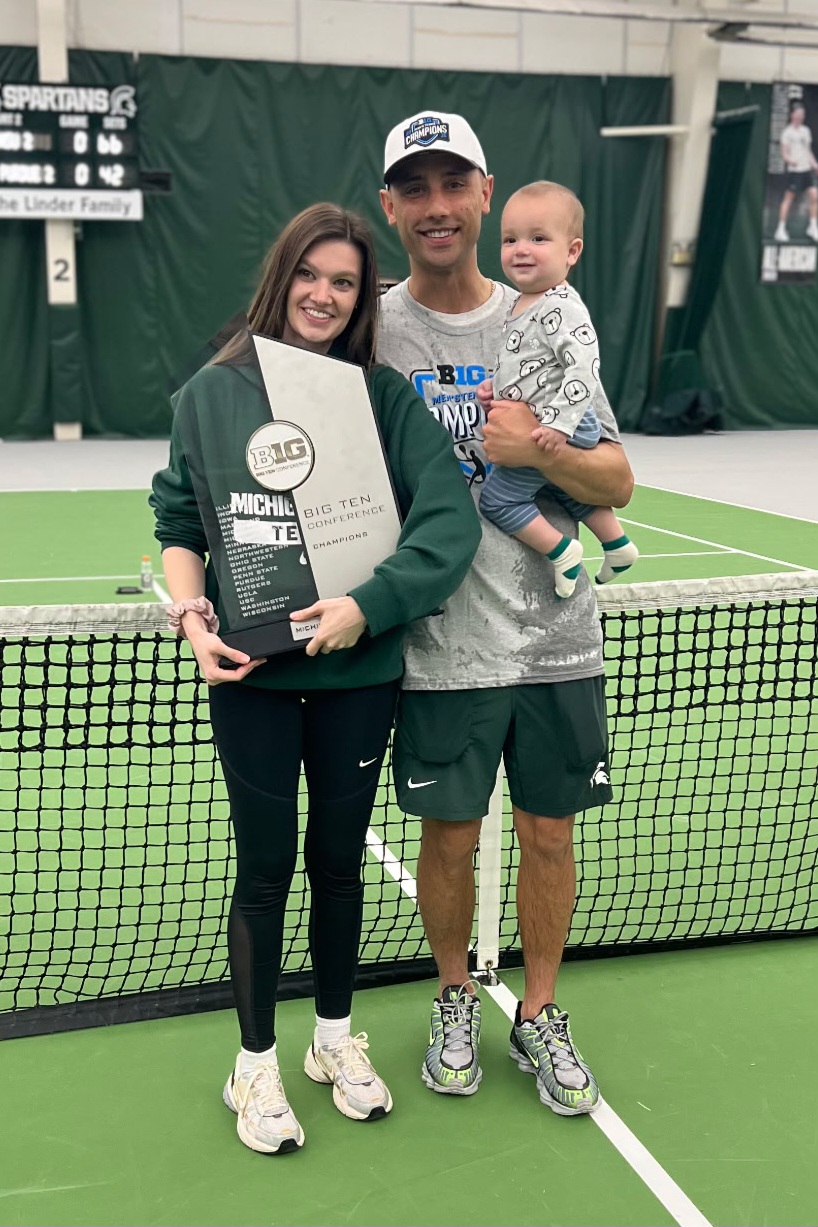
The Spartans ripped off 10 consecutive Big Ten victories, went 12-1 in conference play, earned a share of their first Big Ten regular-season championship since 1967, and entered the conference tournament as the No. 1 seed.
Then they won that, too, beating Ohio State 4-3 for the championship.
Jadun was named Big Ten Coach of the Year, and Michigan State advanced to the NCAA Tournament for a third consecutive season.
 (courtesy photo)
After inheriting a program with little recent national success, Jadun finished his four seasons as head coach with a 70-40 record, including 32-12 in Big Ten play. Both winning percentages are the best in program history among coaches who served longer than one season.
It was, in almost every imaginable way, the kind of season that could make someone reconsider walking away.
Jadun did.
"For sure," he said. "Especially with all the fifth-year stuff coming down the pipe, it's almost like, hey, we can bring back a lot of the guys and have pretty much the same team."
Then reality intervened again.
The Big Ten Tournament was played in Ojai, California, where Michigan State spent roughly a week. After winning the championship, Jadun caught a red-eye flight back to Michigan without sleeping so he could make it home for Rami's birthday celebration.
Two days later, he left again for the NCAA Tournament in South Carolina.
He had gone coast to coast, with little more than a brief stop at home in between, and Jadun understood something.
"It's never going to change," he said. "I'll always be scrambling to get home for my son's birthday."
That was the job. And doing it the way Jadun believed it should be done meant accepting that reality.
"I just knew that it's a hamster wheel," he said. "I didn't want to be going 150 miles per hour every single day for the rest of my life, which is what it takes to be good.
"And quite frankly, I wasn't in the business of coaching to be mediocre or struggle. We wanted to be great."
So he walked away – not after losing, not because Michigan State pushed him out, and not because another coaching job came calling.
MSU made an effort to retain him, Jadun said, and he appreciated that effort. But there wasn't really a contract Michigan State could offer that would solve the problem he was trying to solve.
"It would have had to have been the old Godfather quote – the offer you can't refuse," Jadun said. "It would have had to have been a crazy, crazy offer to keep me, just because I knew that, from a personal level, my marriage and my personal life and my relationship with my kid really would have struggled as a head coach at a really good Division I program competing for championships."
A different understanding of time
There is another piece of Jadun's decision that goes deeper than coaching.
His mother was diagnosed with early-onset Alzheimer's disease when Jadun was a sophomore in high school. She was 47, though Jadun believes she had begun showing symptoms several years earlier.
She died during his senior year at Michigan State at 55.
That experience never completely leaves him, and becoming a husband and father forced Jadun to think differently about the assumptions people make about time.
"I don't know how genetic it is or whatever it is," Jadun said. "But my mom got diagnosed with Alzheimer's at 47. She probably started showing symptoms at like 43. And I'm just like, man, let's say I've got until I'm 43 as guaranteed time. And then after that, I don't know what happens."
Jadun wasn't predicting the same future for himself. But watching his mother's life change so young affected the way he evaluates his own.
"I'd be remiss if I didn't take these next 10 years to spend more time with the family," he said.
That's a difficult argument for another Big Ten championship to overcome.
Leaving it better
Jadun can also leave because he believes he finished what he came back to East Lansing to do.
He grew up here and became a Spartan.
As a Michigan State player, Jadun was part of the first doubles team in school history to earn All-America honors, reaching the NCAA semifinals in 2015. He later returned as an assistant coach before Michigan State took a chance and handed him the program at 28 years old in 2022.
Alan Haller, then Michigan State's athletic director, made that decision.
Jadun understood why Haller might have had some reservations.
"I think I was the youngest coach at Michigan State and maybe even the youngest coach in the Big Ten of any sport," Jadun said. "I was definitely the youngest coach in a Power Four tennis position."
It was a gamble, and Jadun knew it.
"You could tell Alan was a little apprehensive when he gave me the opportunity, and I don't blame him," Jadun said. "I was a young coach."
There were mistakes and lessons along the way – what Jadun called his "bumps and lumps" – but there was also considerable growth.
"I stepped out of it feeling like I kind of grew up a ton, honestly, in the position," Jadun said.
That youth also brought energy, ambition, and a willingness to believe Michigan State could become something it hadn't been in a long time.
"When I was the player, we would always look up to those teams that were winning Big Ten championships," Jadun said.
Eventually, players such as Ozan Baris, Aristotelis Thanos, and Matthew Forbes weren't people Michigan State players were looking up at from somewhere below. They were Spartans.
The NCAA appearances started coming. Then came the championships.
"You talk to yourself and you tell yourself, 'You can do it, you can do it,'" Jadun said. "But to see that come through, I think it's a good thing for me to leave this in a better spot than I found it."
Building it required more than coaching
Jadun is also quick to acknowledge that Michigan State's rise didn't happen simply because the Spartans started hitting better forehands.
Building a championship-level program required players, facilities, relationships, and resources, and one of the most important relationships during Jadun's tenure was with Tom Dieters and Charitable Gift America.
"Tom and the Charitable Gift America team were great throughout my time at Michigan State and just so grateful for them," Jadun said.
For a program trying to climb nationally, relationships and resources both mattered.
"You've got to have relationships, you've got to have resources, you've got to be able to attract the top talent," Jadun said. "Everything that we did here was all about trying to get the top talent, and Charitable Gift America really helped making that possible."
Dieters, a Michigan State alumnus, became more than simply someone willing to support the program.
"He's a Spartan alum, and I know he's really invested in Michigan State athletics as a whole," Jadun said. "I'm just grateful for him."
The environment around Michigan State athletics changed during Jadun's final years. Haller departed as athletic director and J Batt took over, while college athletics itself was undergoing a seismic financial restructuring through the House settlement, direct revenue sharing, NIL, and new pressures on how departments allocate money across dozens of programs.
From inside the department, Jadun said, it wasn't always easy to separate one change from another.
"Sometimes you conflate the two," Jadun said. "Obviously, things change with Alan and the leadership atop the athletic department. But then also things change with the House settlement. Now you've got the revenue sharing and the salary cap and things like that. So it was an adjustment period."
That adjustment inevitably created difficult decisions about resources.
"As a coach, you're always advocating for your program and wanting more," Jadun said. "There was always the push and pull of what we wanted and what we felt like we needed and what the administration was willing to give. And we landed somewhere in the middle. It was enough to win some championships."
Jadun's view of Batt's departure, however, is considerably less charitable.
For Jadun, being a Spartan has never simply meant drawing a paycheck from Michigan State, wearing green, or occupying an office inside the athletic department. It means staying through difficult stretches, doing right by the people around you, and finishing what you started.
He learned that standard from people who actually did it.
"What Coach Izzo has done over all the years and what he has stood through – that's what it means to be a Spartan," Jadun said.
Then there is Mark Dantonio.
Dantonio spent years telling his players to "complete your circles." When his own time at Michigan State eventually ended, Jadun believes Dantonio had lived up to the standard he demanded from everyone else.
"Coach Dantonio said, 'Complete your circles,' and then he did," Jadun said. "That's what it means to be a Spartan. We lived by that."
Jadun sees Batt's brief tenure and departure very differently.
Batt arrived at Michigan State with considerable authority, launched major initiatives, and began reshaping the athletic department around his vision – then left before much of that work could be seen through.
To Jadun, that wasn't merely disappointing. It violated the very standard he had been taught Michigan State was supposed to represent.
"Batt leaving after a year was the opposite," Jadun said. "He never was a Spartan."
Jadun has spent most of his life around Michigan State. He grew up in East Lansing, played for the Spartans, coached them, and eventually became their head coach. He fought through losing seasons, recruiting battles, resource limitations, and an 0-7 start to his final season before ultimately leaving Michigan State tennis as a Big Ten champion.
To him, being a Spartan isn't a title somebody acquires when they are hired. It has to be earned.
"Coach Izzo says, 'Do right by people,'" Jadun said. "Coach Izzo and Coach Dantonio embody what it means to be a Spartan. Batt was not."
That is ultimately Jadun's indictment of Batt.
Izzo and Dantonio stayed. They endured criticism, adversity, pressure, and difficult seasons while continuing to answer for the programs and people entrusted to them.
In Jadun's view, Batt asked Michigan State coaches, athletes, donors, and administrators to buy into a new direction, then left before seeing that direction through.
Jadun sees nothing Spartan about that.
Part of the coaching fraternity
For Jadun, that matters because one of the things he cherished most about the job went beyond tennis.
He loved being one of Michigan State's coaches.
There was a fraternity inside the athletic department that Jadun came to appreciate more and more as his own program rose. Different sports came with different budgets, recruiting dynamics, challenges, and expectations, but the people leading them understood the demands that came with trying to build championship programs at Michigan State.
Jadun pointed to gymnastics coach Mike Rowe, men's soccer coach Damon Rensing, women's soccer coach Jeff Hosler, women's golf coach Stacy Slobodnik-Stoll, men's golf coach Casey Lubahn, and wrestling coach Roger Chandler as examples.
"You've got unbelievable coaches here," Jadun said.
All had demonstrated, in different ways, that Michigan State could build championship-caliber programs well beyond the sports that command the largest crowds and television audiences.
Izzo occupied a different place in that fraternity for Jadun, having become his model for the longevity, accountability, and commitment that being a Spartan should represent. For a much shorter time, Jadun also shared that fraternity with Pat Fitzgerald as Fitzgerald began the work of rebuilding Michigan State football.
Jadun was reaching the end of his tenure as Fitzgerald was beginning his, but whether it was Izzo, Rowe, Rensing, Hosler, Slobodnik-Stoll, Lubahn, Chandler, Fitzgerald, or others around the department, Jadun valued being surrounded by people who understood what it took to try to win at Michigan State.
That experience also shaped the way he thinks about the department's financial future.
Jadun understands that competing at the highest levels of football and men's basketball takes enormous resources. What he hopes Michigan State doesn't lose along the way is the ability to be great elsewhere, too.
"I really hope that we can carve out a pocket and find a way for Michigan State to be dang good at football and basketball and hockey and volleyball and all those sports," Jadun said. "And then also, let's win some championships everywhere else, too."
There is something revealing in the way Jadun talks about those coaches. He doesn't sound like a former employee listing colleagues as much as someone who was genuinely proud to be one of them.
At 28, Haller gave him a seat in that fraternity.
Four years later, Jadun left it as a championship coach.
In good hands
It helps that Jadun believes Michigan State tennis remains in the right hands.
His longtime assistant, Mike Flowers, now runs the program, with Vince Orlando joining him, and Jadun couldn't be much more enthusiastic about either.
"I just really want to emphasize how excited I am for Coach Mike and Coach Vince," Jadun said. "They're the right guys to lead this program."
For Jadun, both understand what Michigan State tennis is supposed to be – and both understand Michigan State.
"Those two guys, Michigan State tennis is in unbelievable hands," Jadun said.
The transition wasn't necessarily easy. After the transfer portal opened, Flowers and Orlando were at one point left with just three players on the roster.
They went to work.
"They got busy," Jadun said. "They filled it with some great players that are playing this week here at the Capital City Tennis Classic, and I'm excited to see those guys don the green and white and get after it."
That creates a fitting scene this week, with the former coach who built the program into a champion able to stand beside the courts and watch some of the players recruited by the staff that followed him.
Jadun isn't hovering over their shoulders, but he isn't disappearing, either.
"I'm a Spartan," he said. "I grew up in East Lansing. I played and coached here. I'm going to do everything in my power to help Mike and Vince in the transition and help this athletic department and, hopefully, help Michigan State tennis continue to compete for championships."
He knows the program isn't his anymore, and he's comfortable with that. Flowers and Orlando have the responsibility now, while Jadun gets to remain close enough to help without carrying the daily demands of running the program.
The next chapter
For Jadun, that next chapter is already beginning.
He has joined Oracle Financial Solutions in Mason and is starting a career in financial advising, a transition that will keep him planted in mid-Michigan rather than sending him chasing the next coaching opportunity. His wife, Rachel, a psychologist, is launching her own private practice, and both are beginning new professional chapters in the same community where they grew up.
Their families are from East Lansing, and Jadun still lives in the same neighborhood where he was raised – in fact, in the same house where he grew up. Their careers are changing and their family is growing, but they aren't looking for the next town or the next opportunity somewhere else.
They are already home.
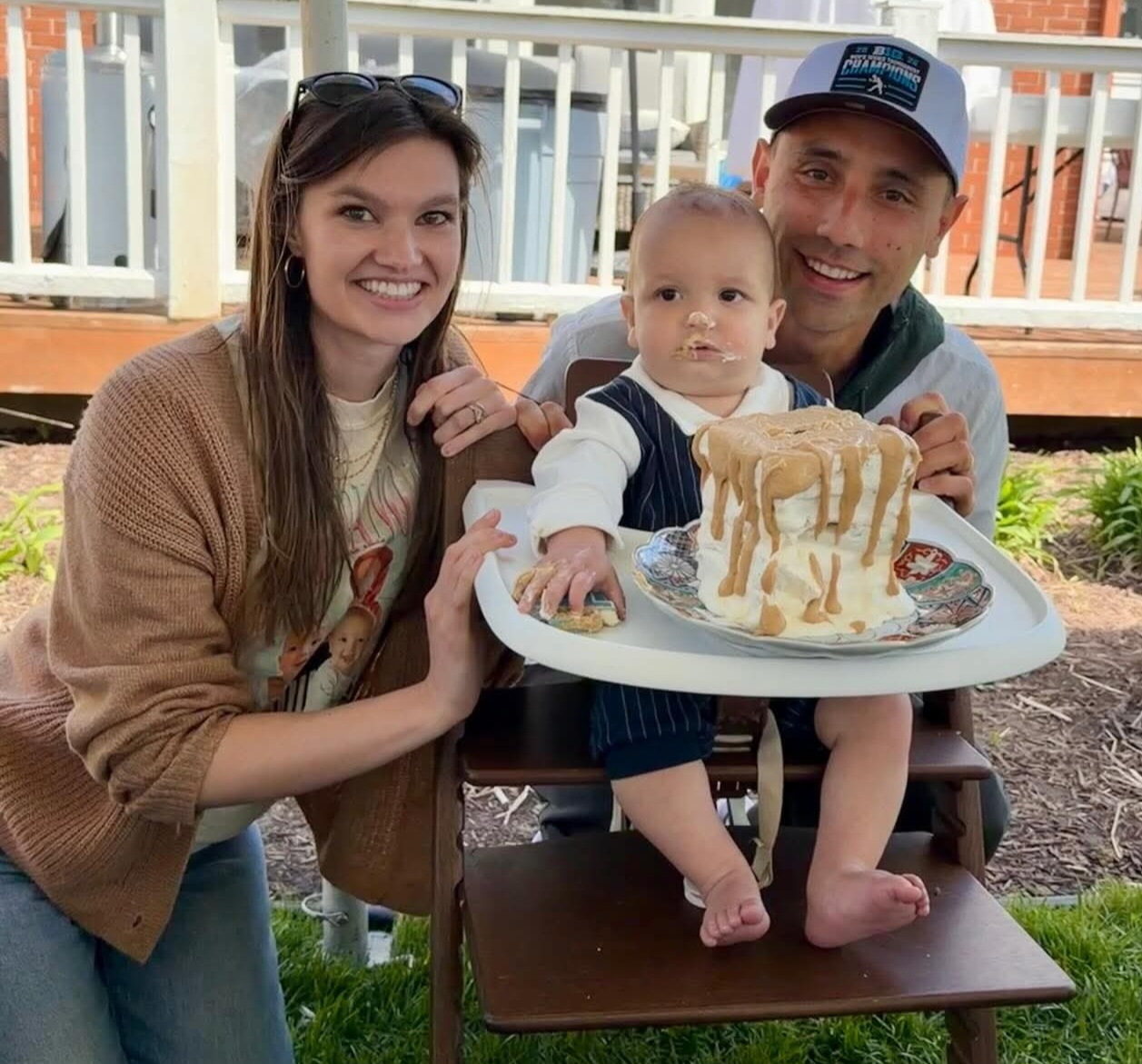
Those roots may be getting even deeper. Rami, still young, has already developed a fascination with tennis, much to the amusement of his father.
 (courtesy photo)
"I can't get away from tennis," Jadun said, laughing.
Maybe he isn't supposed to.
Leaving coaching was never about leaving tennis behind. It was about finding a different way to have the game in his life – one that allowed him to remain connected to Michigan State, his community, and the people he cares about without allowing the demands of Division I coaching to consume everything else.
In that sense, the Capital City Tennis Classic might be the perfect example of what Jadun's relationship with tennis looks like now.
The tournament brings professional players from around the world to Michigan State, but its impact extends far beyond who wins the trophy. Children pick up rackets at clinics, local families open their homes to visiting players, ball kids get an up-close look at professional competition, and current Michigan State players compete while younger players in the community get to imagine themselves doing the same someday.
Jadun can be part of all of it. He can help build the event, support Flowers and Orlando, stay connected to Michigan State tennis, and continue growing the game in the place where he grew up.
He just doesn't have to live on the hamster wheel anymore.
That may be why Jadun sounds remarkably at peace only a few months after walking away from a championship program. He misses coaching, certainly, but missing it doesn't mean he believes he made the wrong decision.
If anything, stepping away has given him some perspective on what he actually misses.
It isn't simply the championships.
"When we were struggling in the Big Ten and in the lower half, you always feel like, when you win, 'Oh, that'll make my life better. All my problems would be solved,'" Jadun said.
They weren't.
Some of his favorite memories came before the trophies – traveling with players, battling through difficult seasons, pulling off improbable wins, watching teammates become brothers, and seeing young men grow up together.
"Some of those times, just being in the trenches with the guys, were some of the best times of my life," Jadun said.
That is ultimately what Jadun wants the players who follow him to understand. Winning still matters to him. He spent too much of his life pursuing championships, and too much energy building Michigan State into a program capable of winning them, to pretend otherwise.
But winning was never the only thing being built.
"I just feel like these guys have the opportunity to compete every single day, put their best foot forward, become close with their teammates, and just focus on the process because the winning and losing takes care of itself," Jadun said. "Man, these are brothers. These are teammates."
Those are lessons Jadun once delivered as Michigan State's head coach. Now Flowers and Orlando get to deliver them, and this week, as professional tennis again fills the courts in East Lansing, some of the players they recruited to continue Michigan State's championship momentum will be competing where Jadun spent so much of his life.
Jadun will be there, too – helping where he can, supporting the program, growing the game, and remaining part of a tennis community he helped build.
Only now, he also gets to go home and be Rachel's husband and Rami's dad.
"I had my run," Jadun said. "Now I get to pass the baton and we'll see where it goes."
For the first time in a long time, though, Harry Jadun doesn't have to be the one running with it.
If you appreciate stories like this, please take a moment to subscribe to Spartans Illustrated (for a month or for a year) so that we can keep doing it. Click here.
