

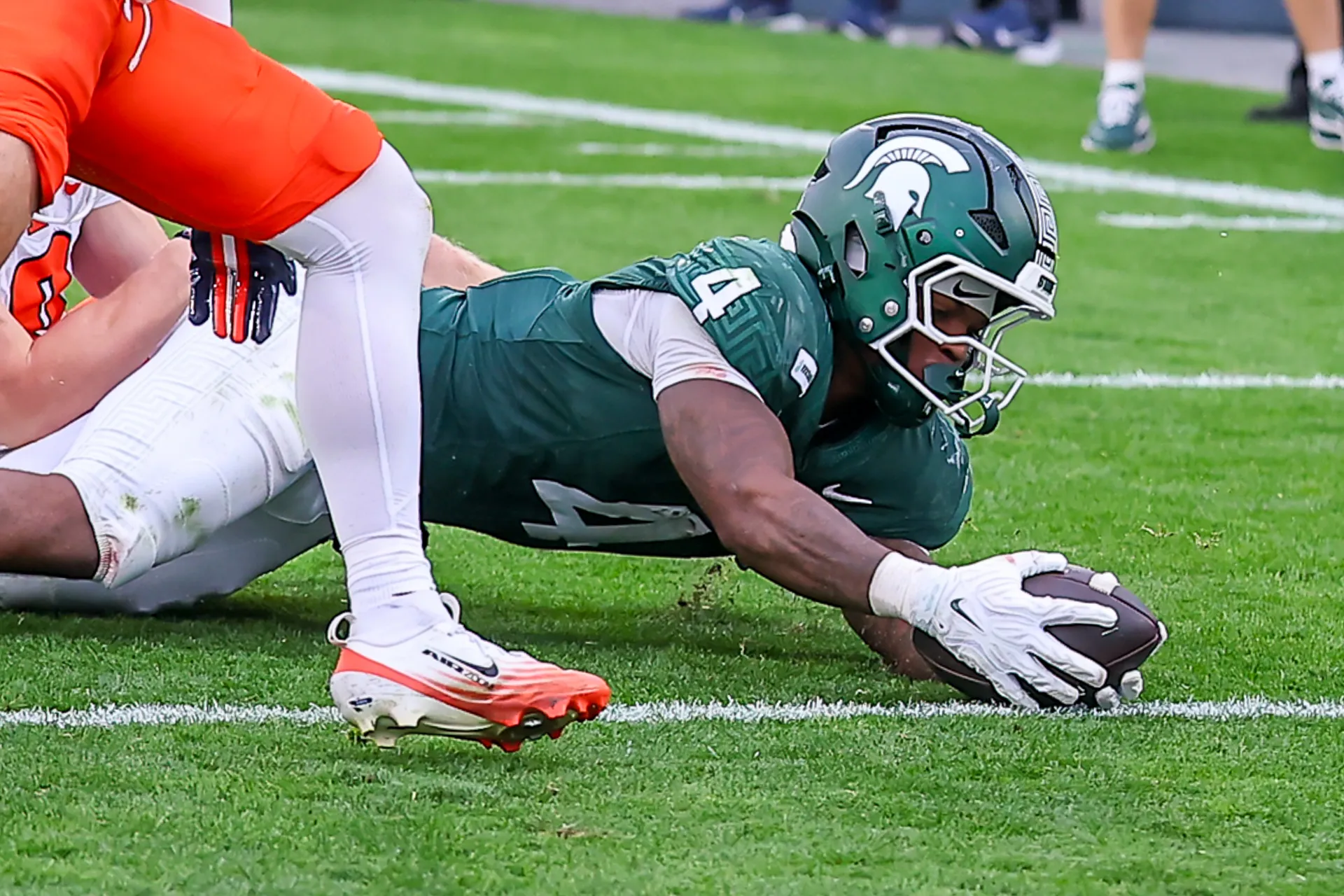
Inside the ‘Jaz mindset’ Pat Fitzgerald wants Michigan State players to follow
Jaziun Patterson’s preparation and relentless effort set the standard Fitzgerald wants Michigan State to follow
When Jaziun Patterson sat down in Pat Fitzgerald’s office during his recruitment to Michigan State, the head coach wanted to be clear about the opportunity he was offering.
The Spartans had already brought in Cam Edwards to be their starting running back. Fitzgerald needed another player who could complement him, strengthen the depth in the backfield, and be ready when called upon. He described the role as “1B,” giving Patterson a straightforward explanation of where he would enter the competition.
Patterson looked him in the eye.
“I don’t care who you bring in,” Fitzgerald recalled him saying. “I’ll be ready to go.”
Fitzgerald had already watched Patterson play at Iowa and heard an enthusiastic assessment from his son, who was a teammate of Patterson’s there. But Patterson's answer in his office helped settle the decision.
“I walked out of my office and said, ‘We’re taking him,’” Fitzgerald said.
Months later, Fitzgerald stood before his team Monday morning and asked the rest of the Spartans to approach their remaining opportunities the way Patterson had approached his.
Michigan State was coming off a 38-37 overtime loss to Illinois, its fourth consecutive defeat. Patterson had carried 17 times for 93 yards and scored four touchdowns, three rushing and one receiving. With Edwards sidelined by a season-ending injury, the player recruited to share the workload had become a central part of the offense.
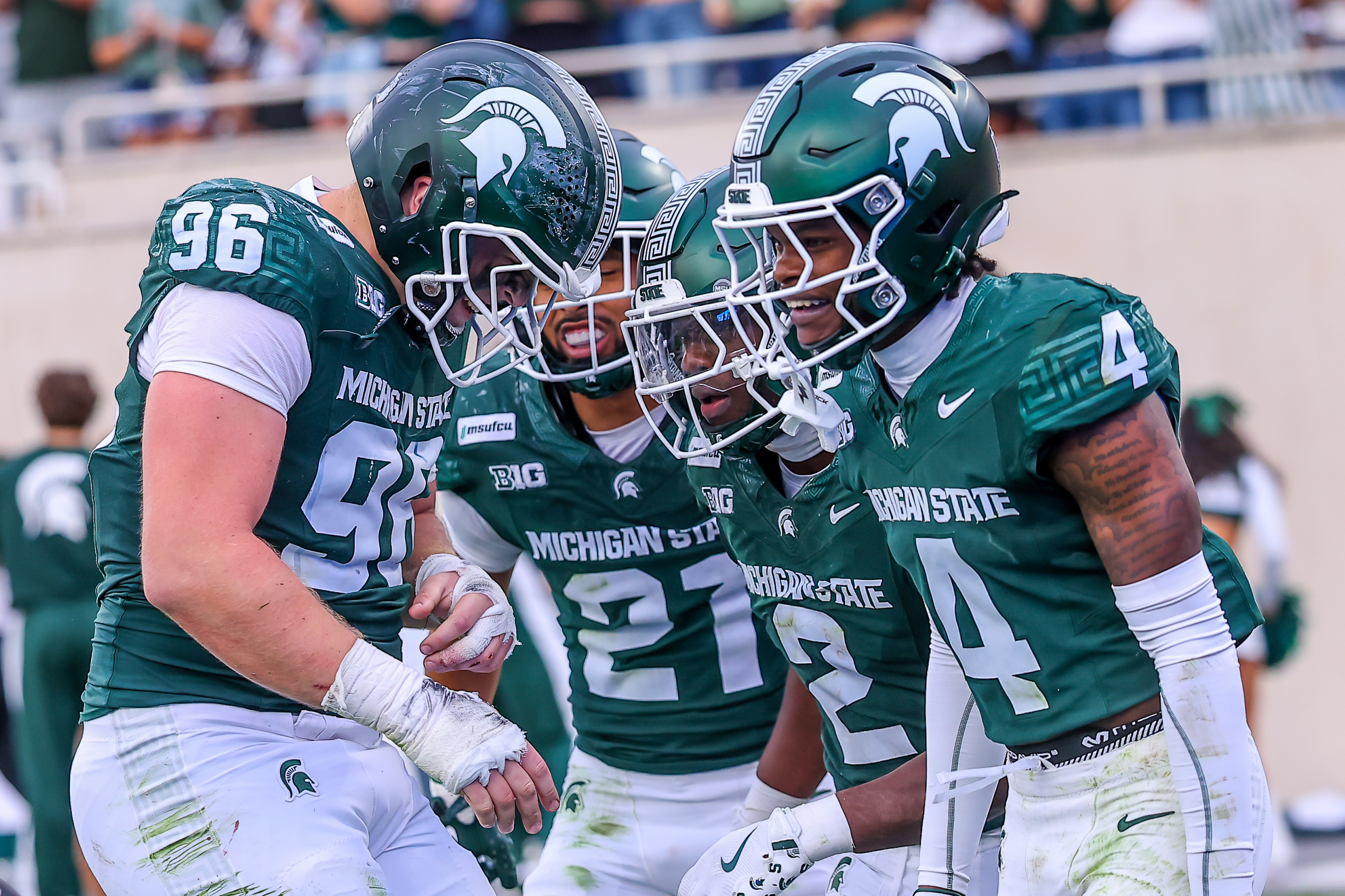
Photo credit: Marvin Hall/Spartans Illustrated
Fitzgerald’s challenge to the team extended beyond the production.
“I said, ‘Can you imagine if everybody in a chair right now operated mentally, mindset, and attacked the day like Jazz attacks it? Why not?’” Fitzgerald said.
As the Spartans entered the second half of the season, their coach was pointing to someone whose response to an expanded role reflected the preparation that preceded it. Patterson had told Fitzgerald he would be ready, then continued preparing while the timing and size of his opportunity remained uncertain.
“Even when I was a backup,” Patterson said, “I just always operated like I was a starter.”
That approach had been developing long before their conversation in Fitzgerald’s office.
Patterson’s father coached him for roughly five or six years, until he reached high school, and filled those years with instructions his son still carries.
“Don’t talk about it. Be about it,” Patterson said, repeating one of his father’s sayings.
Another was equally direct: “Don’t let it happen. Make it happen.”
His father continues telling him those things today. Patterson describes them as ideas implanted in his mind when he was young, shaping how he approaches football and the rest of his life.
The coaches at Michigan State have come to recognize those habits through their daily work with him. Offensive coordinator Nick Sheridan sees them in Patterson’s preparation, his energy, and his willingness to keep working through the demands of a season.
Sheridan also offered a way for Spartan fans to recognize them on Saturdays.
“I would just go back and watch the plays where he didn’t get the ball,” Sheridan said. “He’s always sprinting towards the ball carrier.”
Patterson’s touchdowns made his contribution easy to find against Illinois. Sheridan’s suggestion was to look through the rest of the game, at the snaps when someone else had the opportunity to advance the ball.
“He just is so steady and consistent in his approach,” Sheridan said. “And then on top of that, the approach that he does have is just uplifting. It just gives you energy.”
For a staff working to establish its expectations in its first season at Michigan State, Patterson has given the coaches an example they can describe in specific terms. Fitzgerald can point to his readiness when the backfield changed. Sheridan can point to his effort when the ball goes elsewhere.
Patterson can trace both back to a childhood in which he was trying to get onto a football field before he was old enough to belong at the practice.
Patterson was about 5 when he began running through his father’s practices, getting in the way and trying to tackle players who were 14 or 15.
His father was coaching older boys, but Patterson wanted to participate. He remembers moving around the field, inserting himself into the activity, and trying to bring down teenagers considerably bigger than he was.
Eventually, the team made him its mascot.
Subscribe to Spartans Illustrated