

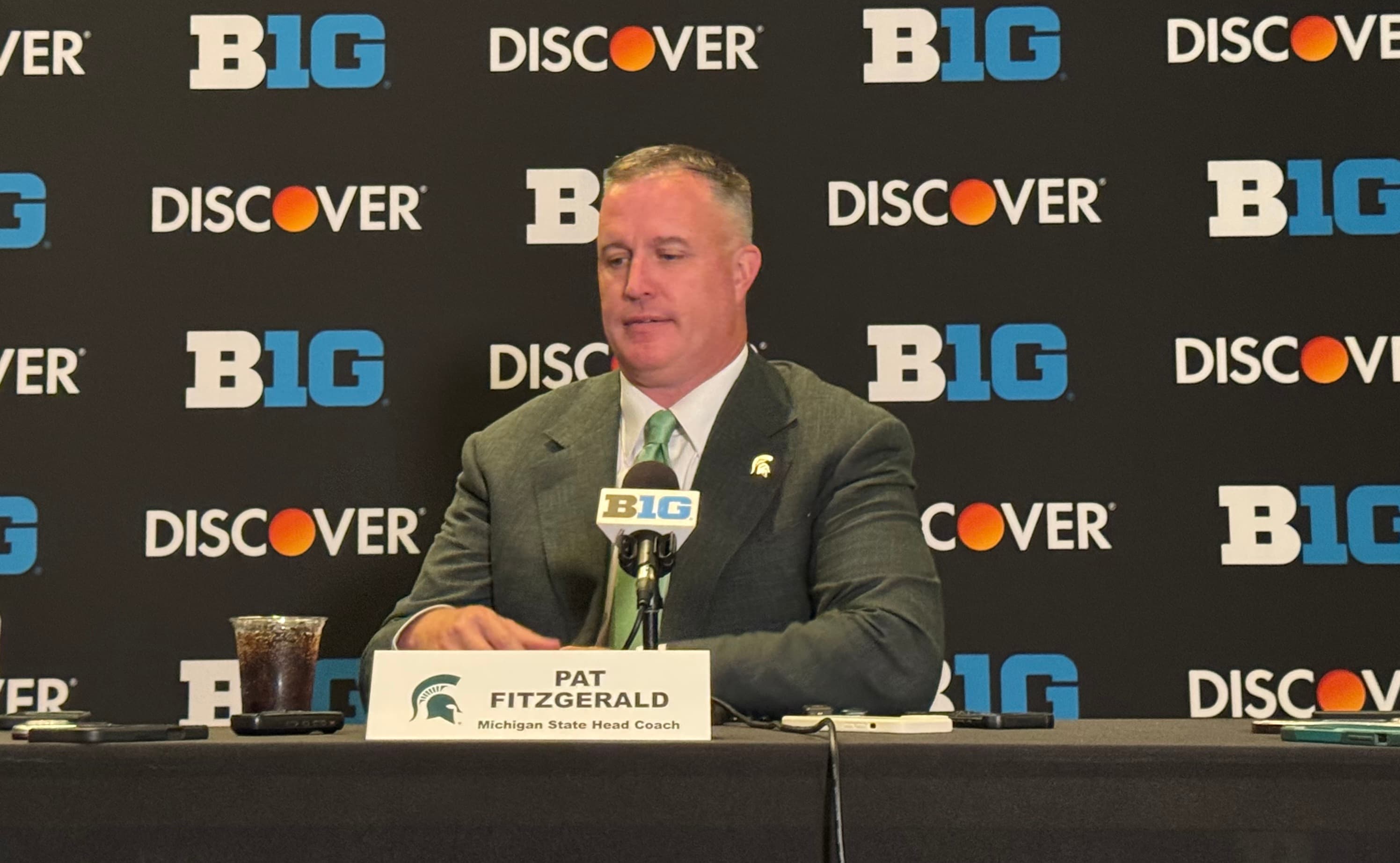
INSIDER: Pat Fitzgerald is building Michigan State for the future – without surrendering the present
From rebuilding the trenches to rethinking practice and demanding alignment above him, Fitzgerald has a plan to make the Spartans competitive now – not someday
Pat Fitzgerald is not asking Michigan State fans for three or four years of patience.
At Big Ten Media Days, he talked about development, culture, roster construction, administrative alignment, sports science, position depth, and reconnecting the program to its past. He acknowledged that Michigan State remains a long way from becoming what he expects it to become.
But Fitzgerald also made the timeline unmistakably clear. He isn't interested in waiting three or four years. He's asking, how can they make this team competitive now?
The Spartans are not approaching the 2026 season as a ceremonial first step in an indefinite rebuild. Fitzgerald inherited significant roster issues, another round of transition, and an athletic department that lost the director who hired him before he coached his first game.
His response has been to move with urgency.
Michigan State attacked the transfer portal to rebuild the offensive line, identified a starting quarterback early, created competition throughout the roster, increased the number of coaches directly involved with each position group, changed how training camp will operate, and placed a heavy emphasis on developing every available player rather than separating the roster into those expected to contribute and those waiting for another year.
Fitzgerald is attempting to restore Michigan State’s long-term identity while preparing the current roster to win as quickly as possible.
Those goals are not easy to reconcile.
A patient rebuild usually emphasizes younger players, future recruiting classes, and gradual cultural change. A win-now approach can lead to an overreliance on transfers, short-term fixes, and roster decisions that create another reset later.
Fitzgerald appears intent on doing both.
He is using experienced transfers to make the 2026 team more competitive while creating an internal development system he believes can produce a sustainable program. He is reconnecting Michigan State with the toughness and line-of-scrimmage identity of Mark Dantonio’s best teams without pretending the sport still operates as it did a decade ago.
The structure Fitzgerald described in Chicago is built for the realities of college football now.
Every roster spot matters. Development cannot be postponed. Players who are not quite ready in September may be needed in November. Coordinators must oversee the entire operation rather than becoming consumed by one position room. The transfer portal must be used selectively, but it cannot be ignored.
And none of it will work without support from the president, athletic director, and Board of Trustees.
Taken together, Fitzgerald’s comments offered the clearest explanation yet of how he intends to rebuild Michigan State football.
The internal rebuild has been steadier than the external appearance
From the outside, Fitzgerald’s first seven months have appeared turbulent.
J Batt hired him and then left Michigan State before Fitzgerald coached a game. President Kevin Guskiewicz explored the Clemson presidency before ultimately deciding to remain in East Lansing. Jon Palumbo moved into the interim athletic director role while MSU began another search for permanent leadership.
The public perception has been one of instability.
Inside the football program, Fitzgerald says it has felt considerably different.
You have run into the paywall. 90% of this article remains. Subscribers have access to the rest.
