
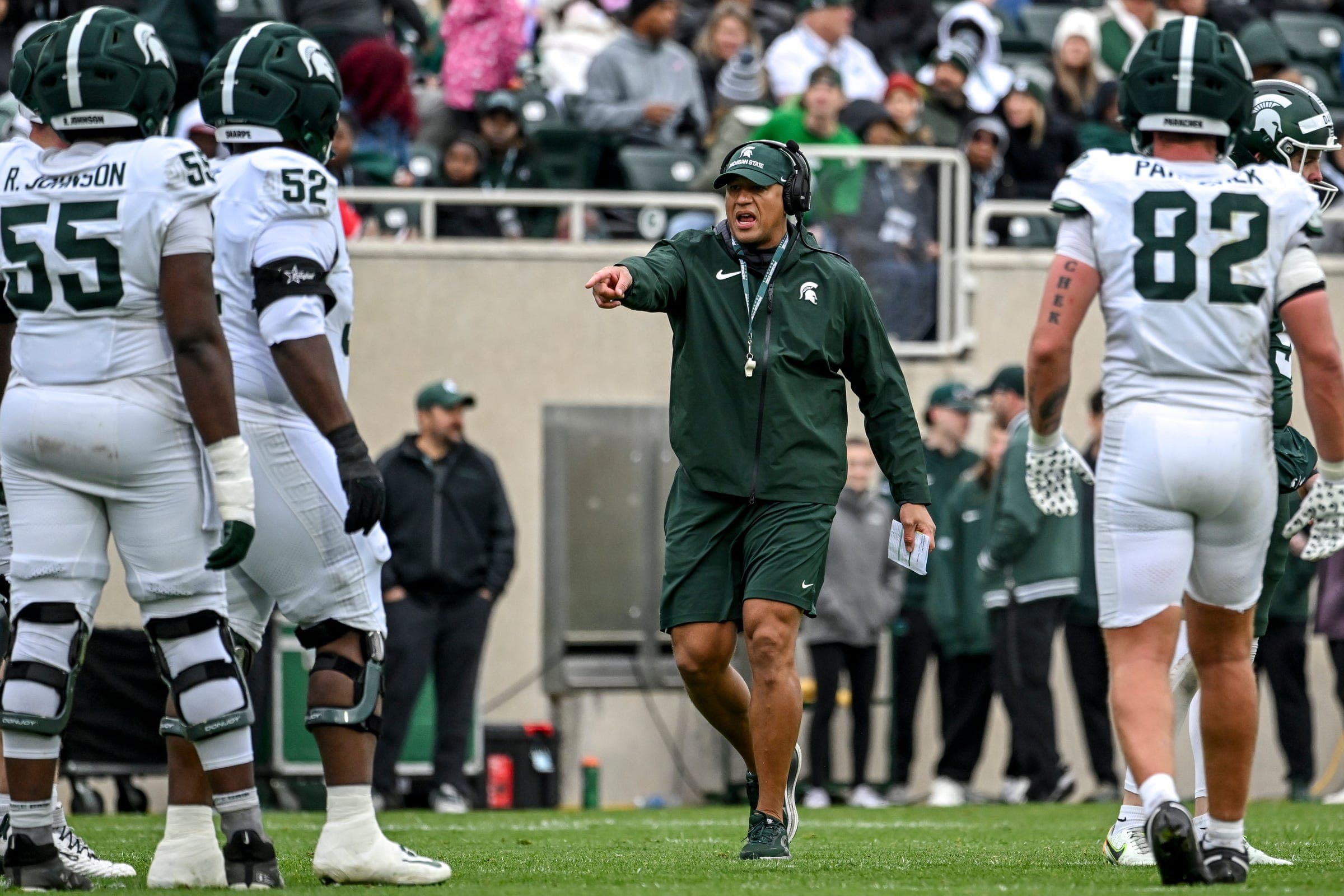
LeVar Woods breaks down college football's new punt rule and advocates for it to be reversed
Michigan State's assistant head coach and special teams coordinator LeVar Woods is very "unhappy" with how the rule came about and thinks there is time to change course.
LeVar Woods is widely regarded as one of the most respected and best special teams coordinators in the country after consistently coaching some of the highest-rated units at Iowa year in and year out during his tenure as the Hawkeyes' special teams coordinator from 2018 through 2025.
So, when Michigan State head coach Pat Fitzgerald was able to poach Woods from Iowa and hire him as Michigan State's assistant head coach and special teams coordinator in 2026, the move was strongly praised by fans and pundits alike. It wasn't exactly a move anybody saw coming, as Woods spent his playing career and his entire coaching/administrative career at the University of Iowa. He also has a son, Mason, who currently plays tight end for the Hawkeyes. Woods is expected to immediately boost the Spartans' special team units, while also now getting a chance to operate under Fitzgerald and learn what it takes to be a head coach.
When Woods talks, particularly about special teams, his peers listen, and for good reason. One thing that Woods has been vocal about is his opposition to the NCAA's new punt formation rule that goes into effect for the 2026 season — something that Woods believes very few coaches want.
In March, the NCAA adopted a rule that significantly changes things for special teams coordinators. Now, the NCAA is enforcing strict numbering requirements for players on the line of scrimmage and restricting shifts and eligible receivers on punt formations. It could also make fake punts a lot harder to execute.
Schools now have two options: either have at least five linemen wearing jersey numbers 50 through 79 (ineligible numbers) on the line of scrimmage, or use the numbering exception. The latter means that if any of the five players on the line of scrimmage are not wearing an ineligible number, punt formations are locked into a two-by-two alignment — meaning there are two adjacent linemen on each side of the long snapper with the guards and tackles in or touching the tackle box (which extends five yards from the snapper). Regardless of jersey number, these players are ineligible as receivers and cannot shift in this alignment.
Meanwhile, if the five players on the line of scrimmage are wearing ineligible jersey numbers between 50 and 79, the punting team then regains the ability to shift and have flexibility with punt formations, while still making it clear who the eligible receivers are. To work around the numbering exception and assure the proper personnel is on the field, schools will likely have players on the field switch jersey numbers during punts. Teams will need to fill out a form highlighting the number changes and present it to the referees in a pregame meeting, and an announcement about any number changes will be made prior to the play. The information will be provided to the opposing coach before the game as well.
But constantly changing players' jersey numbers for punt plays may cause even more headaches, according to Woods (much more on that to come).
The purpose of this rule change, according to the NCAA, is to help coaches and officials identify who is an eligible wide receiver on punt plays. However, Woods argues that coaches and officials he has spoken with have never found that to be a difficult task.
Woods mentioned that Fitzgerald ("Fitz") is also staunchly opposed to the new rule change, and several coaches around the country, such as head coaches and special teams coordinators, have voiced their displeasure about the new punt restrictions — including Iowa head coach Kirk Ferentz, whom Woods worked under from 2008 through 2025.
Unsurprisingly, Woods had a lot to say about the new punt rule when he spoke publicly on Monday.
"First and foremost, it's still very unclear of how this whole thing came about," Woods said when discussing the new punt rule. "(I'm) very unhappy with how it came about — the rule change, who was consulted, who wasn't consulted. I don't want to speak for Fitz, but I know he is upset. Coaches weren't consulted and they tried to ramrod this thing through in the cloak of darkness in the middle of like late February/early March. People were on spring break, people were getting going (on) their spring practice (during the time of the rule change). A lot of guys, a lot of coaches — head coaches and coordinators — had no idea.
"I go back to the spring, right, we have spring practice all through April, and every day we'd come off the field, we're fielding calls from different people — different coaches, coordinators and head coaches around the country, 'Hey can you explain this rule?' Because we kind of found it and heard about it, and we were curious about it, being the staff here: myself, (assistant special teams coordinator) Josh Robinson, was (former special teams assistant) Mason Ruddy at the time and then Coach Fitz. And so we were constantly just trying to understand it and find out who knows what. Most guys, coordinators around the Power Four (conferences), had no idea.”
Woods explained that the new rules also felt like a "moving target," saying he never got any clarity on whom he needed to speak to in order to discuss reverting back to the old rules.
The veteran special teams coach went on to break down the new rules and discuss its issues.
"The way the rule is written, they would like to have you in a two-by-two formation — even though it's not what the rule says, OK? But someone will interpret the rule as saying, call it a guard/tackle, a guard/tackle on either side of the center. And those numbers have to be ineligible numbers, OK? Or, let me back up. If you're not in that formation, you have to have five ineligible numbers on your punt unit (50 through 79). OK, so, what a lot of coaches are doing around the country that I've spoken to, they would like to keep the the multitude of formations — the ability to change formations, and not be locked into a two-by-two formation. So, what most people I know (are doing), they're going with a jersey change. So, good luck to you guys (the media) trying to figure out who's who and what's what. Because there's going to be like hockey line changes with changing jerseys."
As examples, Woods used MSU linebacker Jordan Hall, who wears No. 5 and safety Nikai Martinez, who wears No. 21. Now, if they were to go in on a punt play, they may have to wear ineligible numbers (Woods referred to numbers such as No. 77 or No. 67 as examples) to try to go protect a punt, cover a punt and go down and make a tackle. He mentioned that Hall and Martinez are just two guys on the team on a MSU roster that includes more than 110 players, so this issue is going to come up often.
The punt rule wasn't the only new rule that was adopted by the NCAA during the offseason. There were changes to the enforcement of the targeting penalty (where, on a one-year trial basis, "a player disqualified for targeting for the first time during the season, regardless of which half it occurs, may participate in the next game").
Another rule approved was a fair-catch kick, where "a team can choose to attempt a kick after a completed or awarded fair catch. The kick will be a field goal place kick with a holder (no tee) or a drop kick from the spot where the returner caught the ball. If the ensuing kick goes through the uprights, it will add 3 points to that team’s total. The defense is required to be at least 10 yards from the spot of the kick."
Meanwhile, offensive pass interference penalties are now 10 yards instead of 15 yards, and there were some rule clarifications for unsportsmanlike conduct penalties.
One rule change that was proposed and didn't pass was a proposal that would have required players to wear leg coverings from the top of their shoes to the bottom of their pants.
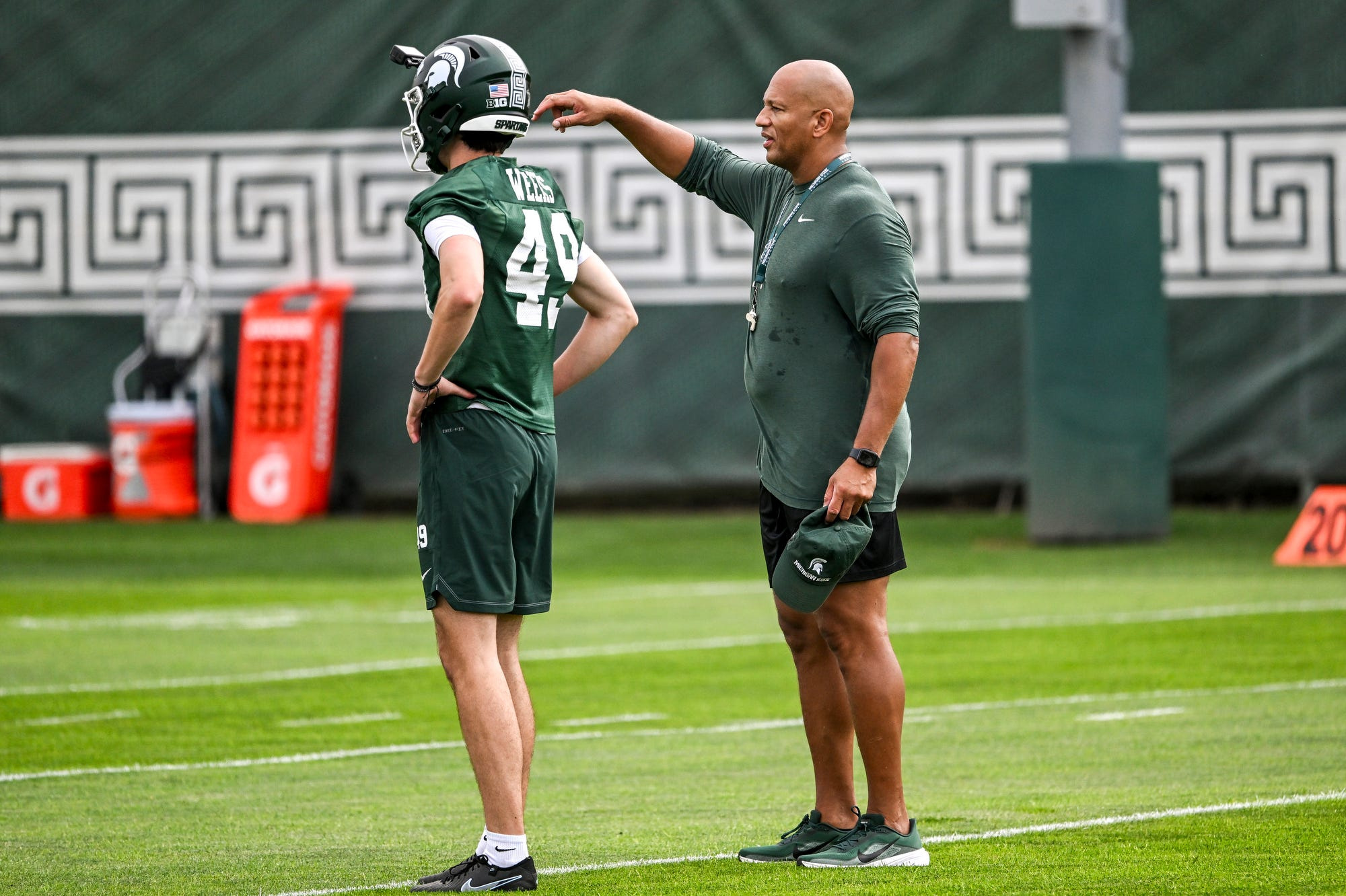
Caption: LeVar Woods coaches punter Alex Weeks. Credit: USA TODAY Network via Reuters Connect
When discussing number changes, though, Woods brought up an interesting point that probably never crossed the mind of most people.
"So here's the impact that nobody thought of, I promise you, the NIL impact, right," Woods said about the new punt rule. "So all those rules that were up: there was targeting, it was punt rules, it was pants too short, right? I called and talked to people on the oversight committee. 'Hey, how come all these things went through except for the pants?' Why do you think they said the pants rule didn't go through? Take a guess: uniform contracts, money and they said the players would revolt."
Woods was once again able to use Hall as an example, this time about how the new punt rule numbers could damage a player's ability to earn NIL money. Woods said he has spoken to Hall directly about this. For instance, if Hall has an NIL deal with a local company in town revolving around his No. 5 jersey, and now he has to constantly put on a new number every time there is a punt, that could potentially take money out of Hall's pocket, or any other player in that situation.
Additionally, Woods said that the constant number swapping can make it difficult for professional scouts to evaluate players, which obviously has the potential to hurt current players' chances of playing at the next level if personnel from professional teams aren't seeing the value the players bring on special teams. Woods also mentioned how much harder the number confusion will make things for public address announcers, such as MSU's Peter Clay. The same can be said for television and radio broadcasters.
"Our players here, I've spoken to them about it," Woods said about potential effects of the new punt rule. "And because to me, once those things happen, you start messing with the players, you start messing with now players are getting paid, right, you start messing with the name, image and likeness that's tied to that uniform and away you go. So a lot of unintended consequences with it, a lot of craziness to be honest with you. A lot of upset people, meaning, I'm talking about special teams coaches because it was nearly unanimous that — I shouldn't say unanimous, but very, very overwhelming majority did not want the rule. A lot of them did not know about the rule. We're going all the way into practice 13, 14, 15 of spring football and coaches had no clue (at the time)."
While the 2026 season is quickly approaching, Woods believes there is still time to revert back to the original rules, and that it would be "really easy" to do so.
"The point I'm trying to get across is this is really just ramrodded through," Woods said about the punt rule. "I still think there's time to reverse this and time to like really think about it and get it right and put a committee together. Let's get the rule right the way we want it rather than the craziness you're about to see on Saturdays in college football coming up."
For a full explainer of the new scrimmage kick formation rule from retiring NCAA secretary-rules editor and national coordinator of officials Steve Shaw, watch the video below:
Woods discusses the MSU coaching staff and the personnel in the specialist room
Woods is grateful for the opportunity that Fitzgerald has given him given him to not only lead the Spartans' special team units, but to learn how to be a head coach in his role as Michigan State's assistant head coach.
Fitzgerald believes Woods will be a head coach someday and he wants to help get him there. While Fitzgerald does things a little bit differently than he is used to, Woods sees Fitzgerald as the same caliber of coach as the greats that he played under and/or learned to coach under.
"I've only ever been around like Hall of Fame, championship-level coaches — starting in high school in college," Woods said. "My assistant coach (when I was a player) Norm Parker was the coordinator here (at MSU previously) and then Hayden Fry and then Kirk Ferentz and going the National Football League, right? Whether you're talking about assistants or head coaches, that's what I've been around, so that's what I'm used to, and I get that with Fitz. The guy knows how to win, the guy knows how to coach. He's got great energy, completely different energy than what I've been around before — and a different way to skin a cat if you will. So I'm learning from him every day, and just trying to continue to learn and continue to try to keep up."
Woods also praised his assistant special teams coordinator Josh Robinson and Michigan State's coaches and staff members as a whole.
As for the personnel at Woods' disposal, he called his room of specialists — kickers, punters and long snappers — "incredibly talented and young." He mentioned there is a lot of competition between the older veterans in the room and the young players. Woods said the room is "tight" and gets along well.
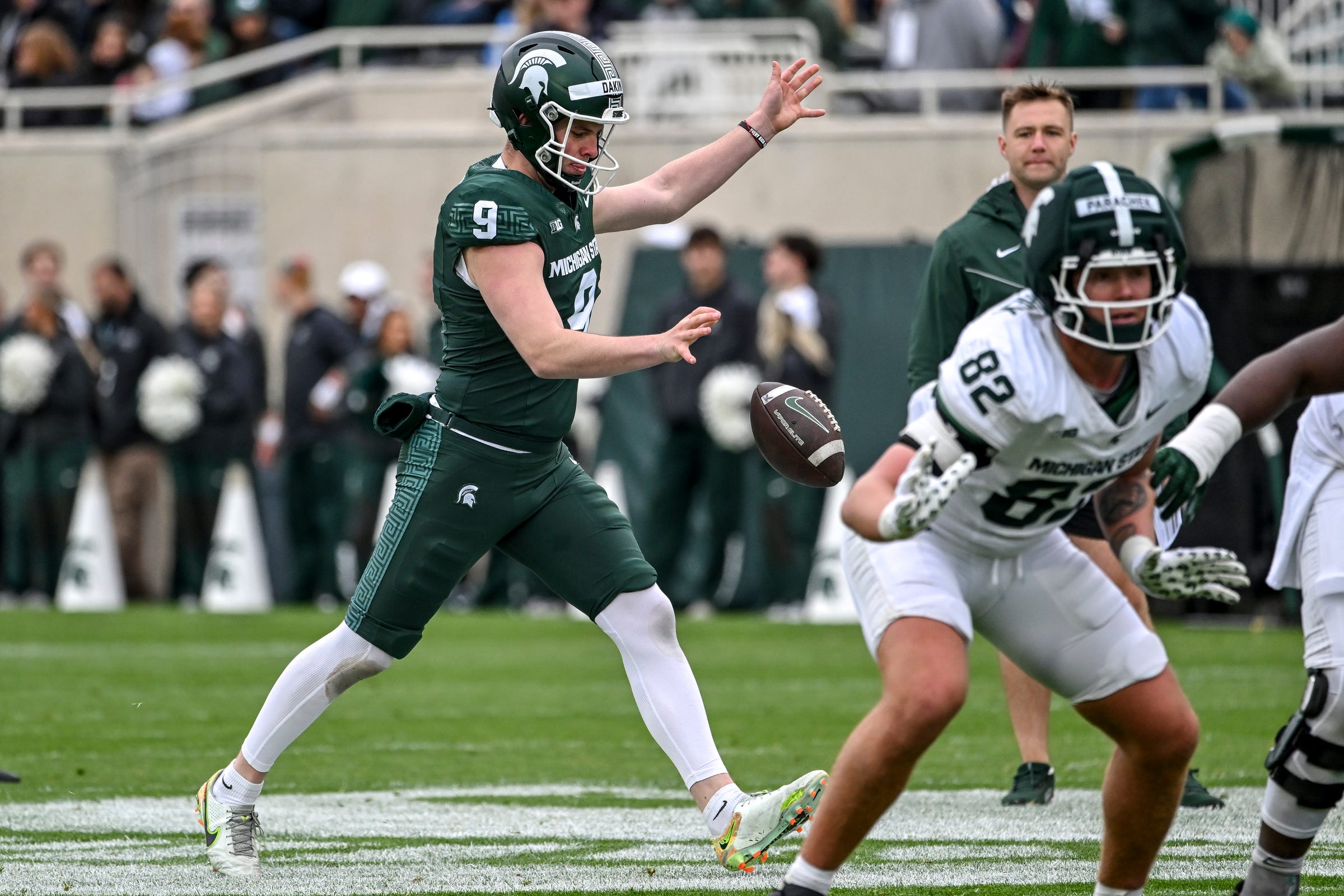
Caption: Rhys Dakin punts during the Spring Showcase on April 18, 2026. Credit: USA TODAY Network via Reuters Connect
Woods mentioned he feels good about punter Rhys Dakin — who followed Woods to East Lansing after transferring to Michigan State from Iowa. Woods also called kicker Liam Boyd (a transfer from Charlotte who also spent time at North Carolina and Clemson) a "veteran guy" who he believes is "in a position to really take a step forward" in 2026. Woods also mentioned long snappers Nick Duzansky and Alex Weeks. He noted that Duzansky is a veteran transfer from Oregon who is still looking for his first real opportunity to start, while Weeks is a young redshirt freshman and Northern Arizona transfer who Woods expects to "be really good one day."
Additionally, Woods said that true freshman kicker Stephen Gonzales and true freshman long snapper Trey Serauskis also have promising futures and turned down scholarship offers at other schools to join the Spartans.
As for players who are competing for spots in the return game, Woods mentioned running back and special teams ace Kenneth Williams (a Detroit native), wide receiver Chrishon McCray and wide receiver Braylon Collier as the top-three return men as of now. However, he noted it is an open competition with the possibility of others emerging and that it is still early in fall camp.
