

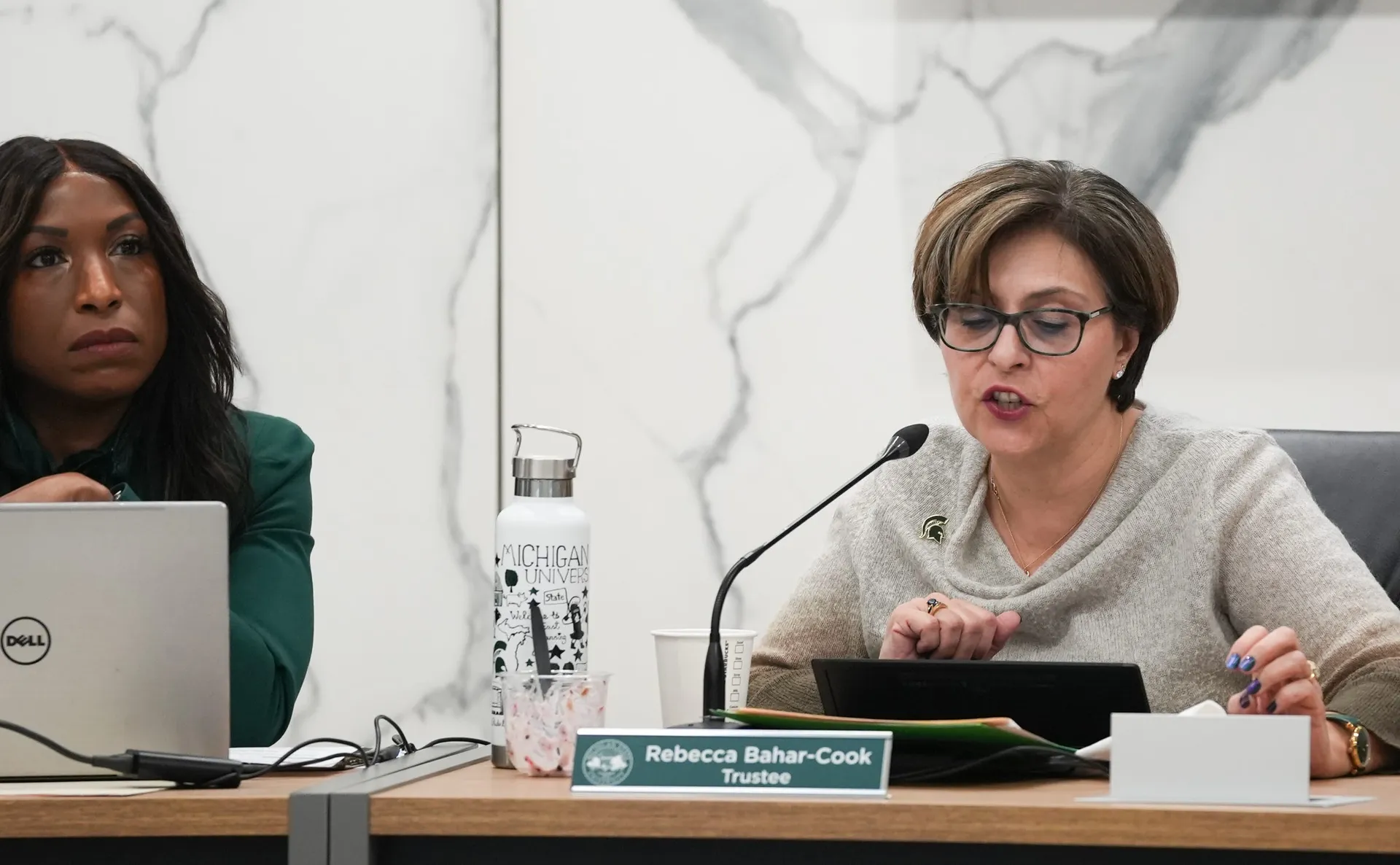
(OPINION) MSU Board of Trustees: The manifestations of a low-trust boardroom
MSU's Board of Trustees has been in the news lately - because of athletics and in general; Jeshua Lauka examines why:
Editor's Note: This is a guest column by Jeshua Lauka, an attorney and Founding Partner at LightStone Law where he serves as outside general counsel to private companies and non-profit corporations. With over 17 years in corporate law and governance, he advises boards on leadership, fiduciary responsibilities, and board dynamics. You can follow him @JeshuaTLauka (X) and Jeshua Lauka (LinkedIn).
There are multiple lines that stuck out to me as I listened to the recording of the MSU Board of Trustees special meeting from Sunday, May 17 at 8:00 p.m.
Two such lines:
“At our most recent April work session, we were given feedback on our governance [by national governance experts], which was quite frankly amounting to a failing grade…” - Board Chair Brianna Scott
“It is very disappointing to me that this abomination of a university policy is being put on the agenda on a Sunday night at 8 o’clock.” - Trustee Mike Balow
These remarks illustrate an overarching problem facing the MSU Board of Trustees: an inherent lack of trust.
Stephen M.R. Covey identifies character and competency as foundational ingredients of trust. The remarks made during Sunday’s meeting reflected a serious trust deficit within the MSU boardroom.
Governance Principles
Last Sunday’s special board meeting took up two main issues: amendments to the Board of Trustees Code of Ethics and Conduct and an increase in the MSU president’s compensation. Much has already been said about the substance of those agenda items. I am commenting purely from a governance perspective.
A governing body - whether a public body, nonprofit corporation, private company, or public company - operates under common guiding principles.
Who is in Charge?
The board is the originator of all authority in an organization. The board is the linkage between the “shareholders” or “stakeholders” of an organization and its management. Most private companies have little distinction between ownership and management, so governance is primarily concerned with organizations where there is a separation between the owners and the operators - as is the case with Michigan State University.
Simply put, the buck stops with the board.
Because authority ultimately resides with the board, no one is “the boss” of the board. The president has only the authority delegated by the board. Boards can lose sight of this distinction.
Weak boards can tend to rubber stamp every action item presented by the president or management team.
Conversely, overbearing boards can get caught up in operational details and lose focus on their responsibility to look toward the future. In those situations, trustees can begin functioning as “super managers” rather than governors.
Strong boards have a healthy appreciation of their authority while also understanding the boundaries of governance. They neither abdicate their authority nor overstep into areas delegated to the president. A strong board does not bend on essentials and does not meddle where authority has already been delegated. A strong president, in turn, is empowered to execute the institution’s mission while remaining accountable to the board’s clearly established expectations.
For a public university like MSU, a strong board of trustees is critical. Strong boards should want strong presidents, and strong presidents should want strong boards.
Who Speaks on Behalf of the Board?
Subscribe to Spartans Illustrated to continue reading...