Reset your password
Enter the phone number associated with your account and we will send you a confirmation code to reset your password
New to Lockerverse?
Create an accountLOCKERVERSE
LOCKERVERSE
Enter the phone number associated with your account and we will send you a confirmation code to reset your password
New to Lockerverse?
Create an accountLOCKERVERSE
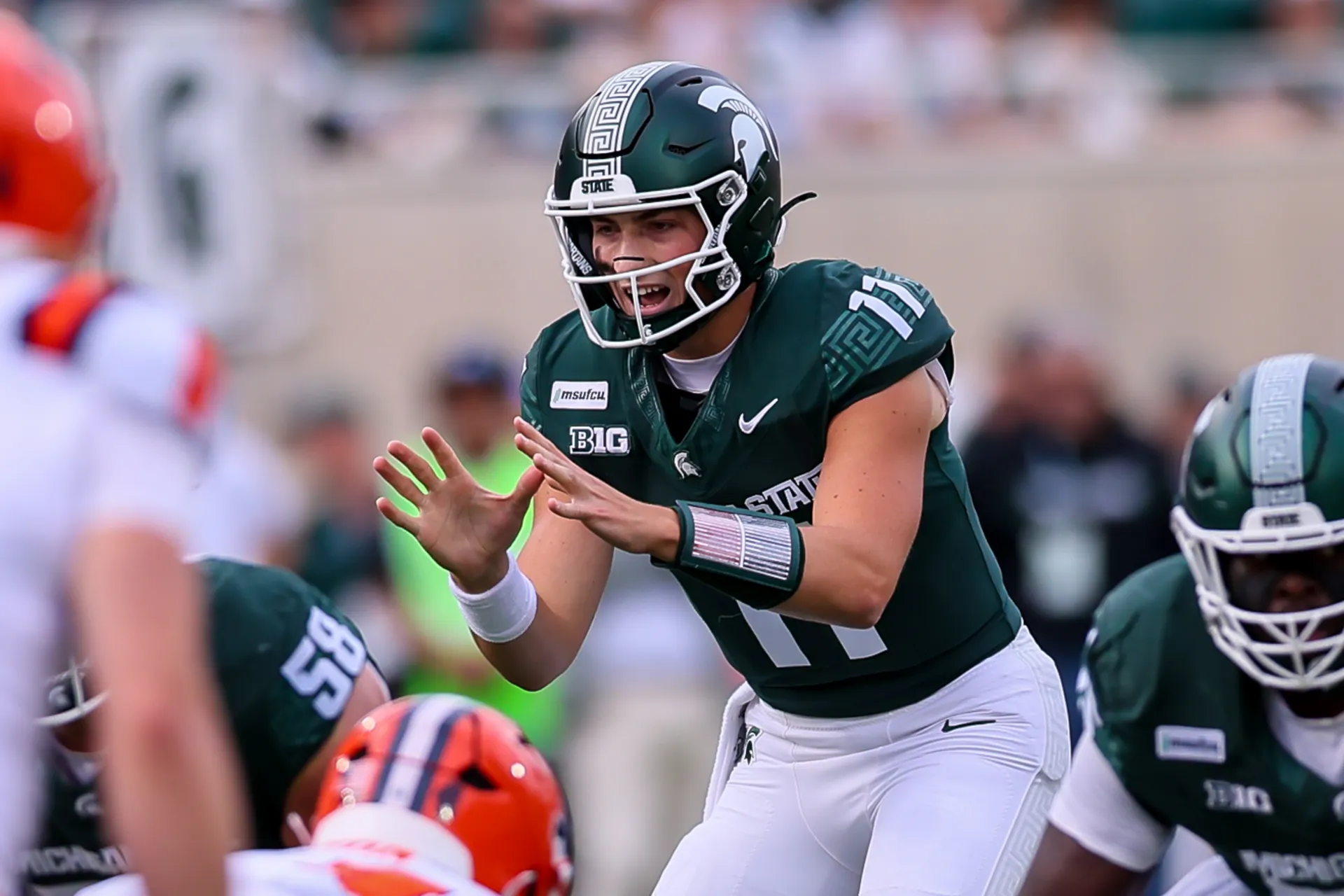
Alessio Milivojevic shows promise in loss versus Illinois, but fact remains: Spartans aren't good enough.
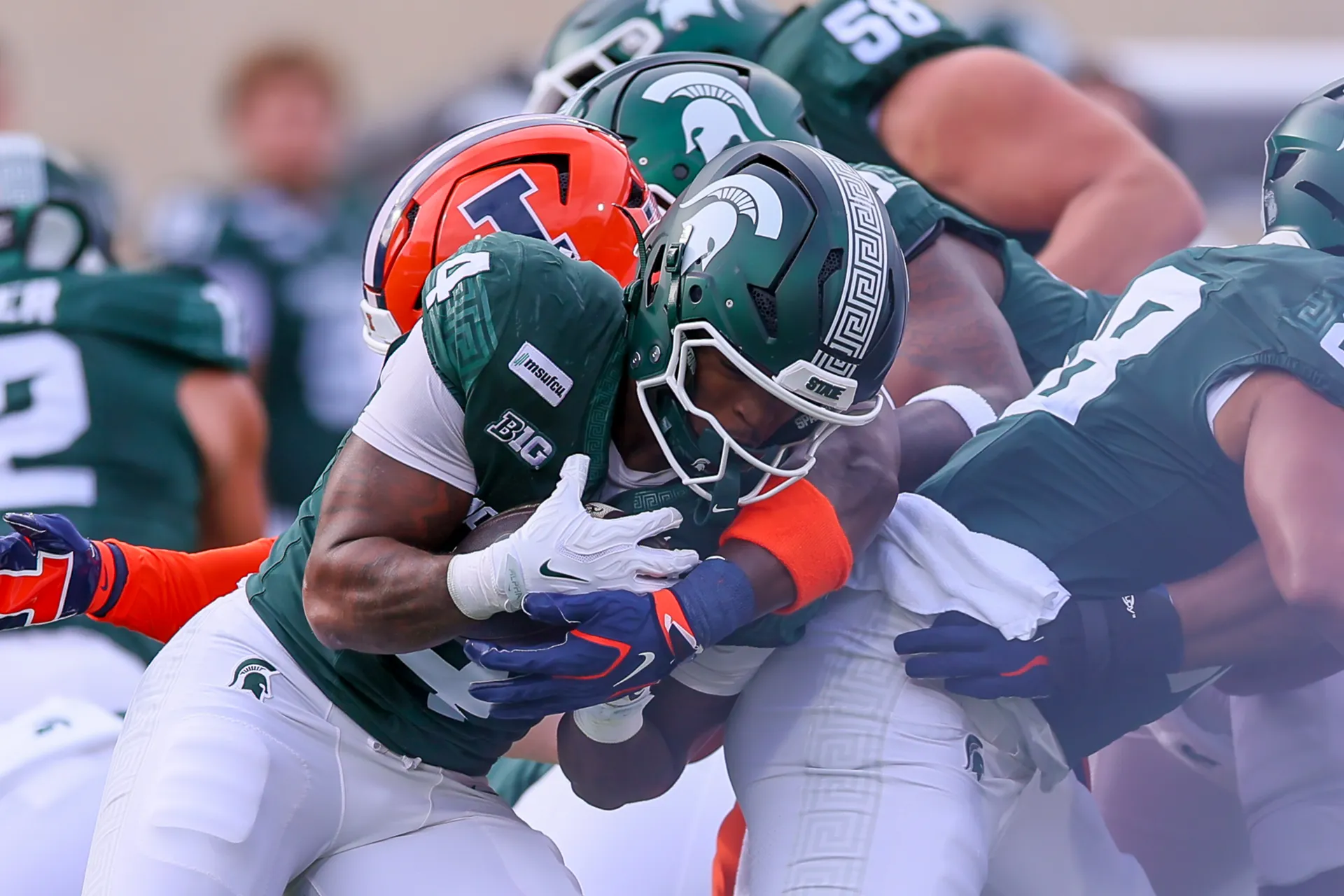
Michigan State dropped its fourth straight game Saturday in a hard-fought homecoming battle against Illinois. The Spartans rallied late to force overtime but ultimately fell 38-37. MSU drops to 2-4 on the season and 0-3 in big Ten play with the loss. The 50th all-time meeting between the two programs ended in heartbreak for the Spartans at Spartan Stadium, as their two-point conversion attempt in overtime came up short. The series began in 1955, and MSU still leads it 27-21-2, but Illinois has now won two straight, including a 38-16 win in Champaign in 2024. Illinois scored first in overtime on Michael Clayton II’s 25-yard touchdown pass to Hudson Clement, and after Jaziun Patterson answered with a 1-yard touchdown run, the Spartans went for the win, but the two-point try failed.Alessio Milivojevic finished 22 of 26 passing for 196 yards and two touchdowns with no interceptions. Carson Gulker also saw action and completed his lone attempt for 19 yards, and added 7 yards on two rushes. Patterson was the story of the day, rushing for 92 yards and three touchdowns on 18 carries, including a long of 36, and adding three catches for 26 yards and another score.Jayden Savoury led the receiving corps with 49 yards on six catches from seven targets. Fredrick Moore made the most of his two catches, totaling 42 yards and a 24-yard touchdown in the fourth quarter. On the defensive side, Cam Stodghill led the team with 11 total tackles, including five solo. Nikai Martinez added nine tackles and a forced fumble, and Devin Vaught had five solo tackles and an interception that he returned 37 yards to set up a touchdown. As a team, MSU totaled 342 yards to Illinois’ 409 and converted 6 of 10 third downs, but committed nine penalties for 68 yards.For the Illini, former Spartan Katin Houser finished 20 of 29 passing for 194 yards with one touchdown and one interception, and also ran for a touchdown, before Clayton replaced him late in the third quarter. Clayton went 6 of 8 for 88 yards and two touchdowns, including the game winner. Clement led Illinois with 105 receiving yards on six catches, Collin Dixon added seven catches for 62 yards and a touchdown, and Aidan Laughery rushed for 70 yards on 17 carries and caught a touchdown pass. James Kreutz led the Illinois defense with 15 tackles, including a sack, and Ethan Moczulski made all three of his field goal attempts.First HalfMSU trailed Illinois 10-0 after a rough first quarter in which the Spartans managed just 8 yards of total offense on two possessions. After MSU won the toss and deferred, Houser hit Clement for 39 yards on the opening drive to reach the Spartans’ 24, but the defense stiffened, Kenny Soares Jr. hurried Houser into a third-down incompletion, and the Illini settled for Moczulski’s 40-yard field goal.The Spartans’ first series went nowhere when Kreutz sacked Milivojevic for a 5-yard loss, more trouble for an offensive line that has struggled in recent weeks, made worse by Connor Moore’s early-season injury, though Rhys Dakin flipped the field with a 74-yard punt for a touchback. Illinois followed with an 80-yard scoring drive that started with a 13-yard pass interference penalty on cornerback Tre Bell, who was back on the field after his status was in doubt before last week’s game at Wisconsin. The drive kept going when Houser found Laughery on fourth-and-2 at the MSU 36, and it reached the 8 on a 27-yard strike to Brayden Trimble. Laughery then caught a 5-yard touchdown pass with 3:21 left in the quarter.Kenneth Williams gave the Spartans decent field position with a 21-yard kickoff return, and Milivojevic connected with Rodney Bullard Jr. for 9 yards, but Patterson was dropped for a 2-yard loss on third-and-1, and an illegal formation penalty on the ensuing punt handed Illinois 5 extra yards. The Illini closed the quarter at their own 31 after a pair of completions to Dixon, including an 8-yard gain on third-and-5.The Spartans found their offense in the second quarter but still went to the locker room trailing 20-7 at halftime. Illinois carried its drive from the end of the first quarter into the second, with Javari Barnett running for 15 and 7 yards, Laughery converting a third-and-5 with an 11-yard run, and Houser keeping it on third-and-1 at the MSU 4 before scoring on a 2-yard run with 8:57 left, capping an 82-yard drive.MSU answered with its best possession of the half, a 75-yard march that Patterson powered by running, catching, and taking a direct snap to convert a third-and-2 at the Illinois 9. Milivojevic kept the chains moving with completions of 16 yards to Savoury, 15 yards to Bullard, and 13 yards to Patterson, then found Patterson for a 6-yard touchdown with 3:29 left, and Liam Boyd’s extra point made it 17-7.Illinois drove into MSU territory before halftime, and Martinez forced a Laughery fumble at the Spartans’ 25, but Illinois’ Jake Renfro recovered it. MSU used all three of its timeouts to save time, and Anelu Lafaele and Dion Crawford hurried Houser into a third-down incompletion at the 17, holding the Illini to Moczulski’s 35-yard field goal as the half ended. The Spartans had 83 yards of total offense at the break, 75 of them on the touchdown drive.Illinois dominated the first half statistically, outgaining the Spartans 261-83, running 42 plays to MSU’s 17, and holding the ball for 20:52 to MSU’s 9:08. Houser completed 18 of 23 passes for 178 yards as the Illini piled up 17 first downs to the Spartans’ 5 and converted 4 of 7 third downs, while MSU went 1 of 3. The lone bright spots for the Spartans were Dakin’s 64.5-yard punting average and an efficient 75-yard touchdown drive in the second quarter, but MSU also committed the half’s only two penalties, which cost 18 yards.Second HalfThe Spartans cut Illinois’ lead to 23-17 in the third quarter, scoring 10 points even though they lost a fumble on their first possession. Milivojevic opened the half with completions of 14 yards to Chrishon McCray and 12 yards to Bullard on third-and-5. A holding penalty on Ben Murawski then wiped out a Patterson catch, and on the next play Juice Clarke forced a fumble by Brennan Parachek that Daniel Brown recovered for Illinois at midfield.The MSU defense held from there: Jeremiah Favorite broke up a third-and-3 pass at the 20, and the Illini settled for Moczulski’s 38-yard field goal with 8:48 left. The Spartans answered with a 64-yard drive keyed by Patterson’s 36-yard run and Marvis Parrish’s 6-yard catch on third-and-5. A 13-yard completion to Moore on fourth-and-2 at the Illinois 19 was wiped out by an illegal formation penalty on Moore, and Boyd made a 42-yard field goal instead to make it 23-10 with 2:52 left.Braylon Collier forced a fumble on the kickoff return, but Illinois returner Mac Resetich fell on it. Three plays later, Mikeshun Beeler pressured Houser, and Vaught intercepted Houser’s pass at the Illinois 48 and returned it 37 yards to the 11.Patterson ran 11 yards up the middle for a touchdown on the next play, a call that stood after review, with 1:30 left.Illinois turned to backup quarterback Clayton on its final series as Houser headed for the locker room with an injury, and he hit Dixon for 14 yards to the Illinois 39 as the quarter ended.The Spartans erased a 14-point deficit in the fourth quarter to tie the game 31-31 and force overtime, even though a disputed penalty cost them a recovered onside kick. Illinois went up 31-17 when Clayton hit Dixon for a 14-yard touchdown with 13:14 left. A face mask penalty on Favorite kept that drive going, and a pass interference call on Martinez gave the Illini a second chance at the two-point conversion, which Laughery converted. MSU answered with a 72-yard drive that survived a false start on fourth down. Milivojevic converted fourth-and-7 with an 18-yard pass to Moore, then found Moore for a 24-yard touchdown with 7:47 left.Boyd’s onside kick was recovered by Samson Gash, but officials flagged Gash for offsides. Replays showed Gash was clearly onside, but offsides is not reviewable, so the penalty stood. Officials did review whether Gash was inbounds on the recovery and initially ruled he was out of bounds, which would have given the Illini excellent field position, but they reversed that ruling after a better camera angle showed he was inbounds. Because of the penalty, MSU had to kick again and opted to kick deep.The defense made up for it after Illinois ran nearly four minutes off the clock, as DiMari Malone and Ben Roberts stopped Clayton for no gain on fourth-and-1 at the Illinois 33 with 3:27 left. A 27-yard touchdown pass from Gulker to Bryson Williams was called back for an illegal block in the back on Moore. Later in the drive, Bullard fumbled at the end of an 11-yard run, but Savoury recovered at the 2, and Patterson scored on a direct snap with 1:17 left.Illinois went three-and-out, and Patterson was sacked on the final play of regulation, sending the game to overtime.OvertimeIllinois scored on the first play of overtime, Clayton’s 25-yard touchdown pass to Clement, and Moczulski’s extra point gave the Illini a 38-31 lead. MSU answered in five plays, with Patterson, who lined up at quarterback for the final two plays of the drive, scoring on a 1-yard keeper up the middle. MSU coach Pat Fitzgerald chose to go for two and the win, but the play broke down, and Milivojevic was forced to throw to Savoury, who was tackled quickly to seal the Illinois win.Michigan State returns to the field against Northwestern. Kickoff is set for noon, and the game will stream exclusively on Peacock.
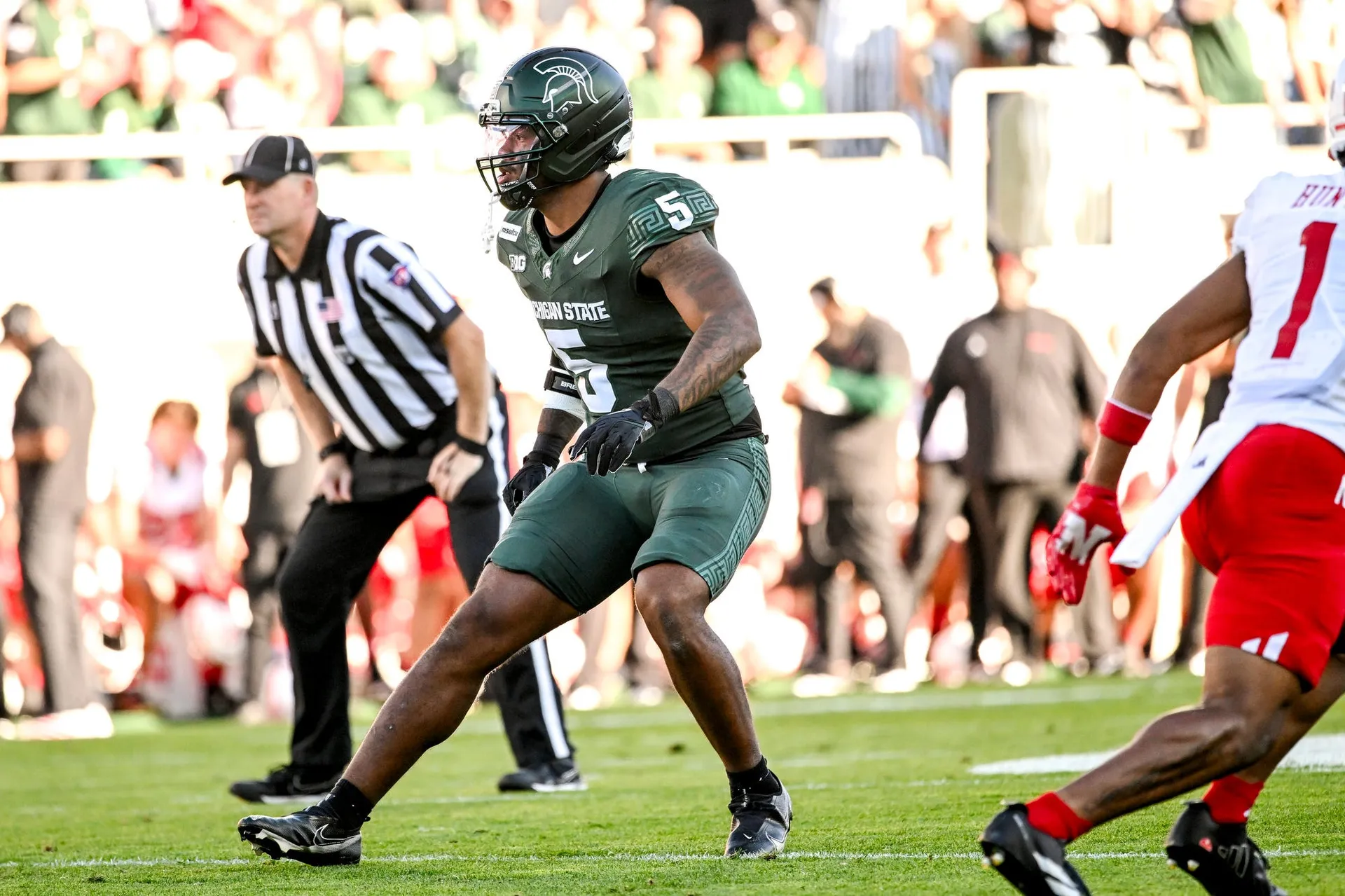
Michigan State will host Illinois for its homecoming game on Saturday at 3:30 p.m. Eastern Time. The game will air on FS1. Both teams enter the matchup with 2-3 overall records and are 0-2 in Big Ten play.On Wednesday, the Big Ten released its initial availability report for this weekend's contest between the Fighting Illini and Spartans. The report will be updated on Thursday night, Friday night and two hours before kickoff on Saturday.Here is where things stand on the injury front for both squads. Editor's note: This article was originally published on Oct. 7 and will be updated throughout the week.Wednesday Report:Michigan State has already ruled eight players out for Week 6 against Illinois. Additionally, three Spartans are listed as questionable for Saturday's game. Meanwhile, one athlete is designated as doubtful, which is redshirt freshman running back Darrin Jones Jr., who joined the program as a walk-on in 2025. The cornerback position has been particularly hit hard with injuries for MSU, as Nijhay Burt, Tyran Chappell and Keshawn Williams are all out. In addition, starting cornerback Tre Bell is listed as questionable. Bell managed to play 42 defensive snaps in a 31-3 loss to Wisconsin in Week 5 after missing a 31-13 defeat to Nebraska in Week 4. It is no surprise to see running back Cam Edwards listed as out against Illinois. He started the first four games of 2026 for Michigan State, but will miss the remainder of the season after suffering an apparent right knee injury against the Cornhuskers.Other players listed as out for the Spartans on Saturday include tight end/fullback Jay Coyne, linebacker Caleb Wheatland, offensive lineman Tristan Comer and tight end Joey Caudill. Wheatland was injured against the Badgers in Week 5. With Wheatland already being ruled out, the linebacker spot is one to watch. Starting linebacker and team captain Jordan Hall was injured against Nebraska Week 4 and was forced to miss the road contest at Wisconsin last week. After being listed as doubtful last week prior to the Wisconsin game before ultimately being ruled inactive, Hall — whose presence is off the utmost importance for MSU — is trending in a better direction with a questionable tag ahead of the contest with Illinois.The Spartans have dealt with various injuries in the linebacker room this season. Outside of Wheatland and Hall, Brady Pretzlaff missed the Week 4 game against Nebraska before returning for the Week 5 matchup with Wisconsin. Fellow linebackers Dion Crawford and Cam Stodghill have also been banged up at times this year. One other notable listing on the Wednesday availability report is quarterback Cam Fancher. He exited the game against the Badgers last weekend with an undisclosed injury. Fancher has played offensive snaps in every game this season — 36 total snaps — and enters games behind starter Alessio Milivojevic. Offensive coordinator Nick Sheridan has used Fancher to provide a running threat at the quarterback position for the Spartans and to give defenses a different look.Meanwhile, Illinois has 11 total players listed on its initial availability report for Week 6. The Fighting Illini have six players who are already ruled out: running back Ca'Lil Valentine, wide receiver Alex Perry, linebacker Jack Paris, defensive lineman Carter Smith, offensive TJ McMillen and tight end BJ Thurman. Valentine suffered a season-ending injury in a 24-17 Purdue in Week 5. He led the Fighting Illini in rushing attempts with 50, and was second on the team in rushing yards with 225, while scoring one rushing touchdown.Offensive lineman Champ Smith is deemed questionable in the initial report.Illinois has also designated three players as doubtful: defensive back Tywan Cox, offensive lineman Kai Pritchard and offensive lineman Dezmond Schuster. Cox has played in all five games for the Illini, and drew the start at cornerback against Purdue last week. Pritchard is a true freshman who has played in every game for Illinois this season, primarily on special teams. Schuster has appeared in three games on special teams.Wide receiver Jayshon Platt is listed as probable for Saturday's game with Michigan State. He has not appeared in a game in 2026.Thursday Report (Oct. 8 update):-No changes for Michigan State.-Illinois defensive back Tywan Cox and offensive lineman Dezmond Schuster went from doubtful to probable. -Illinois offensive lineman Champ Smith went from questionable to probable.Game Day Report (Oct. 10 update):-MSU linebacker Jordan Hall and cornerback Tre Bell will be available this afternoon against Illinois.-MSU quarterback Cam Fancher and running back Darrin Jones Jr. will not be available to play.-Michigan State will have 10 players out in total. -Illinois offensive lineman Kai Pritchard will not be available to play. The Fighting Illini have seven players out in total. -Illinois will have three game-time decisions to make in wide receiver Jayshon Platt, defensive back Tywan Cox and offensive lineman Champ Smith.
Alessio Milivojevic shows promise in loss versus Illinois, but fact remains: Spartans aren't good enough.
Michigan State dropped its fourth straight game Saturday in a hard-fought homecoming battle against Illinois. The Spartans rallied late to force overtime but ultimately fell 38-37. MSU drops to 2-4 on the season and 0-3 in big Ten play with the loss. The 50th all-time meeting between the two programs ended in heartbreak for the Spartans at Spartan Stadium, as their two-point conversion attempt in overtime came up short. The series began in 1955, and MSU still leads it 27-21-2, but Illinois has now won two straight, including a 38-16 win in Champaign in 2024. Illinois scored first in overtime on Michael Clayton II’s 25-yard touchdown pass to Hudson Clement, and after Jaziun Patterson answered with a 1-yard touchdown run, the Spartans went for the win, but the two-point try failed.Alessio Milivojevic finished 22 of 26 passing for 196 yards and two touchdowns with no interceptions. Carson Gulker also saw action and completed his lone attempt for 19 yards, and added 7 yards on two rushes. Patterson was the story of the day, rushing for 92 yards and three touchdowns on 18 carries, including a long of 36, and adding three catches for 26 yards and another score.Jayden Savoury led the receiving corps with 49 yards on six catches from seven targets. Fredrick Moore made the most of his two catches, totaling 42 yards and a 24-yard touchdown in the fourth quarter. On the defensive side, Cam Stodghill led the team with 11 total tackles, including five solo. Nikai Martinez added nine tackles and a forced fumble, and Devin Vaught had five solo tackles and an interception that he returned 37 yards to set up a touchdown. As a team, MSU totaled 342 yards to Illinois’ 409 and converted 6 of 10 third downs, but committed nine penalties for 68 yards.For the Illini, former Spartan Katin Houser finished 20 of 29 passing for 194 yards with one touchdown and one interception, and also ran for a touchdown, before Clayton replaced him late in the third quarter. Clayton went 6 of 8 for 88 yards and two touchdowns, including the game winner. Clement led Illinois with 105 receiving yards on six catches, Collin Dixon added seven catches for 62 yards and a touchdown, and Aidan Laughery rushed for 70 yards on 17 carries and caught a touchdown pass. James Kreutz led the Illinois defense with 15 tackles, including a sack, and Ethan Moczulski made all three of his field goal attempts.First HalfMSU trailed Illinois 10-0 after a rough first quarter in which the Spartans managed just 8 yards of total offense on two possessions. After MSU won the toss and deferred, Houser hit Clement for 39 yards on the opening drive to reach the Spartans’ 24, but the defense stiffened, Kenny Soares Jr. hurried Houser into a third-down incompletion, and the Illini settled for Moczulski’s 40-yard field goal.The Spartans’ first series went nowhere when Kreutz sacked Milivojevic for a 5-yard loss, more trouble for an offensive line that has struggled in recent weeks, made worse by Connor Moore’s early-season injury, though Rhys Dakin flipped the field with a 74-yard punt for a touchback. Illinois followed with an 80-yard scoring drive that started with a 13-yard pass interference penalty on cornerback Tre Bell, who was back on the field after his status was in doubt before last week’s game at Wisconsin. The drive kept going when Houser found Laughery on fourth-and-2 at the MSU 36, and it reached the 8 on a 27-yard strike to Brayden Trimble. Laughery then caught a 5-yard touchdown pass with 3:21 left in the quarter.Kenneth Williams gave the Spartans decent field position with a 21-yard kickoff return, and Milivojevic connected with Rodney Bullard Jr. for 9 yards, but Patterson was dropped for a 2-yard loss on third-and-1, and an illegal formation penalty on the ensuing punt handed Illinois 5 extra yards. The Illini closed the quarter at their own 31 after a pair of completions to Dixon, including an 8-yard gain on third-and-5.The Spartans found their offense in the second quarter but still went to the locker room trailing 20-7 at halftime. Illinois carried its drive from the end of the first quarter into the second, with Javari Barnett running for 15 and 7 yards, Laughery converting a third-and-5 with an 11-yard run, and Houser keeping it on third-and-1 at the MSU 4 before scoring on a 2-yard run with 8:57 left, capping an 82-yard drive.MSU answered with its best possession of the half, a 75-yard march that Patterson powered by running, catching, and taking a direct snap to convert a third-and-2 at the Illinois 9. Milivojevic kept the chains moving with completions of 16 yards to Savoury, 15 yards to Bullard, and 13 yards to Patterson, then found Patterson for a 6-yard touchdown with 3:29 left, and Liam Boyd’s extra point made it 17-7.Illinois drove into MSU territory before halftime, and Martinez forced a Laughery fumble at the Spartans’ 25, but Illinois’ Jake Renfro recovered it. MSU used all three of its timeouts to save time, and Anelu Lafaele and Dion Crawford hurried Houser into a third-down incompletion at the 17, holding the Illini to Moczulski’s 35-yard field goal as the half ended. The Spartans had 83 yards of total offense at the break, 75 of them on the touchdown drive.Illinois dominated the first half statistically, outgaining the Spartans 261-83, running 42 plays to MSU’s 17, and holding the ball for 20:52 to MSU’s 9:08. Houser completed 18 of 23 passes for 178 yards as the Illini piled up 17 first downs to the Spartans’ 5 and converted 4 of 7 third downs, while MSU went 1 of 3. The lone bright spots for the Spartans were Dakin’s 64.5-yard punting average and an efficient 75-yard touchdown drive in the second quarter, but MSU also committed the half’s only two penalties, which cost 18 yards.Second HalfThe Spartans cut Illinois’ lead to 23-17 in the third quarter, scoring 10 points even though they lost a fumble on their first possession. Milivojevic opened the half with completions of 14 yards to Chrishon McCray and 12 yards to Bullard on third-and-5. A holding penalty on Ben Murawski then wiped out a Patterson catch, and on the next play Juice Clarke forced a fumble by Brennan Parachek that Daniel Brown recovered for Illinois at midfield.The MSU defense held from there: Jeremiah Favorite broke up a third-and-3 pass at the 20, and the Illini settled for Moczulski’s 38-yard field goal with 8:48 left. The Spartans answered with a 64-yard drive keyed by Patterson’s 36-yard run and Marvis Parrish’s 6-yard catch on third-and-5. A 13-yard completion to Moore on fourth-and-2 at the Illinois 19 was wiped out by an illegal formation penalty on Moore, and Boyd made a 42-yard field goal instead to make it 23-10 with 2:52 left.Braylon Collier forced a fumble on the kickoff return, but Illinois returner Mac Resetich fell on it. Three plays later, Mikeshun Beeler pressured Houser, and Vaught intercepted Houser’s pass at the Illinois 48 and returned it 37 yards to the 11.Patterson ran 11 yards up the middle for a touchdown on the next play, a call that stood after review, with 1:30 left.Illinois turned to backup quarterback Clayton on its final series as Houser headed for the locker room with an injury, and he hit Dixon for 14 yards to the Illinois 39 as the quarter ended.The Spartans erased a 14-point deficit in the fourth quarter to tie the game 31-31 and force overtime, even though a disputed penalty cost them a recovered onside kick. Illinois went up 31-17 when Clayton hit Dixon for a 14-yard touchdown with 13:14 left. A face mask penalty on Favorite kept that drive going, and a pass interference call on Martinez gave the Illini a second chance at the two-point conversion, which Laughery converted. MSU answered with a 72-yard drive that survived a false start on fourth down. Milivojevic converted fourth-and-7 with an 18-yard pass to Moore, then found Moore for a 24-yard touchdown with 7:47 left.Boyd’s onside kick was recovered by Samson Gash, but officials flagged Gash for offsides. Replays showed Gash was clearly onside, but offsides is not reviewable, so the penalty stood. Officials did review whether Gash was inbounds on the recovery and initially ruled he was out of bounds, which would have given the Illini excellent field position, but they reversed that ruling after a better camera angle showed he was inbounds. Because of the penalty, MSU had to kick again and opted to kick deep.The defense made up for it after Illinois ran nearly four minutes off the clock, as DiMari Malone and Ben Roberts stopped Clayton for no gain on fourth-and-1 at the Illinois 33 with 3:27 left. A 27-yard touchdown pass from Gulker to Bryson Williams was called back for an illegal block in the back on Moore. Later in the drive, Bullard fumbled at the end of an 11-yard run, but Savoury recovered at the 2, and Patterson scored on a direct snap with 1:17 left.Illinois went three-and-out, and Patterson was sacked on the final play of regulation, sending the game to overtime.OvertimeIllinois scored on the first play of overtime, Clayton’s 25-yard touchdown pass to Clement, and Moczulski’s extra point gave the Illini a 38-31 lead. MSU answered in five plays, with Patterson, who lined up at quarterback for the final two plays of the drive, scoring on a 1-yard keeper up the middle. MSU coach Pat Fitzgerald chose to go for two and the win, but the play broke down, and Milivojevic was forced to throw to Savoury, who was tackled quickly to seal the Illinois win.Michigan State returns to the field against Northwestern. Kickoff is set for noon, and the game will stream exclusively on Peacock.
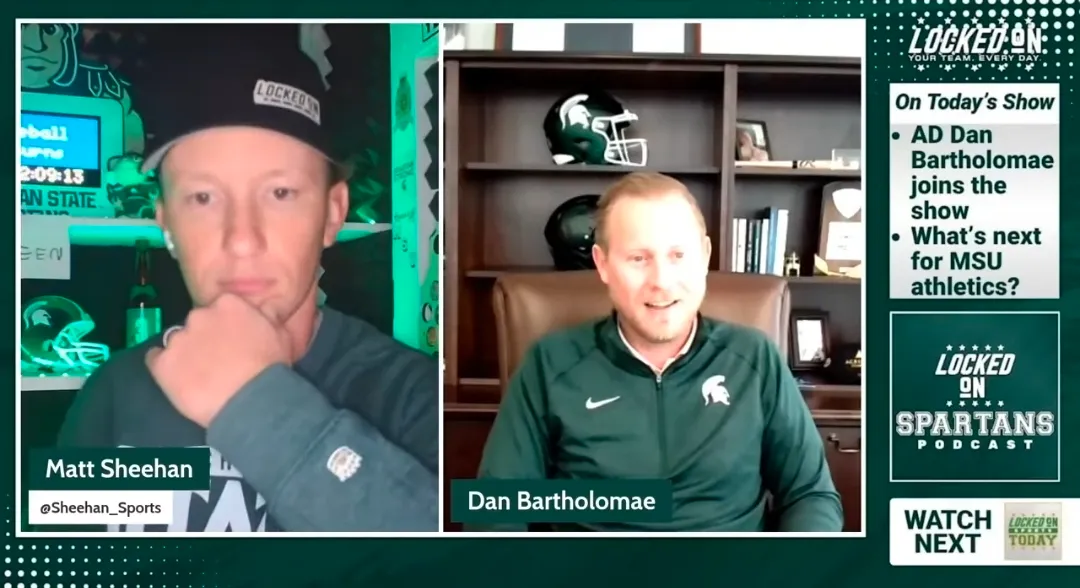
Michigan State athletic director Dan Bartholomae has been on the job for all of five weeks, and he's already making some pretty big promises.Football will be a priority. Michigan State will work toward funding its programs in the top third of the Big Ten. Spartan Ventures will become a legitimate revenue-generating operation. And the athletic department will finally establish something that has been pretty hard to find around East Lansing lately – consistency.Sounds great, right?Well, I had Bartholomae on Locked On Spartans on Friday, just two days after he sent a letter to Spartan Nation outlining his vision. And while I enjoyed the letter, I wanted to know how much of it was a realistic commitment and how much was an ambitious goal.Because we've all heard the big plans before.Let's start with the biggest item: Money.Bartholomae's letter stated that Michigan State needs to resource programs in the upper third of the conference to compete for championships. That's a pretty substantial statement in a league where football spending has become an arms race.So I asked him whether this was something Michigan State was prepared to deliver or something it was simply hoping to achieve."It's probably a little bit in between," Bartholomae said. "Are we close to that now? No."Michigan State isn't where it needs to be financially to compete with the upper tier of the Big Ten, and its new athletic director isn't pretending otherwise.But he believes the mechanisms exist to get there, and he wants it to happen immediately.How? A little bit of everything."It's a potpourri, man. It's a potpourri," Bartholomae said.That means traditional fundraising, donor support, FOR SPARTA, and Spartan Ventures all playing a role in bringing additional resources into the athletic department.And speaking of Spartan Ventures, I asked Bartholomae to explain it to me like I'm five years old. Because, frankly, that's about where a lot of us are with this thing.His answer was refreshingly candid.He's still figuring it out himself.The athletic director and CEO who launched Spartan Ventures are gone, and Bartholomae is working to hire a replacement CEO, something he hopes to complete within the next two weeks.He explained that Spartan Ventures operates as an affiliated entity designed to consolidate Michigan State's revenue-generating operations outside the traditional university business structure.But he was also careful about what it isn't."It's not like the solution to revenue generation in NIL," Bartholomae said. "It is a mechanism that we need to activate."In other words, Spartan Ventures isn't some magical money machine that's going to solve Michigan State's problems overnight. There is infrastructure in place, but the university still needs to figure out how to make it produce meaningful returns.Bartholomae expects to provide a more complete explanation of both Spartan Ventures and FOR SPARTA over the coming months.And I think that's fair, provided those explanations eventually arrive.His biggest challenge might surprise youWhen I asked Bartholomae to identify the biggest item on his to-do list, I expected something about fundraising, football, or Spartan Stadium.Instead, he talked about trust.He said he's already encountered a recurring response in conversations with donors, coaches, student-athletes, and staff members.They like what he's saying. They appreciate his vision.But they're wondering whether he'll still be around to see it through."I like you. You seem great, but I don't know if you're going to be here in a year," Bartholomae said, describing the reaction he's received.And really, can you blame them?Michigan State has experienced four athletic directors and three football coaches over the past five-plus years. People have seen plans introduced, initiatives launched, and leadership changes that send everyone back to square one.Bartholomae understands that skepticism.During his 15 years at Pittsburgh, he worked under nine athletic directors, including interims. He also experienced a stretch when the university had five football coaches in four years.He's seen what instability can do to an athletic department.Now he's trying to establish a plan that survives beyond the next press conference, the next season, or the next leadership change.And he made one thing pretty clear."Matt, I'm going to be here a year from now, and I'm going to be here two years from now," Bartholomae said.Then he added, "I ain't going anywhere."That's quite a statement from somebody who's barely unpacked his office.But it's also exactly what a fan base tired of administrative turnover probably needed to hear.Building a relationship with Pat FitzgeraldOf course, none of this works if Michigan State can't get its football program moving in the right direction.And that means Bartholomae and Pat Fitzgerald need to be working together.The interesting thing is that they're still getting to know each other.Bartholomae started Aug. 31, the Monday of Michigan State's opening game week. That's not exactly an ideal time to take over an entire athletic department.He acknowledged that the timing has kept him from spending as much time around football practice as he'd normally prefer.But he and Fitzgerald have established a routine.Bartholomae checks in with Fitzgerald on Sundays following games, and the two have a standing Thursday meeting. They spend time discussing the program, but they're also learning about each other's families, careers, and approaches to leadership."He's going to be my partner, right, and I'm going to be his partner in getting this program to where everybody wants it to be," Bartholomae said.Yes, fundraising is part of those conversations.But they're not yet sitting around hammering out every detail of next year's roster budget.I joked that it would be a little crass for Fitzgerald to immediately demand $30 million or $40 million for the offseason.Bartholomae laughed off the premise."He doesn't need to tell me that," he said.Fair enough.He knows what he's getting into.Michigan State needs its own 'Jump Around'One of the more interesting portions of our conversation had nothing to do with NIL, fundraising, or conference revenue.It was about having fun at football games.Bartholomae believes Michigan State has an incredible asset in its student section, and he wants to do a better job of engaging those students throughout the game.He's already looking at smaller changes, including student concessions promotions and getting Tom Izzo involved with the student section.But he has something bigger in mind.After attending Michigan State's game at Wisconsin last weekend, Bartholomae came away impressed by the Badgers' famous third-quarter tradition.Even with the early kickoff and students arriving late, the section came alive for "Jump Around."And it got him thinking."What's our Jump Around?" Bartholomae asked.He wasn't necessarily suggesting Michigan State needs another song. His point was that the Spartans need something that gets the entire stadium involved, something students look forward to and fans embrace regardless of what's happening on the field.He's right.Michigan State has plenty of traditions, but finding another one that consistently energizes Spartan Stadium would be a pretty worthwhile accomplishment.Bartholomae also wants to evaluate the Breslin Center experience during basketball season. He praised what Michigan State already offers inside the arena but believes there's room for improvement, particularly with premium seating and the experience fans have from the moment they enter the building.He emphasized that the overall fan experience will be a regular topic in executive staff meetings.And over at Munn Ice Arena, he's excited about what Adam Nightingale has built, particularly the success of the program and the enthusiasm of the Munsters student section.Having come from Western Michigan, where the Broncos won a national hockey championship, Bartholomae knows what an elite hockey program and a passionate student section can accomplish together.Sorry, Central Michigan is probably staying on the scheduleI couldn't let Bartholomae leave without asking about Michigan State's scheduled 2027 football game against Central Michigan.I've made my feelings on this pretty clear. Given the controversy surrounding Central Michigan's involvement in the sign-stealing scandal, I'd rather Michigan State cancel the game.Bartholomae, despite his Western Michigan background, wasn't about to give me the answer I wanted.He explained that Michigan State has a contractual obligation that predates his arrival, and breaking that agreement would carry consequences at a time when the athletic department has plenty of financial priorities."Breaking a contractual agreement at a time where we're trying to get Spartan Ventures going, we're trying to fund football, it is, in my opinion, not the best global decision for the football program," Bartholomae said.Translation: Don't expect that game to disappear.It's the responsible answer.I still don't have to like it.When asked, Bartholomae also expressed interest in possibly expanding Michigan State's brand internationally, including the possibility of football games overseas, although he made it clear he wouldn't be eager to sacrifice a home game to accomplish it.Now comes the hard partHere's where I land after talking with Bartholomae.I like what I'm hearing. I like that he was willing to admit Michigan State isn't currently resourcing football at the level it needs to. I like that he acknowledged he doesn't have Spartan Ventures completely figured out yet. And I especially like that he recognizes the damage leadership turnover has done to the department's credibility.But the next step is what matters.Michigan State needs more money for football. Spartan Ventures needs to generate revenue. Fitzgerald needs the resources to build a competitive roster. And fans need to see a department operating with a consistent vision.None of that happens just because the athletic director writes a compelling letter or gives a good interview.Bartholomae knows it, too.He pointed to his time at Western Michigan, where the school's highest-level giving society grew from one member when he arrived to more than 100 by the time he left. He credited that success to presenting donors with a plan and giving them reasons to believe their investments would produce results.Some donors bought in immediately. Others waited years to see whether the vision would become reality.He expects a similar process at Michigan State.And for an athletic department that has spent far too much time starting over, the most encouraging thing Bartholomae said might have been the simplest.He's planning to stick around.Now let's see what he can build.
Michigan State athletic director Dan Bartholomae has been on the job for all of five weeks, and he's already making some pretty big promises.Football will be a priority. Michigan State will work toward funding its programs in the top third of the Big Ten. Spartan Ventures will become a legitimate revenue-generating operation. And the athletic department will finally establish something that has been pretty hard to find around East Lansing lately – consistency.Sounds great, right?Well, I had Bartholomae on Locked On Spartans on Friday, just two days after he sent a letter to Spartan Nation outlining his vision. And while I enjoyed the letter, I wanted to know how much of it was a realistic commitment and how much was an ambitious goal.Because we've all heard the big plans before.Let's start with the biggest item: Money.Bartholomae's letter stated that Michigan State needs to resource programs in the upper third of the conference to compete for championships. That's a pretty substantial statement in a league where football spending has become an arms race.So I asked him whether this was something Michigan State was prepared to deliver or something it was simply hoping to achieve."It's probably a little bit in between," Bartholomae said. "Are we close to that now? No."Michigan State isn't where it needs to be financially to compete with the upper tier of the Big Ten, and its new athletic director isn't pretending otherwise.But he believes the mechanisms exist to get there, and he wants it to happen immediately.How? A little bit of everything."It's a potpourri, man. It's a potpourri," Bartholomae said.That means traditional fundraising, donor support, FOR SPARTA, and Spartan Ventures all playing a role in bringing additional resources into the athletic department.And speaking of Spartan Ventures, I asked Bartholomae to explain it to me like I'm five years old. Because, frankly, that's about where a lot of us are with this thing.His answer was refreshingly candid.He's still figuring it out himself.The athletic director and CEO who launched Spartan Ventures are gone, and Bartholomae is working to hire a replacement CEO, something he hopes to complete within the next two weeks.He explained that Spartan Ventures operates as an affiliated entity designed to consolidate Michigan State's revenue-generating operations outside the traditional university business structure.But he was also careful about what it isn't."It's not like the solution to revenue generation in NIL," Bartholomae said. "It is a mechanism that we need to activate."In other words, Spartan Ventures isn't some magical money machine that's going to solve Michigan State's problems overnight. There is infrastructure in place, but the university still needs to figure out how to make it produce meaningful returns.Bartholomae expects to provide a more complete explanation of both Spartan Ventures and FOR SPARTA over the coming months.And I think that's fair, provided those explanations eventually arrive.His biggest challenge might surprise youWhen I asked Bartholomae to identify the biggest item on his to-do list, I expected something about fundraising, football, or Spartan Stadium.Instead, he talked about trust.He said he's already encountered a recurring response in conversations with donors, coaches, student-athletes, and staff members.They like what he's saying. They appreciate his vision.But they're wondering whether he'll still be around to see it through."I like you. You seem great, but I don't know if you're going to be here in a year," Bartholomae said, describing the reaction he's received.And really, can you blame them?Michigan State has experienced four athletic directors and three football coaches over the past five-plus years. People have seen plans introduced, initiatives launched, and leadership changes that send everyone back to square one.Bartholomae understands that skepticism.During his 15 years at Pittsburgh, he worked under nine athletic directors, including interims. He also experienced a stretch when the university had five football coaches in four years.He's seen what instability can do to an athletic department.Now he's trying to establish a plan that survives beyond the next press conference, the next season, or the next leadership change.And he made one thing pretty clear."Matt, I'm going to be here a year from now, and I'm going to be here two years from now," Bartholomae said.Then he added, "I ain't going anywhere."That's quite a statement from somebody who's barely unpacked his office.But it's also exactly what a fan base tired of administrative turnover probably needed to hear.Building a relationship with Pat FitzgeraldOf course, none of this works if Michigan State can't get its football program moving in the right direction.And that means Bartholomae and Pat Fitzgerald need to be working together.The interesting thing is that they're still getting to know each other.Bartholomae started Aug. 31, the Monday of Michigan State's opening game week. That's not exactly an ideal time to take over an entire athletic department.He acknowledged that the timing has kept him from spending as much time around football practice as he'd normally prefer.But he and Fitzgerald have established a routine.Bartholomae checks in with Fitzgerald on Sundays following games, and the two have a standing Thursday meeting. They spend time discussing the program, but they're also learning about each other's families, careers, and approaches to leadership."He's going to be my partner, right, and I'm going to be his partner in getting this program to where everybody wants it to be," Bartholomae said.Yes, fundraising is part of those conversations.But they're not yet sitting around hammering out every detail of next year's roster budget.I joked that it would be a little crass for Fitzgerald to immediately demand $30 million or $40 million for the offseason.Bartholomae laughed off the premise."He doesn't need to tell me that," he said.Fair enough.He knows what he's getting into.Michigan State needs its own 'Jump Around'One of the more interesting portions of our conversation had nothing to do with NIL, fundraising, or conference revenue.It was about having fun at football games.Bartholomae believes Michigan State has an incredible asset in its student section, and he wants to do a better job of engaging those students throughout the game.He's already looking at smaller changes, including student concessions promotions and getting Tom Izzo involved with the student section.But he has something bigger in mind.After attending Michigan State's game at Wisconsin last weekend, Bartholomae came away impressed by the Badgers' famous third-quarter tradition.Even with the early kickoff and students arriving late, the section came alive for "Jump Around."And it got him thinking."What's our Jump Around?" Bartholomae asked.He wasn't necessarily suggesting Michigan State needs another song. His point was that the Spartans need something that gets the entire stadium involved, something students look forward to and fans embrace regardless of what's happening on the field.He's right.Michigan State has plenty of traditions, but finding another one that consistently energizes Spartan Stadium would be a pretty worthwhile accomplishment.Bartholomae also wants to evaluate the Breslin Center experience during basketball season. He praised what Michigan State already offers inside the arena but believes there's room for improvement, particularly with premium seating and the experience fans have from the moment they enter the building.He emphasized that the overall fan experience will be a regular topic in executive staff meetings.And over at Munn Ice Arena, he's excited about what Adam Nightingale has built, particularly the success of the program and the enthusiasm of the Munsters student section.Having come from Western Michigan, where the Broncos won a national hockey championship, Bartholomae knows what an elite hockey program and a passionate student section can accomplish together.Sorry, Central Michigan is probably staying on the scheduleI couldn't let Bartholomae leave without asking about Michigan State's scheduled 2027 football game against Central Michigan.I've made my feelings on this pretty clear. Given the controversy surrounding Central Michigan's involvement in the sign-stealing scandal, I'd rather Michigan State cancel the game.Bartholomae, despite his Western Michigan background, wasn't about to give me the answer I wanted.He explained that Michigan State has a contractual obligation that predates his arrival, and breaking that agreement would carry consequences at a time when the athletic department has plenty of financial priorities."Breaking a contractual agreement at a time where we're trying to get Spartan Ventures going, we're trying to fund football, it is, in my opinion, not the best global decision for the football program," Bartholomae said.Translation: Don't expect that game to disappear.It's the responsible answer.I still don't have to like it.When asked, Bartholomae also expressed interest in possibly expanding Michigan State's brand internationally, including the possibility of football games overseas, although he made it clear he wouldn't be eager to sacrifice a home game to accomplish it.Now comes the hard partHere's where I land after talking with Bartholomae.I like what I'm hearing. I like that he was willing to admit Michigan State isn't currently resourcing football at the level it needs to. I like that he acknowledged he doesn't have Spartan Ventures completely figured out yet. And I especially like that he recognizes the damage leadership turnover has done to the department's credibility.But the next step is what matters.Michigan State needs more money for football. Spartan Ventures needs to generate revenue. Fitzgerald needs the resources to build a competitive roster. And fans need to see a department operating with a consistent vision.None of that happens just because the athletic director writes a compelling letter or gives a good interview.Bartholomae knows it, too.He pointed to his time at Western Michigan, where the school's highest-level giving society grew from one member when he arrived to more than 100 by the time he left. He credited that success to presenting donors with a plan and giving them reasons to believe their investments would produce results.Some donors bought in immediately. Others waited years to see whether the vision would become reality.He expects a similar process at Michigan State.And for an athletic department that has spent far too much time starting over, the most encouraging thing Bartholomae said might have been the simplest.He's planning to stick around.Now let's see what he can build.
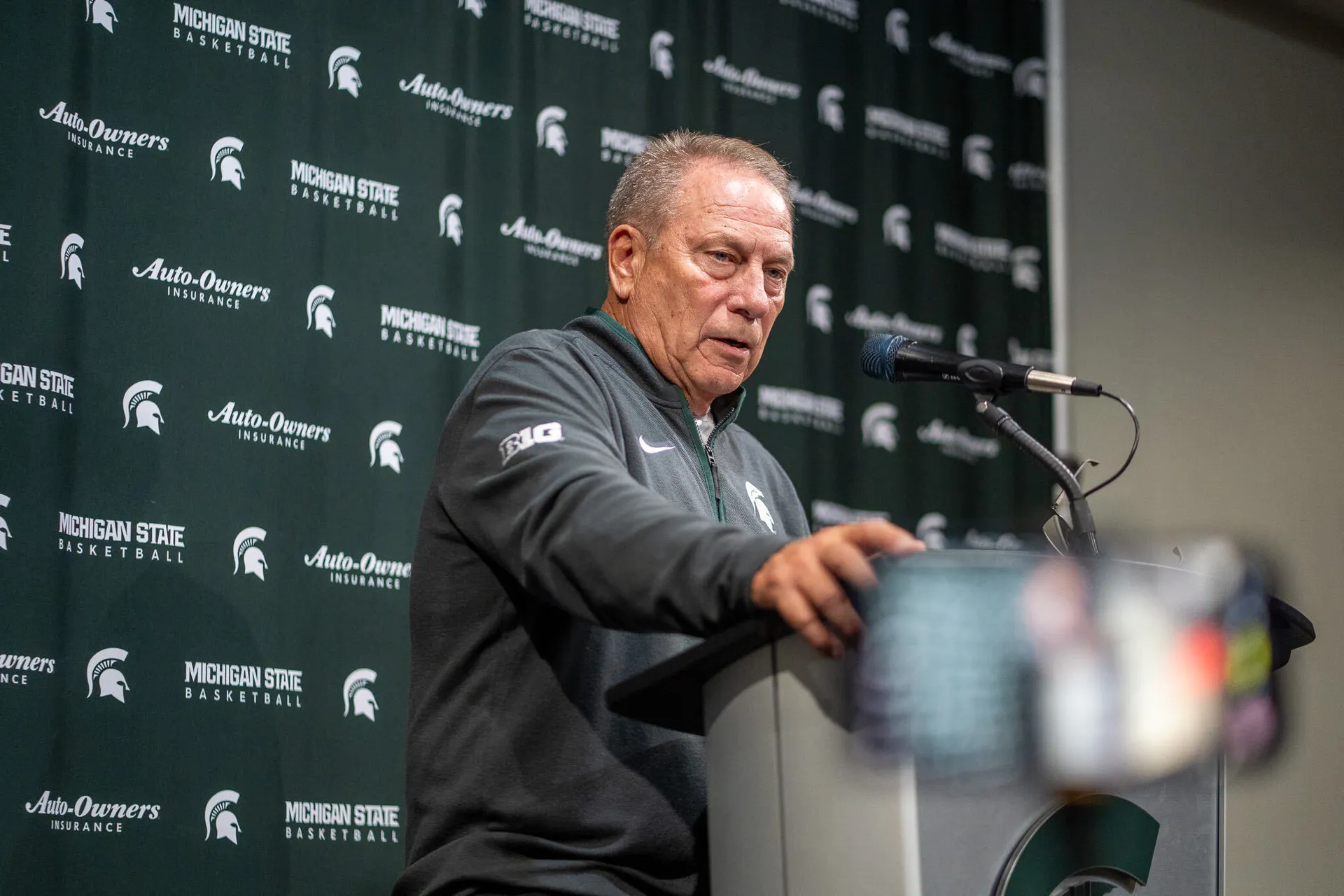
Tom Izzo recaps Michigan State's 89-59 exhibition victory versus Incarnate Word.
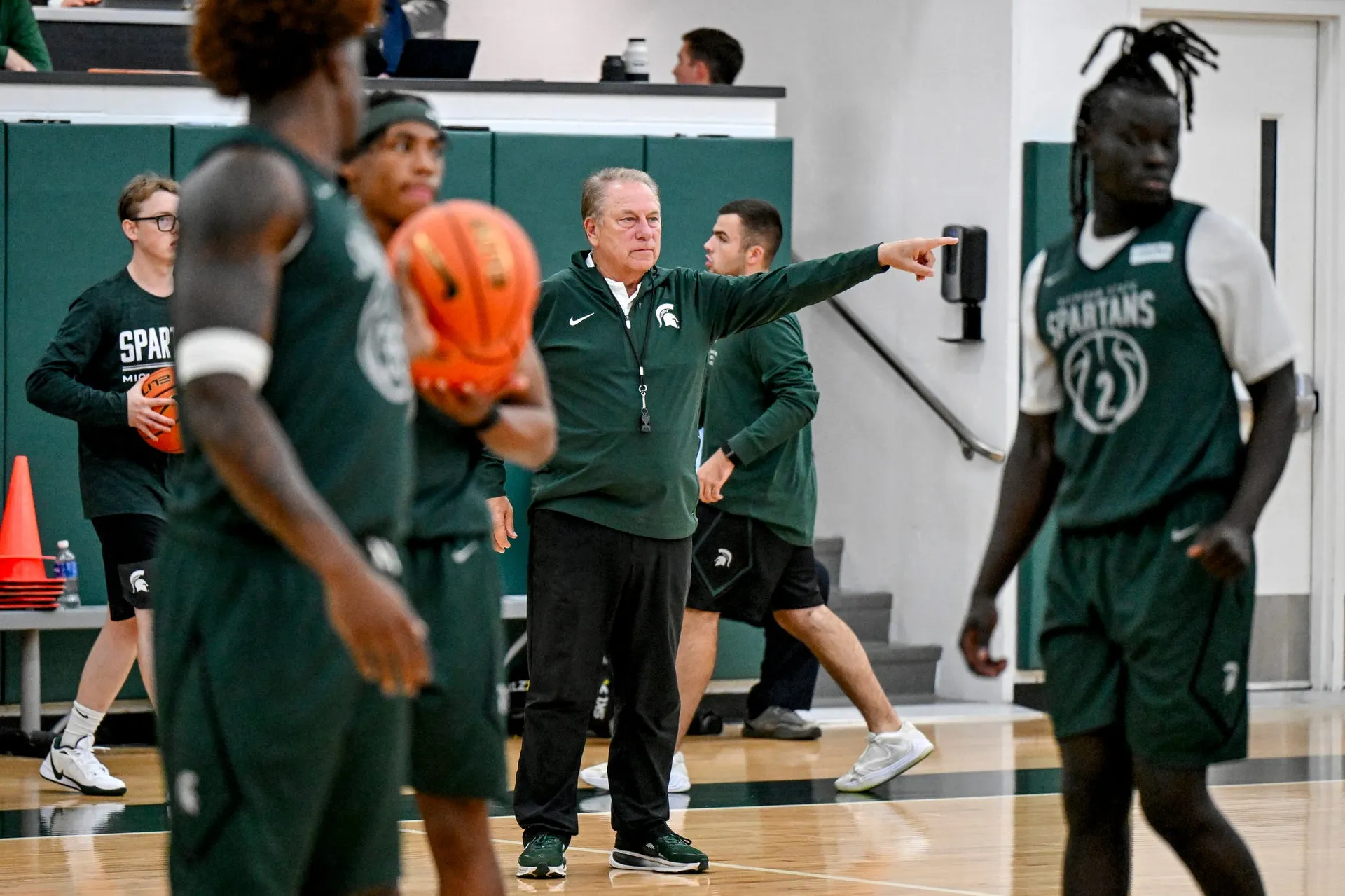
Tom Izzo has an idea of the kind of team he has, but upcoming exhibitions will begin to reveal his team's growth over the summer.
Michigan State athletic director Dan Bartholomae has been on the job for all of five weeks, and he's already making some pretty big promises.Football will be a priority. Michigan State will work toward funding its programs in the top third of the Big Ten. Spartan Ventures will become a legitimate revenue-generating operation. And the athletic department will finally establish something that has been pretty hard to find around East Lansing lately – consistency.Sounds great, right?Well, I had Bartholomae on Locked On Spartans on Friday, just two days after he sent a letter to Spartan Nation outlining his vision. And while I enjoyed the letter, I wanted to know how much of it was a realistic commitment and how much was an ambitious goal.Because we've all heard the big plans before.Let's start with the biggest item: Money.Bartholomae's letter stated that Michigan State needs to resource programs in the upper third of the conference to compete for championships. That's a pretty substantial statement in a league where football spending has become an arms race.So I asked him whether this was something Michigan State was prepared to deliver or something it was simply hoping to achieve."It's probably a little bit in between," Bartholomae said. "Are we close to that now? No."Michigan State isn't where it needs to be financially to compete with the upper tier of the Big Ten, and its new athletic director isn't pretending otherwise.But he believes the mechanisms exist to get there, and he wants it to happen immediately.How? A little bit of everything."It's a potpourri, man. It's a potpourri," Bartholomae said.That means traditional fundraising, donor support, FOR SPARTA, and Spartan Ventures all playing a role in bringing additional resources into the athletic department.And speaking of Spartan Ventures, I asked Bartholomae to explain it to me like I'm five years old. Because, frankly, that's about where a lot of us are with this thing.His answer was refreshingly candid.He's still figuring it out himself.The athletic director and CEO who launched Spartan Ventures are gone, and Bartholomae is working to hire a replacement CEO, something he hopes to complete within the next two weeks.He explained that Spartan Ventures operates as an affiliated entity designed to consolidate Michigan State's revenue-generating operations outside the traditional university business structure.But he was also careful about what it isn't."It's not like the solution to revenue generation in NIL," Bartholomae said. "It is a mechanism that we need to activate."In other words, Spartan Ventures isn't some magical money machine that's going to solve Michigan State's problems overnight. There is infrastructure in place, but the university still needs to figure out how to make it produce meaningful returns.Bartholomae expects to provide a more complete explanation of both Spartan Ventures and FOR SPARTA over the coming months.And I think that's fair, provided those explanations eventually arrive.His biggest challenge might surprise youWhen I asked Bartholomae to identify the biggest item on his to-do list, I expected something about fundraising, football, or Spartan Stadium.Instead, he talked about trust.He said he's already encountered a recurring response in conversations with donors, coaches, student-athletes, and staff members.They like what he's saying. They appreciate his vision.But they're wondering whether he'll still be around to see it through."I like you. You seem great, but I don't know if you're going to be here in a year," Bartholomae said, describing the reaction he's received.And really, can you blame them?Michigan State has experienced four athletic directors and three football coaches over the past five-plus years. People have seen plans introduced, initiatives launched, and leadership changes that send everyone back to square one.Bartholomae understands that skepticism.During his 15 years at Pittsburgh, he worked under nine athletic directors, including interims. He also experienced a stretch when the university had five football coaches in four years.He's seen what instability can do to an athletic department.Now he's trying to establish a plan that survives beyond the next press conference, the next season, or the next leadership change.And he made one thing pretty clear."Matt, I'm going to be here a year from now, and I'm going to be here two years from now," Bartholomae said.Then he added, "I ain't going anywhere."That's quite a statement from somebody who's barely unpacked his office.But it's also exactly what a fan base tired of administrative turnover probably needed to hear.Building a relationship with Pat FitzgeraldOf course, none of this works if Michigan State can't get its football program moving in the right direction.And that means Bartholomae and Pat Fitzgerald need to be working together.The interesting thing is that they're still getting to know each other.Bartholomae started Aug. 31, the Monday of Michigan State's opening game week. That's not exactly an ideal time to take over an entire athletic department.He acknowledged that the timing has kept him from spending as much time around football practice as he'd normally prefer.But he and Fitzgerald have established a routine.Bartholomae checks in with Fitzgerald on Sundays following games, and the two have a standing Thursday meeting. They spend time discussing the program, but they're also learning about each other's families, careers, and approaches to leadership."He's going to be my partner, right, and I'm going to be his partner in getting this program to where everybody wants it to be," Bartholomae said.Yes, fundraising is part of those conversations.But they're not yet sitting around hammering out every detail of next year's roster budget.I joked that it would be a little crass for Fitzgerald to immediately demand $30 million or $40 million for the offseason.Bartholomae laughed off the premise."He doesn't need to tell me that," he said.Fair enough.He knows what he's getting into.Michigan State needs its own 'Jump Around'One of the more interesting portions of our conversation had nothing to do with NIL, fundraising, or conference revenue.It was about having fun at football games.Bartholomae believes Michigan State has an incredible asset in its student section, and he wants to do a better job of engaging those students throughout the game.He's already looking at smaller changes, including student concessions promotions and getting Tom Izzo involved with the student section.But he has something bigger in mind.After attending Michigan State's game at Wisconsin last weekend, Bartholomae came away impressed by the Badgers' famous third-quarter tradition.Even with the early kickoff and students arriving late, the section came alive for "Jump Around."And it got him thinking."What's our Jump Around?" Bartholomae asked.He wasn't necessarily suggesting Michigan State needs another song. His point was that the Spartans need something that gets the entire stadium involved, something students look forward to and fans embrace regardless of what's happening on the field.He's right.Michigan State has plenty of traditions, but finding another one that consistently energizes Spartan Stadium would be a pretty worthwhile accomplishment.Bartholomae also wants to evaluate the Breslin Center experience during basketball season. He praised what Michigan State already offers inside the arena but believes there's room for improvement, particularly with premium seating and the experience fans have from the moment they enter the building.He emphasized that the overall fan experience will be a regular topic in executive staff meetings.And over at Munn Ice Arena, he's excited about what Adam Nightingale has built, particularly the success of the program and the enthusiasm of the Munsters student section.Having come from Western Michigan, where the Broncos won a national hockey championship, Bartholomae knows what an elite hockey program and a passionate student section can accomplish together.Sorry, Central Michigan is probably staying on the scheduleI couldn't let Bartholomae leave without asking about Michigan State's scheduled 2027 football game against Central Michigan.I've made my feelings on this pretty clear. Given the controversy surrounding Central Michigan's involvement in the sign-stealing scandal, I'd rather Michigan State cancel the game.Bartholomae, despite his Western Michigan background, wasn't about to give me the answer I wanted.He explained that Michigan State has a contractual obligation that predates his arrival, and breaking that agreement would carry consequences at a time when the athletic department has plenty of financial priorities."Breaking a contractual agreement at a time where we're trying to get Spartan Ventures going, we're trying to fund football, it is, in my opinion, not the best global decision for the football program," Bartholomae said.Translation: Don't expect that game to disappear.It's the responsible answer.I still don't have to like it.When asked, Bartholomae also expressed interest in possibly expanding Michigan State's brand internationally, including the possibility of football games overseas, although he made it clear he wouldn't be eager to sacrifice a home game to accomplish it.Now comes the hard partHere's where I land after talking with Bartholomae.I like what I'm hearing. I like that he was willing to admit Michigan State isn't currently resourcing football at the level it needs to. I like that he acknowledged he doesn't have Spartan Ventures completely figured out yet. And I especially like that he recognizes the damage leadership turnover has done to the department's credibility.But the next step is what matters.Michigan State needs more money for football. Spartan Ventures needs to generate revenue. Fitzgerald needs the resources to build a competitive roster. And fans need to see a department operating with a consistent vision.None of that happens just because the athletic director writes a compelling letter or gives a good interview.Bartholomae knows it, too.He pointed to his time at Western Michigan, where the school's highest-level giving society grew from one member when he arrived to more than 100 by the time he left. He credited that success to presenting donors with a plan and giving them reasons to believe their investments would produce results.Some donors bought in immediately. Others waited years to see whether the vision would become reality.He expects a similar process at Michigan State.And for an athletic department that has spent far too much time starting over, the most encouraging thing Bartholomae said might have been the simplest.He's planning to stick around.Now let's see what he can build.
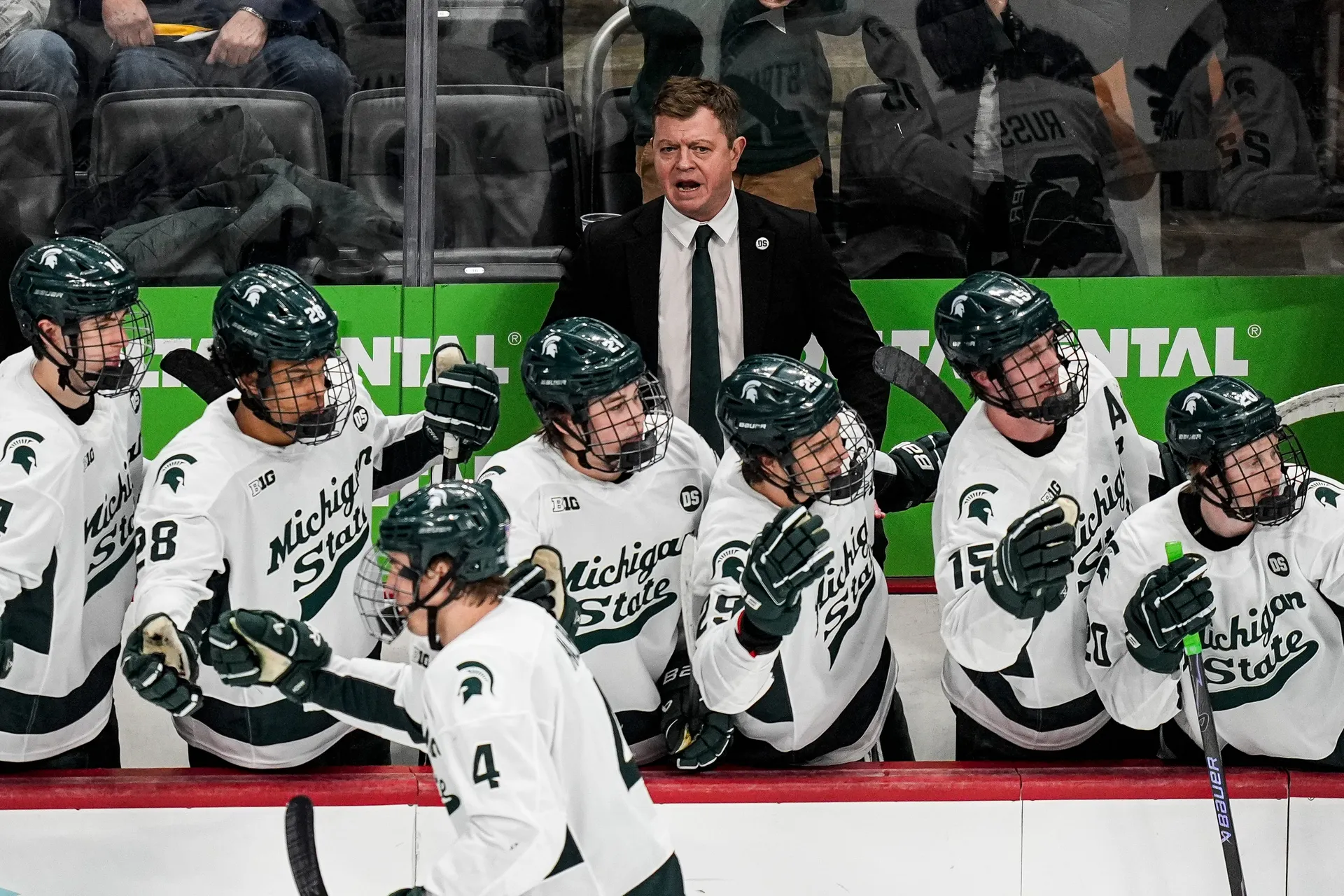
The 2026-2027 season begins Friday, Oct. 2, with the Spartans playing host to top 15 team Boston College for an exhibition. Here is a primer to get ready for the season!
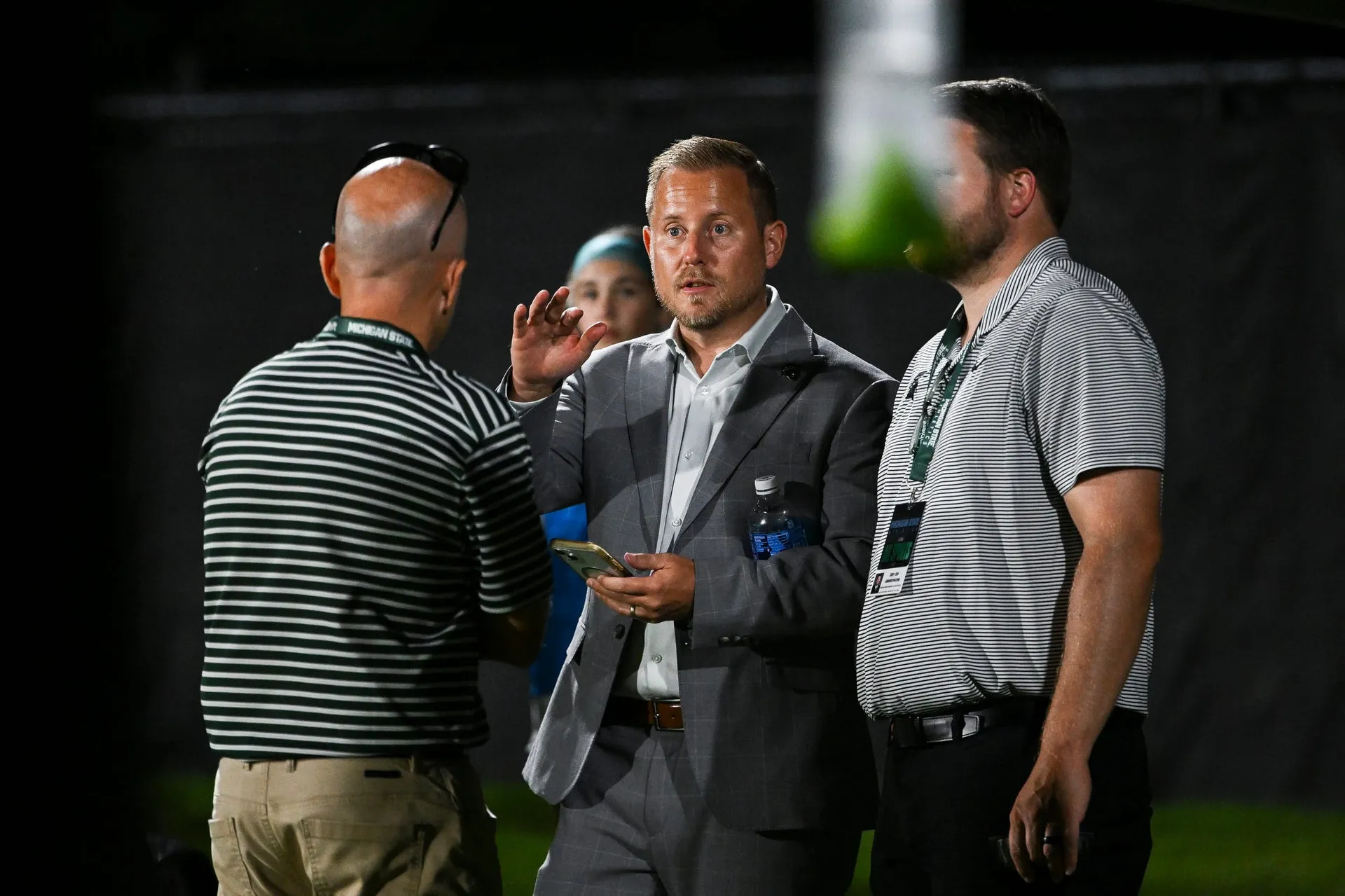
In Part 2 of his one-on-one with Spartans Illustrated, Michigan State’s new AD discusses Spartan Ventures, communication, non-revenue sports, and honoring the 1965-66 football teams
Michigan State athletic director Dan Bartholomae has been on the job for all of five weeks, and he's already making some pretty big promises.Football will be a priority. Michigan State will work toward funding its programs in the top third of the Big Ten. Spartan Ventures will become a legitimate revenue-generating operation. And the athletic department will finally establish something that has been pretty hard to find around East Lansing lately – consistency.Sounds great, right?Well, I had Bartholomae on Locked On Spartans on Friday, just two days after he sent a letter to Spartan Nation outlining his vision. And while I enjoyed the letter, I wanted to know how much of it was a realistic commitment and how much was an ambitious goal.Because we've all heard the big plans before.Let's start with the biggest item: Money.Bartholomae's letter stated that Michigan State needs to resource programs in the upper third of the conference to compete for championships. That's a pretty substantial statement in a league where football spending has become an arms race.So I asked him whether this was something Michigan State was prepared to deliver or something it was simply hoping to achieve."It's probably a little bit in between," Bartholomae said. "Are we close to that now? No."Michigan State isn't where it needs to be financially to compete with the upper tier of the Big Ten, and its new athletic director isn't pretending otherwise.But he believes the mechanisms exist to get there, and he wants it to happen immediately.How? A little bit of everything."It's a potpourri, man. It's a potpourri," Bartholomae said.That means traditional fundraising, donor support, FOR SPARTA, and Spartan Ventures all playing a role in bringing additional resources into the athletic department.And speaking of Spartan Ventures, I asked Bartholomae to explain it to me like I'm five years old. Because, frankly, that's about where a lot of us are with this thing.His answer was refreshingly candid.He's still figuring it out himself.The athletic director and CEO who launched Spartan Ventures are gone, and Bartholomae is working to hire a replacement CEO, something he hopes to complete within the next two weeks.He explained that Spartan Ventures operates as an affiliated entity designed to consolidate Michigan State's revenue-generating operations outside the traditional university business structure.But he was also careful about what it isn't."It's not like the solution to revenue generation in NIL," Bartholomae said. "It is a mechanism that we need to activate."In other words, Spartan Ventures isn't some magical money machine that's going to solve Michigan State's problems overnight. There is infrastructure in place, but the university still needs to figure out how to make it produce meaningful returns.Bartholomae expects to provide a more complete explanation of both Spartan Ventures and FOR SPARTA over the coming months.And I think that's fair, provided those explanations eventually arrive.His biggest challenge might surprise youWhen I asked Bartholomae to identify the biggest item on his to-do list, I expected something about fundraising, football, or Spartan Stadium.Instead, he talked about trust.He said he's already encountered a recurring response in conversations with donors, coaches, student-athletes, and staff members.They like what he's saying. They appreciate his vision.But they're wondering whether he'll still be around to see it through."I like you. You seem great, but I don't know if you're going to be here in a year," Bartholomae said, describing the reaction he's received.And really, can you blame them?Michigan State has experienced four athletic directors and three football coaches over the past five-plus years. People have seen plans introduced, initiatives launched, and leadership changes that send everyone back to square one.Bartholomae understands that skepticism.During his 15 years at Pittsburgh, he worked under nine athletic directors, including interims. He also experienced a stretch when the university had five football coaches in four years.He's seen what instability can do to an athletic department.Now he's trying to establish a plan that survives beyond the next press conference, the next season, or the next leadership change.And he made one thing pretty clear."Matt, I'm going to be here a year from now, and I'm going to be here two years from now," Bartholomae said.Then he added, "I ain't going anywhere."That's quite a statement from somebody who's barely unpacked his office.But it's also exactly what a fan base tired of administrative turnover probably needed to hear.Building a relationship with Pat FitzgeraldOf course, none of this works if Michigan State can't get its football program moving in the right direction.And that means Bartholomae and Pat Fitzgerald need to be working together.The interesting thing is that they're still getting to know each other.Bartholomae started Aug. 31, the Monday of Michigan State's opening game week. That's not exactly an ideal time to take over an entire athletic department.He acknowledged that the timing has kept him from spending as much time around football practice as he'd normally prefer.But he and Fitzgerald have established a routine.Bartholomae checks in with Fitzgerald on Sundays following games, and the two have a standing Thursday meeting. They spend time discussing the program, but they're also learning about each other's families, careers, and approaches to leadership."He's going to be my partner, right, and I'm going to be his partner in getting this program to where everybody wants it to be," Bartholomae said.Yes, fundraising is part of those conversations.But they're not yet sitting around hammering out every detail of next year's roster budget.I joked that it would be a little crass for Fitzgerald to immediately demand $30 million or $40 million for the offseason.Bartholomae laughed off the premise."He doesn't need to tell me that," he said.Fair enough.He knows what he's getting into.Michigan State needs its own 'Jump Around'One of the more interesting portions of our conversation had nothing to do with NIL, fundraising, or conference revenue.It was about having fun at football games.Bartholomae believes Michigan State has an incredible asset in its student section, and he wants to do a better job of engaging those students throughout the game.He's already looking at smaller changes, including student concessions promotions and getting Tom Izzo involved with the student section.But he has something bigger in mind.After attending Michigan State's game at Wisconsin last weekend, Bartholomae came away impressed by the Badgers' famous third-quarter tradition.Even with the early kickoff and students arriving late, the section came alive for "Jump Around."And it got him thinking."What's our Jump Around?" Bartholomae asked.He wasn't necessarily suggesting Michigan State needs another song. His point was that the Spartans need something that gets the entire stadium involved, something students look forward to and fans embrace regardless of what's happening on the field.He's right.Michigan State has plenty of traditions, but finding another one that consistently energizes Spartan Stadium would be a pretty worthwhile accomplishment.Bartholomae also wants to evaluate the Breslin Center experience during basketball season. He praised what Michigan State already offers inside the arena but believes there's room for improvement, particularly with premium seating and the experience fans have from the moment they enter the building.He emphasized that the overall fan experience will be a regular topic in executive staff meetings.And over at Munn Ice Arena, he's excited about what Adam Nightingale has built, particularly the success of the program and the enthusiasm of the Munsters student section.Having come from Western Michigan, where the Broncos won a national hockey championship, Bartholomae knows what an elite hockey program and a passionate student section can accomplish together.Sorry, Central Michigan is probably staying on the scheduleI couldn't let Bartholomae leave without asking about Michigan State's scheduled 2027 football game against Central Michigan.I've made my feelings on this pretty clear. Given the controversy surrounding Central Michigan's involvement in the sign-stealing scandal, I'd rather Michigan State cancel the game.Bartholomae, despite his Western Michigan background, wasn't about to give me the answer I wanted.He explained that Michigan State has a contractual obligation that predates his arrival, and breaking that agreement would carry consequences at a time when the athletic department has plenty of financial priorities."Breaking a contractual agreement at a time where we're trying to get Spartan Ventures going, we're trying to fund football, it is, in my opinion, not the best global decision for the football program," Bartholomae said.Translation: Don't expect that game to disappear.It's the responsible answer.I still don't have to like it.When asked, Bartholomae also expressed interest in possibly expanding Michigan State's brand internationally, including the possibility of football games overseas, although he made it clear he wouldn't be eager to sacrifice a home game to accomplish it.Now comes the hard partHere's where I land after talking with Bartholomae.I like what I'm hearing. I like that he was willing to admit Michigan State isn't currently resourcing football at the level it needs to. I like that he acknowledged he doesn't have Spartan Ventures completely figured out yet. And I especially like that he recognizes the damage leadership turnover has done to the department's credibility.But the next step is what matters.Michigan State needs more money for football. Spartan Ventures needs to generate revenue. Fitzgerald needs the resources to build a competitive roster. And fans need to see a department operating with a consistent vision.None of that happens just because the athletic director writes a compelling letter or gives a good interview.Bartholomae knows it, too.He pointed to his time at Western Michigan, where the school's highest-level giving society grew from one member when he arrived to more than 100 by the time he left. He credited that success to presenting donors with a plan and giving them reasons to believe their investments would produce results.Some donors bought in immediately. Others waited years to see whether the vision would become reality.He expects a similar process at Michigan State.And for an athletic department that has spent far too much time starting over, the most encouraging thing Bartholomae said might have been the simplest.He's planning to stick around.Now let's see what he can build.
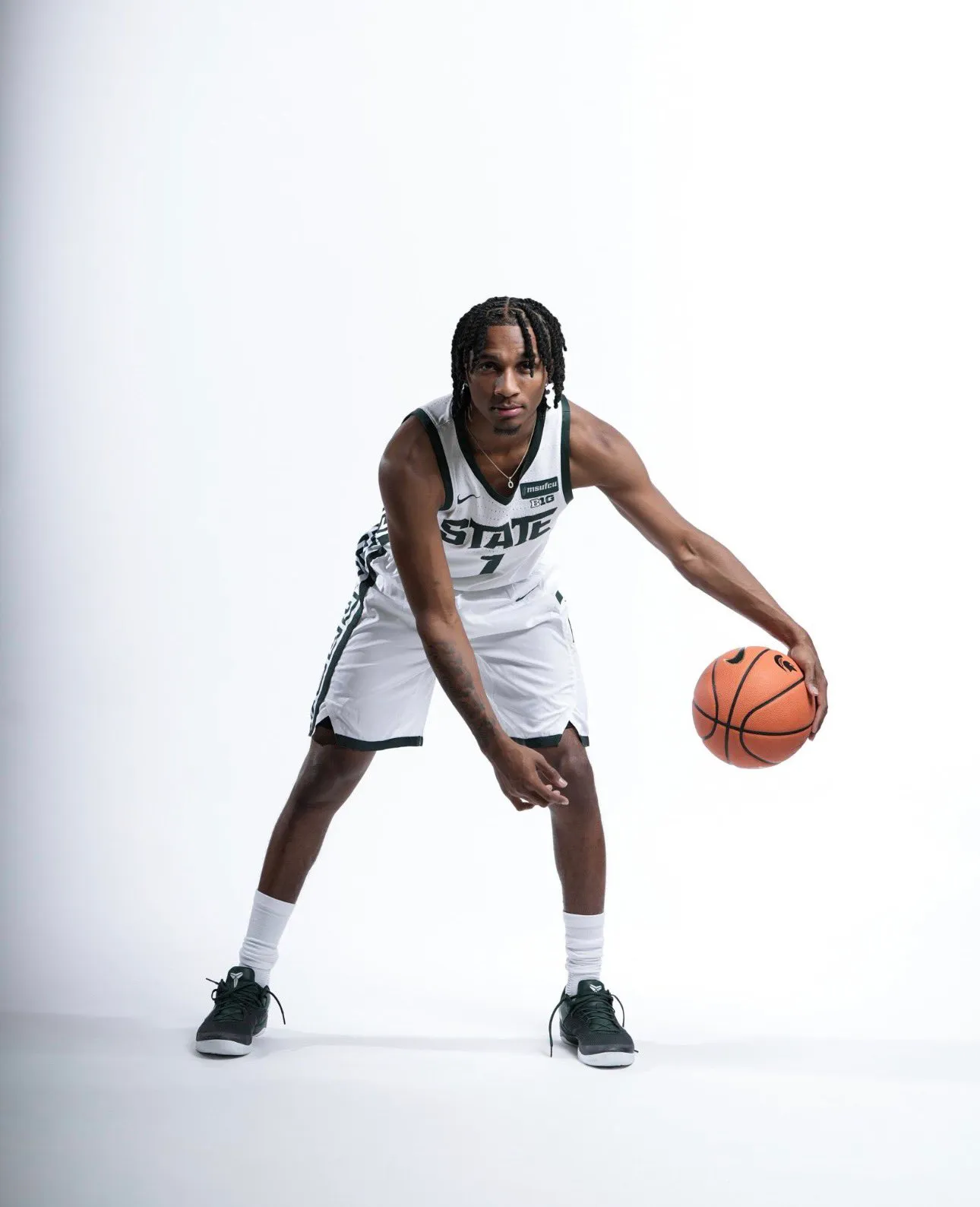
Beyond the ranking, how does Antonio Pemberton's game translate to Michigan State?
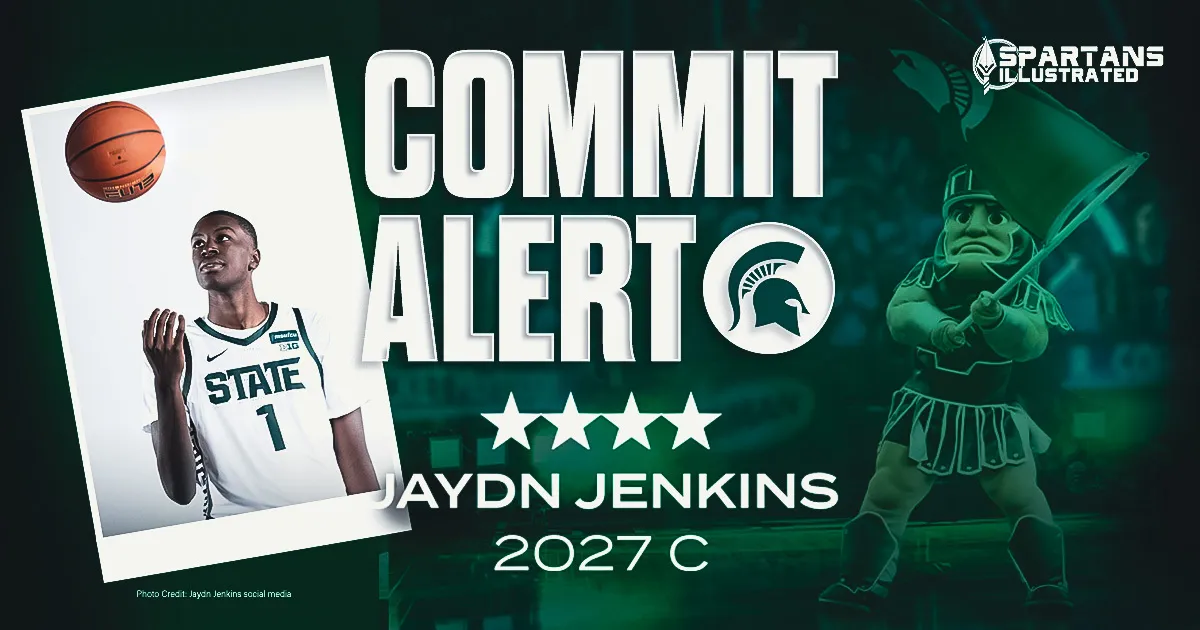
It is another victory for the Michigan State men's basketball program on the recruiting trail, as the Spartans earned a commitment from class of 2027 four-star center Jaydn Jenkins on Wednesday.Dushawn London of 247Sports was the first to report the news of Jenkins' commitment.Jenkins made an official visit to Michigan State during the weekend of Sept. 11, which also happened to be the program's annual "Grind Week" event. Several former Spartans returned to East Lansing to connect with current MSU players and recruits, and it seemingly made a strong impression on Jenkins. Joining Jenkins for an official visit during "Grind Week" was class of 2027 five-star point guard Antonio Pemberton, who recently committed to the Spartans as well.The Archbishop Wood High School (Warminster, Pennsylvania) standout also took official visits to Xavier and Georgetown. He was also considering an official visit to Ohio State. Jenkins canceled a planned trip to North Carolina State following his visit with the Musketeers.Jenkins ranks as the No. 60 overall prospect, No. 8 center and No. 1 recruit in the state of Pennsylvania in the 2027 class, according to both the 247Sports Composite rankings and the Rivals Industry rankings. In addition to the schools already mentioned, Jenkins had scholarship offers from Pittsburgh, Georgia, Mississippi State, Oklahoma State, Penn State, Virginia Tech, West Virginia and several others. The 6-foot-10, 220-pound Jenkins was offered by the Spartans in late June and MSU head coach Tom Izzo and his staff quickly made him a priority target.Jenkins also has a reported 7-foot-4-inch wingspan. He is considered by some analysts to be a prospect with NBA potential, but, obviously, he still has to develop his game and frame much further to reach that level.During the 2025-2026 season at Archbishop Wood, Jenkins averaged 9.7 points, 6.8 rebounds, 1.1 assists and 3.7 blocks per game. He shot 62.1% from the field, 33.3% from 3-point range and 66.1% from the free-throw line.In addition to playing prep ball at Archbishop Wood Team, Jenkins also played for Team Final on the Nike EYBL circuit. He averaged 9.0 points per game and 5.8 rebounds during Session IV of the Nike EYBL, according to thecircuithoops.com.Jenkins has built a strong reputation as one of one of the premier shot blockers and rim protectors in the 2027 class due to his size, length, mobility and anticipation.He also participated in the 2026 USA Men's Under-18 National Team training camp in Colorado Springs, Colorado and in the 2026 Men's Junior National Team minicamp in Indianapolis in April.As Spartans Illustrated originally reported in the summer, Michigan State's plan was to add one center and one point guard to its 2027 recruiting class. The Spartans have done that with Jenkins and Pemberton. It is still possible that MSU looks to add a wing or another prospect to the class, but that remains to be seen.

Dr. Green and White prescribes a homecoming win for what ails Michigan State, then diagnoses the best Week 6 upsets and bets against the spread.

Michigan State’s season has taken a frightening turn, but the numbers suggest the Spartans may still have a path out of their misery and into the postseason

Michigan State ventures into Madison to face Wisconsin, while Dr. Green and White offers a field guide to surviving the wild Week 5 betting landscape.
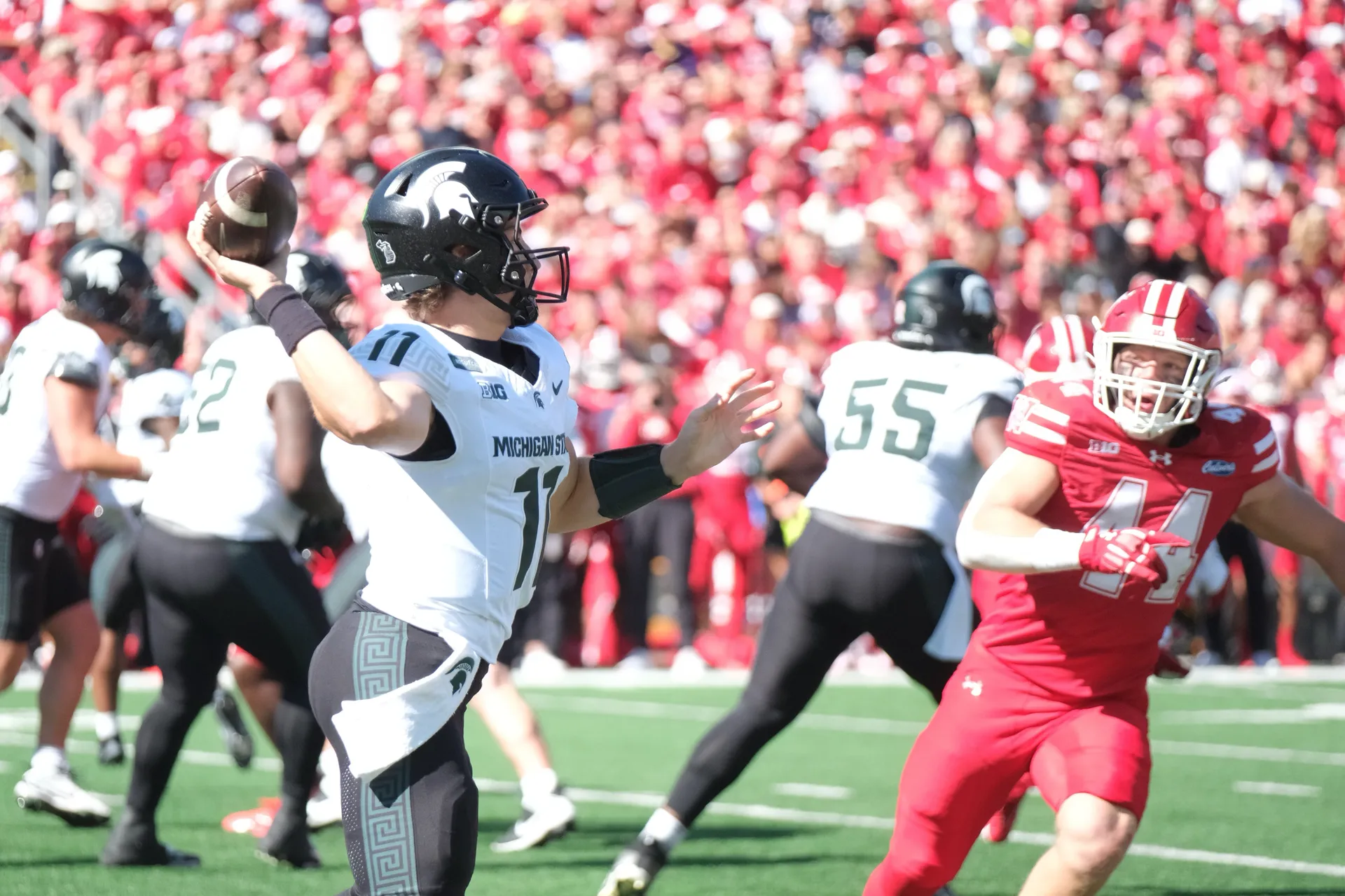
Things spiraled for the Spartans against the Badgers
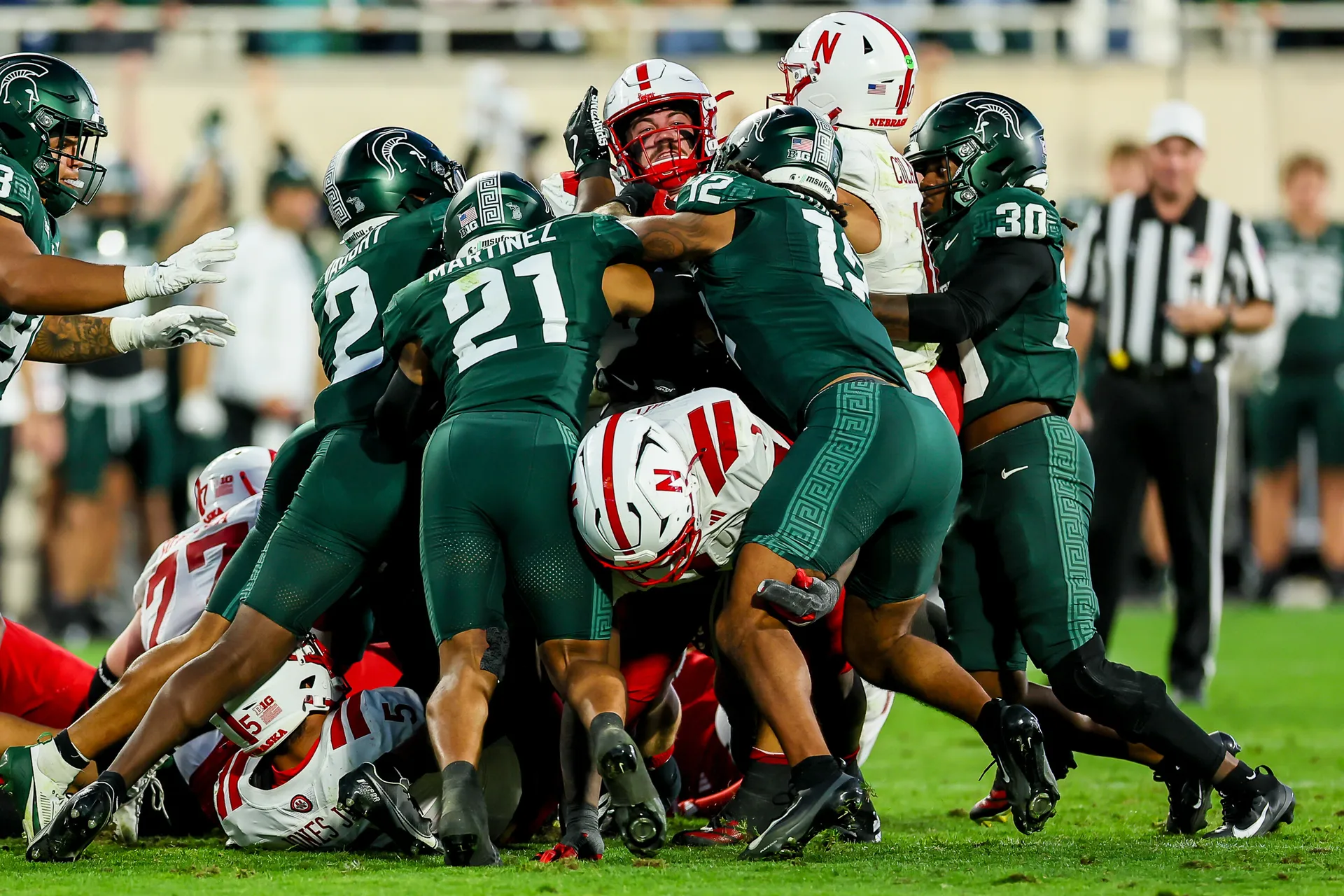
A tough night in East Lansing leaves more questions than answers for the Spartans.
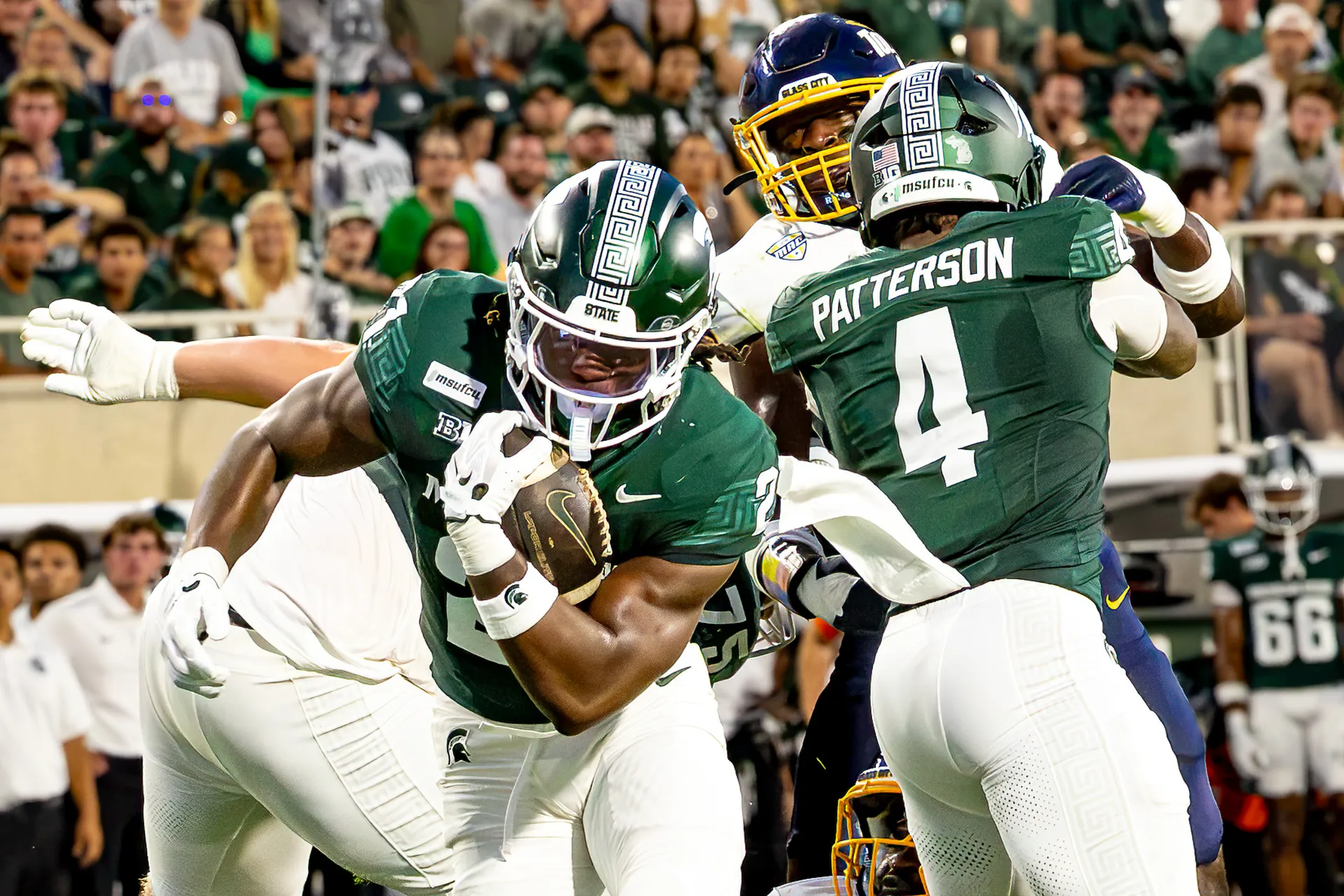
Breaking down the tape from the Spartans' Week 1 victory over the Rockets
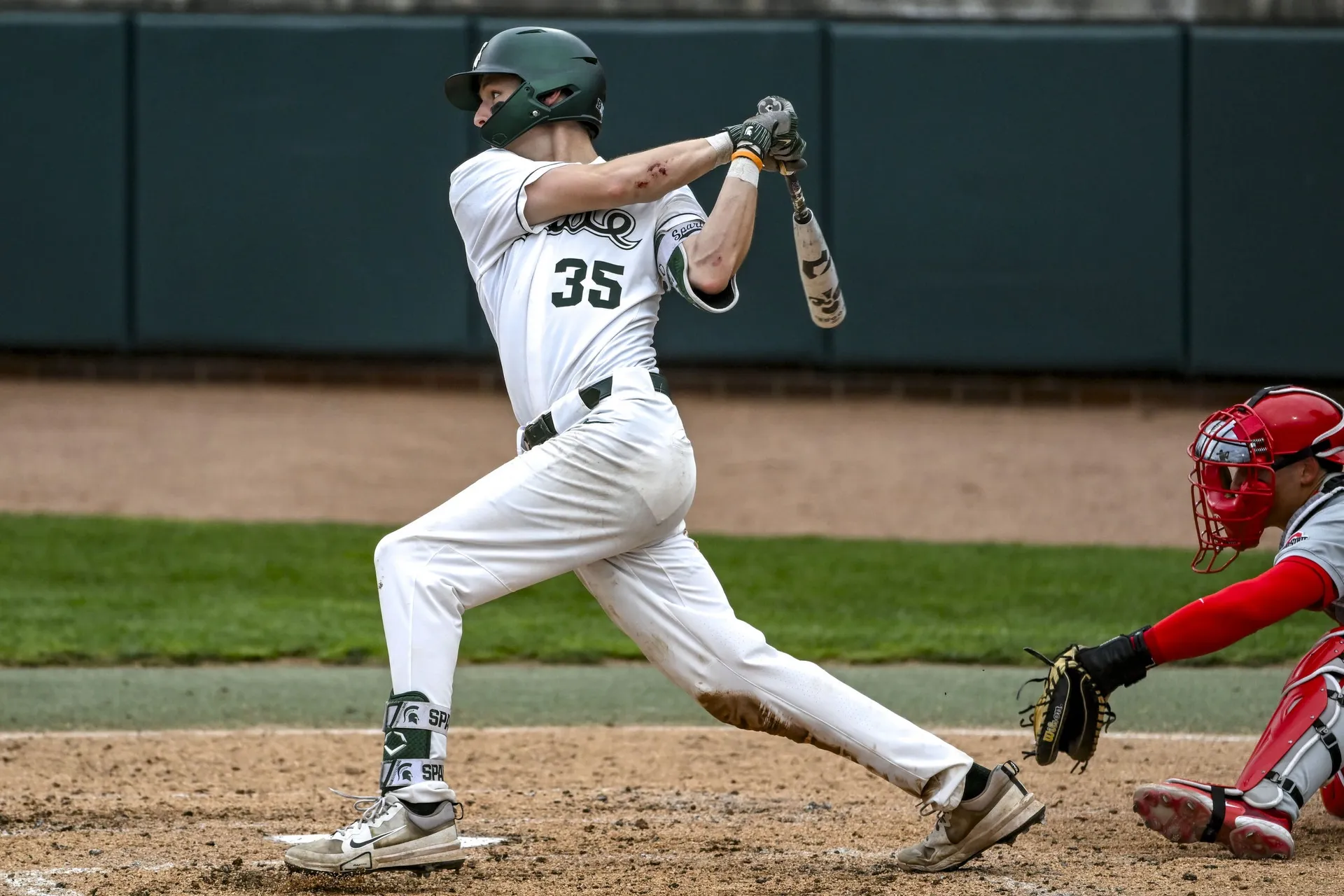
Spartans jump out to 7-0 lead, ride dominant outing from Aidan Donovan into Wednesday matchup with Iowa in Omaha
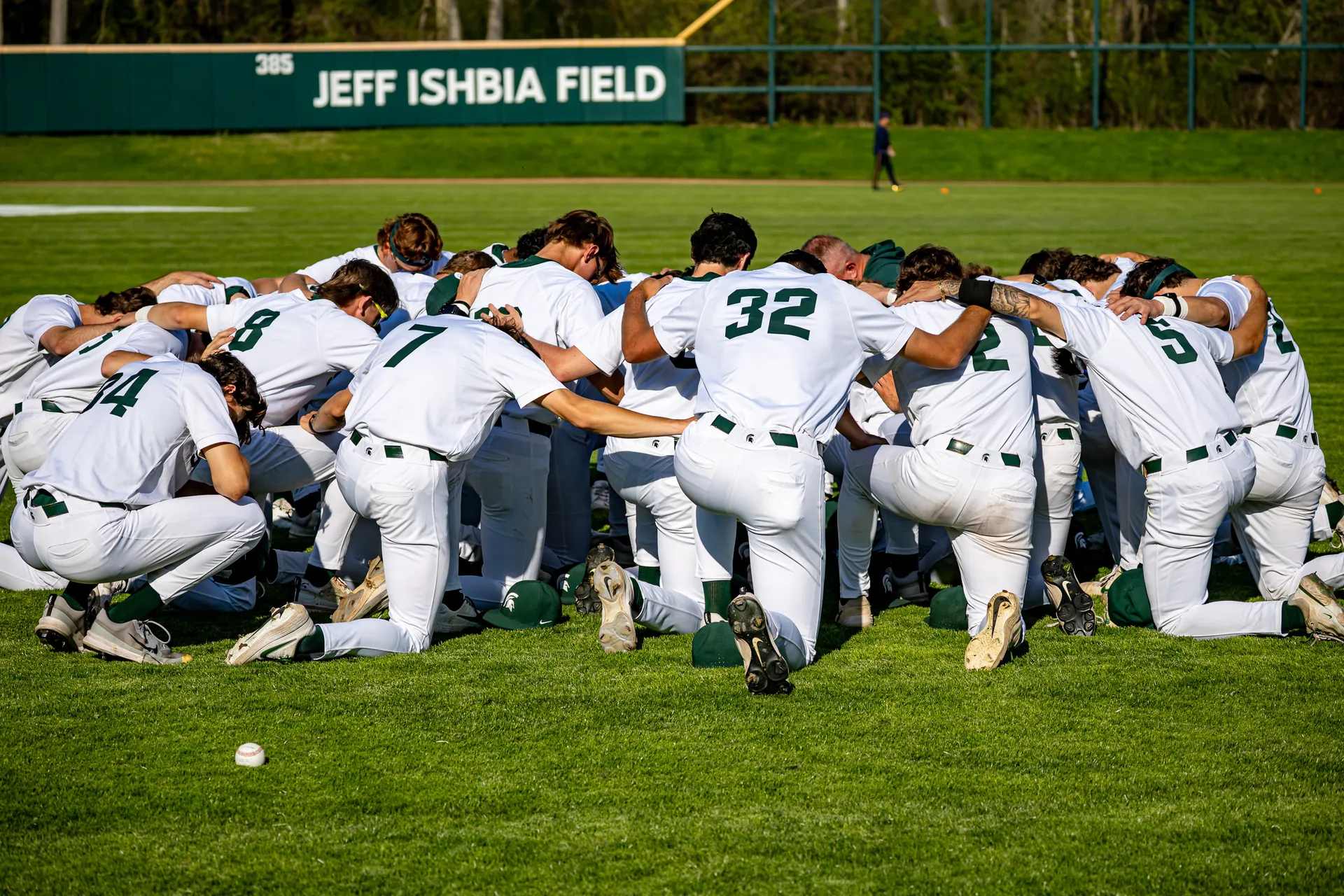
The Spartans are trying to hold on to the last spot in the Big Ten Tournament in Omaha
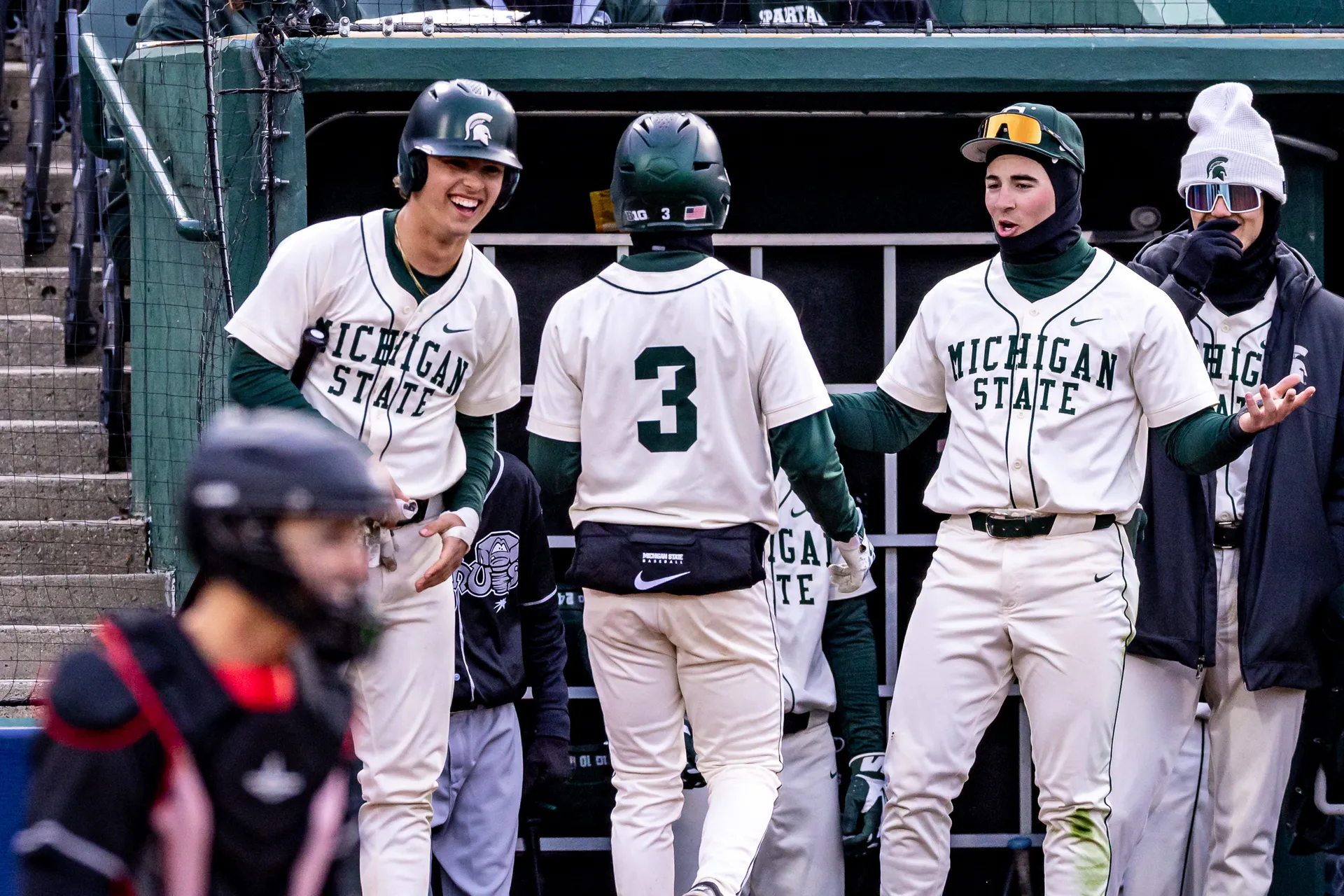
The Spartans remain in search of traction as they approach the heart of conference play
With Theryn Hallock healthy, a dynamic backcourt, and added size inside, the Spartans enter preseason practice focused on finding the right combinations
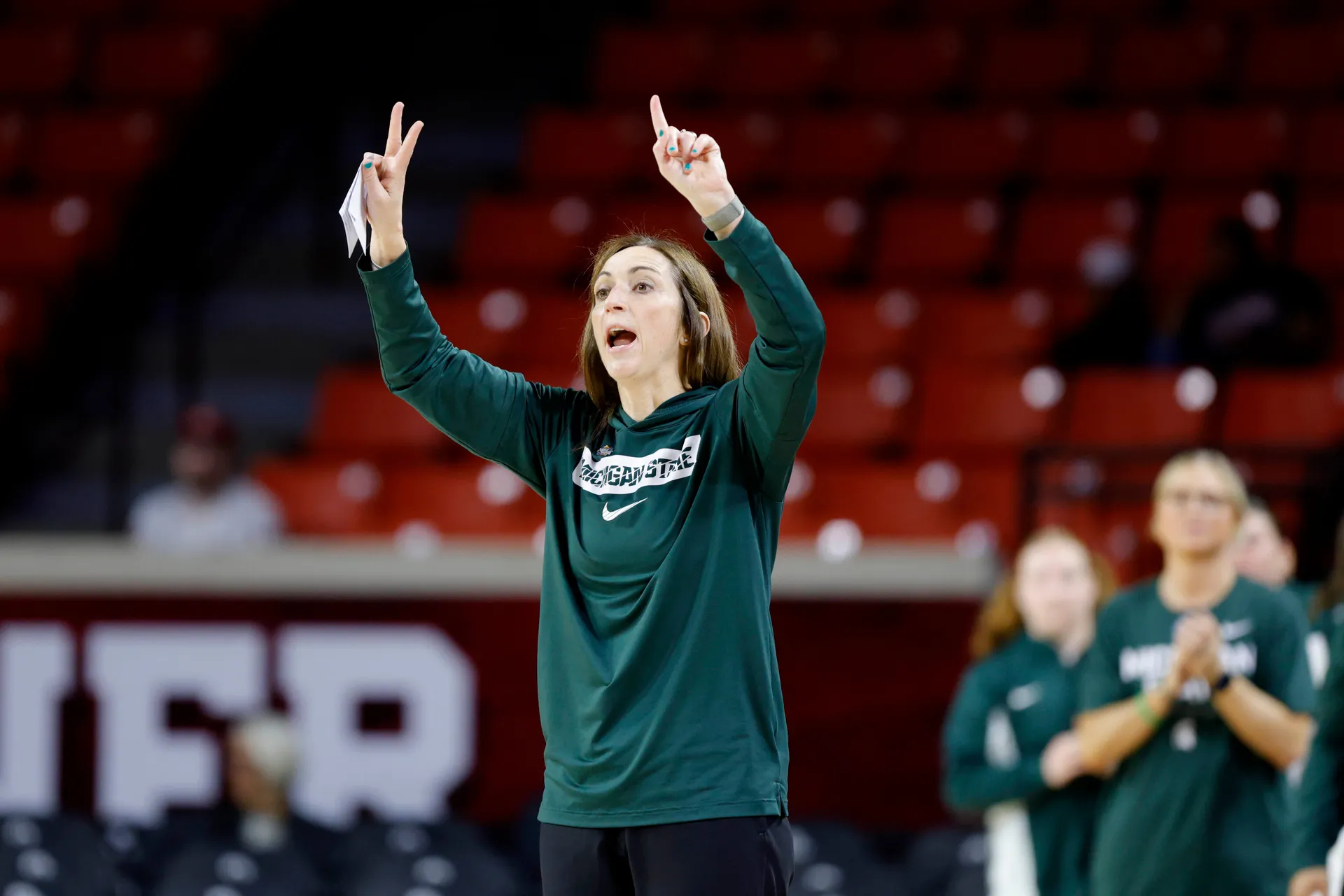
Michigan State women's basketball now has its full 2026-2027 schedule, as the conference revealed all 162 league matchups live on Big Ten Network Wednesday evening. The Spartans will play the standard 18-game conference slate, facing just intrastate rival Michigan both home and away while taking on the other 16 league members once apiece.The Spartans enter their fourth season under head coach Robyn Fralick and return six players from last year's roster that advanced to the second round of the NCAA Tournament and tying for sixth in the final Big Ten standings last season. Combined with nine newcomers to this year's squad, they will look to improve on the 23-9 finish last season that included an 11-7 league record.The full Big Ten schedule is available below:October GamesOct. 28 Michigan Tech (exhibition)November GamesNov. 3 ValparaisoNov. 7 at ToledoNo. 15 vs. OaklandNov. 15 at HarvardNov. 19 vs. Sacred HeartNov. 23 vs. Alcorn State (Emerald Coast Classic, Destin, Fl.)Nov. 24 vs. UT Martin/Virginia Tech (Emerald Coast Classic, Destin, Fl.)Nov. 29 vs. Eastern MichiganDecember GamesDec. 3 vs. MaineDec. 6 vs. Penn StateDec. 9 vs. MilwaukeeDec. 13 vs. DePaulDec. 19 vs. Gonzaga (Acrisure Classic, Palm Desert, Cali.)Dec. 29 at MichiganJanuary GamesJan. 1 vs. IowaJan. 7 at NorthwesternJan. 10 at NebraskaJan. 13 vs. OregonJan. 17 at IllinoisJan. 20 vs. WashingtonJan. 24 vs. IndianaJan. 28 at RutgersFebruary GamesFeb. 1 at MarylandFeb. 7 at Ohio StateFeb. 11 vs. PurdueFeb. 14 vs. MinnesotaFeb. 18 at USCFeb. 21 at UCLAFeb. 25 vs. WisconsinFeb. 28 vs. MichiganIncluding non-conference games, MSU will face up to 13 teams that appeared in last year's NCAA Tournament. That hinges on whether Virginia Tech ends up at the second opponent in the Emerald Coast Classic or not.The Spartans open Big Ten play at home against Penn State on Dec. 6, part of an opening weekend that sees the league tip off Saturday, Dec. 5. After a road trip to UM to close out December, MSU returns to Breslin Center to ring in the new year against Iowa on Jan. 1.League play then sends the Spartans out for a pair of true road games at Northwestern and Nebraska before a mid-January homestand against Oregon and Washington sandwiched around a trip to Illinois. MSU closes the month hosting Indiana before heading east to face Rutgers.February opens on the road with a visit to Maryland, followed by a trip to Ohio State. The Spartans then settle in at home for back-to-back games against Purdue and Minnesota before a stretch of West Coast road games at USC and UCLA. The home slate wraps up with Wisconsin before MSU closes the regular season on Feb. 28 by hosting the Wolverines, once again in a Sunday finale on Senior Day.Tipoff times and broadcast information for Big Ten games will be released at a later date. The Big Ten Tournament is set for March 3-7, 2027, at T-Mobile Arena in Las Vegas.

WJR 760 AM remains the Detroit flagship of the Spartan Media Network through the 2030-31 athletic year
Despite a big second half comeback for the Spartans to force overtime, the Illini leave with the win.
Linebacker Jordan Hall missed Week 5 vs. Wisconsin, but is now available for Week 6 against Illinois. Fellow linebacker Caleb Wheatland is out versus the Illini. Read the full availability report here.
MSU's new AD talks football funding, Spartan Ventures, Pat Fitzgerald, game-day traditions, and why rebuilding trust might be his biggest challenge