LOCKERVERSE
Enter the phone number associated with your account and we will send you a confirmation code to reset your password
New to Lockerverse?
Create an accountLOCKERVERSE
Palumbo may be the right person to lead MSU Athletics, but first he must separate his own vision from the policies and relationships that defined Batt’s brief tenure
For the third time this year, I find myself adding important context to a column by Detroit News editorial page editor Nolan Finley.I have not had to do this so frequently since ESPN repeatedly conflated the crimes of Larry Nassar with Mark Dantonio, Tom Izzo, and Michigan State football and basketball. Once again, the problem is not that every question being raised is illegitimate. It is that Finley starts with a few fair questions, fills in the unanswered parts with the worst possible assumptions, and then presents his preferred version of events as though the evidence leaves no room for another conclusion.ESPN was a national organization swooping into East Lansing and trying to make sense of a complicated institution, a sprawling scandal, and years of internal history it did not fully understand.Finley does not have that excuse.He is here. He covers this state. He has access to the people involved, the documents, the public meetings, and the institutional history. He should be in a better position to separate legitimate concerns from speculation, and write with a degree of fairness that reflects the information available to him. Instead, for the third time this year, I find myself filling in pieces he either did not find or chose not to include.In his latest column for The Detroit News published online Saturday, Finley argues that President Kevin Guskiewicz returned to Michigan State with the Board of Trustees “in his pocket” and with what he describes as a guarantee that trustees will now “rubber-stamp anything he wants.” It is a sweeping conclusion that transforms an unusual presidential reversal, a revised contract, and long-running disagreements over Spartan Ventures into a story about one man manipulating an entire university governing board.The problem is not that every question Finley raises is illegitimate. The problem is that Finley repeatedly treats disagreement as evidence, unanswered questions as proof of misconduct, and his own interpretation of events as though it were the only conclusion available. He moves from uncertainty to suspicion and then from suspicion to certainty without supplying the facts necessary to support the journey.According to Finley’s version of events, Guskiewicz became angry when several trustees challenged him, went shopping for another job, used Clemson to extract more money and control, and then returned to East Lansing only after securing the loyalty of a compliant board. By the end of the column, that interpretation is no longer presented as one possible explanation. It has become a declaration that Guskiewicz played the situation “masterfully” and now effectively controls the people elected to oversee him.Getting from the facts to that conclusion requires Finley to fill in a remarkable amount of the story himself:He describes an 11% ownership interest in a commercial revenue entity as the sale of part of Michigan State’s athletic departmentHe presents assumptions about Guskiewicz’s motives as established factHe leaves important portions of the compensation timeline out of the discussionHe dismisses the very real outpouring of support that encouraged Guskiewicz and his wife, Amy, to reconsider leavingHe then treats the support of a majority of the Board of Trustees as proof that the president now owns it The problem with Finley’s latest theory is not merely that it is cynical; it is that the available evidence does not lead where he insists it does.Legitimate questions do not validate Finley’s larger narrative Under Guskiewicz’s revised agreement, his annual base salary will increase from approximately $1.03 million to $1.5 million, while his annual deferred compensation will rise from $200,000 to $250,000. The agreement extends his term through March 2031 and provides up to 10 hours each year aboard a private aircraft for personal travel by Guskiewicz, his family, or his guests.MSU has said philanthropic funding will support the salary increase and will cover the personal aircraft benefit. That arrangement deserves more explanation because private money connected directly to the compensation of the chief executive of a public university creates a level of public interest that goes beyond ordinary philanthropy.There are reasonable questions to ask here. Are the funds coming from one supporter or several? Are any conditions attached? Do any contributors have business relationships, investment interests, development proposals, contracts, or other matters before the university? Will Guskiewicz know who the donors are? What conflict-of-interest review will occur, and what happens if the private support ends before the contract does?Rather than pose those questions and press Michigan State for answers, Finley assumes the answers for himself, assigns the worst possible motives, and criticizes the people involved as though his suspicions have already been proven.Finley never explores whether the funding could be structured in a way that protects donor privacy while also limiting the potential for influence or conflicts of interest. It took me only a few calls to find out that one possible avenue under discussion is the creation of a separate fund or limited liability company to which supporters could contribute. That entity would then make an earmarked donation to the university to support the president’s compensation. The individuals contributing to the fund would be separate from the entity making the donation, and those donors could choose to remain anonymous to both the public and Guskiewicz, if they so choose.Many people donate to universities, charities, churches, and community organizations without seeking public recognition. Some prefer anonymity for personal, financial, or philosophical reasons, and the decision to remain unnamed should not automatically be treated as evidence that a donor is attempting to purchase influence.The public does not necessarily need every detail of every private gift made to Michigan State. Donor privacy has long been a normal part of university philanthropy, and institutions have legitimate reasons to protect it. At the same time, when private funds are used to support the compensation of a public university president, MSU should explain the safeguards designed to prevent donors from receiving influence, access, or preferential treatment in return.Those two principles can coexist. The university can protect the identities of people who wish to give anonymously while still explaining the structure of the fund, the conflict-of-interest protections surrounding it, whether Guskiewicz knows the identities of the contributors, and what controls are in place to ensure that no donor receives special treatment.Perhaps Finley asked those questions of MSU leadership before manufacturing suspicion about conflicts he has not identified. His column, however, gives no indication that he did.Confidentiality is not the same as secrecyFinley also returns to the dispute over trustee access to information connected to Spartan Ventures, even though that debate has already played out publicly and Spartan Ventures has now begun operations.Trustees were permitted to review certain information and could access additional proprietary records by signing nondisclosure agreements. Those requirements were designed to protect valuations, investment terms, business strategies, and other competitively sensitive information that could weaken Michigan State’s position if disclosed publicly. MSU’s position has consistently been that trustees were not denied access, but were asked to review some information under controlled conditions.Finley may believe those protections were too restrictive, but disagreement with the university’s approach does not establish that trustees lacked oversight or that the arrangement was improper. Elected trustees should receive the information necessary to govern, while MSU also has a responsibility to protect proprietary business material.By describing the NDAs as preventing trustees from discussing “university business” with voters, Finley stretches the dispute well beyond its actual scope. The agreements applied to additional Spartan Ventures-related information, not to university business generally.Spartan Ventures is not what Finley says it isFinley describes Spartan Ventures as a deal Guskiewicz directed to sell a portion of the athletic department to a private investor, without direct approval by the board. That is not an accurate description of what Michigan State created.The reported transaction involved an 11% ownership interest in Spartan Media Ventures, a revenue-focused commercial entity. It did not transfer ownership of 11% of Michigan State Athletics.The university still owns its teams, athletic programs, trademarks, facilities, academic mission, and institutional identity. Private investors did not acquire the authority to hire coaches, select athletes, establish academic policy, direct competition, or govern the athletic department.What is being monetized is future commercial revenue involving media rights, sponsorship opportunities, branding inventory, licensing opportunities, and other assets connected to Michigan State Athletics.Finley is free to question whether selling an ownership interest in a commercial affiliate is wise. He can question the valuation, governance protections, investor rights, transparency, financial assumptions, or long-term implications, and all of those would be fair subjects for scrutiny.However, an ownership stake in Spartan Media Ventures is not an ownership stake in Michigan State Athletics. Finley collapses those two concepts into one phrase because saying that MSU “sold part of its athletic department” sounds considerably more alarming than accurately describing the structure.There is also important history missing from his account.The Board of Trustees approved the broader Spartan Ventures strategy, and that authorization opened the door for university leadership to build the entities and financial structures necessary to carry it out. The broader framework ultimately included Spartan Ventures, the Spartan Athletic Foundation, and Spartan Media Ventures, with each designed to perform a different function within the effort to generate revenue and support Michigan State Athletics.Boards approve strategy and delegate execution. They do not negotiate every investor term, sponsorship agreement, capital structure, or commercial contract line by line. Trustees are responsible for setting direction, establishing guardrails, evaluating leadership, reviewing performance, and holding administrators accountable, while university leadership carries out the strategy the board approved.Expecting trustees to approve every individual step after authorizing the broader framework would not strengthen governance. At some point, it would become micromanagement. Finley largely skips over that division of responsibility because acknowledging it would complicate his narrative that Guskiewicz acted without meaningful board authority.Does Guskiewicz have the board “in his pocket”?Finley’s headline declares that Guskiewicz returned with the board “in his pocket,” while his conclusion goes even further by claiming that MSU now has a guarantee that trustees will “rubber-stamp anything he wants.” What guarantee?I’ve reviewed the contract and I've spoken with trustees this week. I can confidently tell you that there is no new rule requiring trustees to support Guskiewicz’s recommendations, no contract provision surrendering the board’s oversight authority, no agreement preventing trustees from voting against the president, and no evidence that Guskiewicz has been granted unilateral control over the university.Michigan State has eight independently elected trustees. The fact that five or six of them support the president does not mean the president owns the board. A governing-board majority having confidence in the institution’s chief executive is generally a prerequisite for functional governance.Could that majority become too deferential? Certainly.Could trustees fail to exercise enough independent oversight? Of course.Those concerns should be evaluated through decisions, votes, contracts, performance reviews, financial oversight, and specific examples of the board failing to challenge the administration when necessary.Finley offers none of that.Under Finley’s standard, a board majority supporting the president becomes proof that the president controls the board. If trustees fight with Guskiewicz, Michigan State is dysfunctional. If most trustees support him, the board is in his pocket. Either way, Finley reaches the same conclusion because the ending appears to have been written before the evidence was considered. The facts may change, but the story stays the same.There is room for skepticism about what has changed since Guskiewicz announced his departure. The board’s membership has not changed, and many of the same disagreements remain. Some trustees continue to believe recent governance reforms go too far, while others believe stronger expectations are necessary to prevent leaks, public undermining, and individual trustees from attempting to exercise authority outside the board as a whole.It is fair to ask whether recent conversations produced meaningful change or merely temporary peace. It is fair to wonder how long the current alignment will last, and it is fair to question whether the board’s revised governance expectations will improve institutional performance or suppress legitimate dissent.Those are open questions. They are not proof of a secret guarantee that trustees will approve anything Guskiewicz requests.The people Finley writes out of the storyPerhaps the most revealing part of Finley’s column is what receives almost no serious consideration: the Michigan State community.The day after Guskiewicz and his wife, Amy, returned from a family vacation, Spartans organized the “We ❤️ Kevin” and “We ❤️ Amy” campaign. Signs appeared, messages followed, and alumni, faculty members, students, staff members, donors, legislators, university leaders, and longtime Spartans shared messages of encouragement to the Guskiewiczes.Tom Izzo became one of the most prominent voices calling for change and urging the Michigan State community to stand behind a president he believed was moving the institution forward.After Guskiewicz announced his decision to remain, he did not describe one conversation, one contract provision, or one person changing his mind. Instead, he described a cumulative process involving the people who reached out, the relationships he and Amy had built, the work already underway, the leadership team around him, the conversations with Izzo, and a growing belief that Michigan State was still where they belonged.Finley reduces all of that to boosters donning “sackcloth and ashes.”That description is dismissive of the people who reached out and the genuine support that helped shape Guskiewicz’s decision.The outpouring of support does not prove Guskiewicz made the right decision or mean that every criticism of him is unfair. It also does not mean compensation played no role.A $1.5 million salary, additional deferred compensation, and personal aircraft access are substantial benefits, and it would be naïve to assume they did not matter. It is equally unsupported to assume they were the only things that mattered.Finley offers no evidence that Guskiewicz orchestrated the entire episode to enrich himself, consolidate power, or force trustees into permanent submission.He simply writes the story as though that motive has already been established.MSU deserves scrutiny – and accuracyMichigan State does not need protection from difficult questions such as these:What safeguards protect the university from donor influence when private financial support is used to fund part of the president’s compensation?How will Spartan Ventures continue to balance innovation, confidentiality, public accountability, and university oversight?What governance changes convinced Guskiewicz that Michigan State could move forward differently?Those are fair questions, and they are more than enough to justify continued scrutiny. They do not, however, justify filling every gap with the worst possible assumption.That is where Finley’s column loses its footing. Rather than follow the available evidence, he repeatedly pushes it toward the most damaging conclusion. Taken together, the result feels less like an argument built from the facts than a narrative shaped to reach an ending Finley had already chosen. Hard questions are necessary, but they must begin with accurate premises. Michigan State deserves both.Spartans Illustrated is supported by readers who value thoughtful, in-depth coverage of Michigan State. Subscribe today to support our work and gain access to all of our coverage.
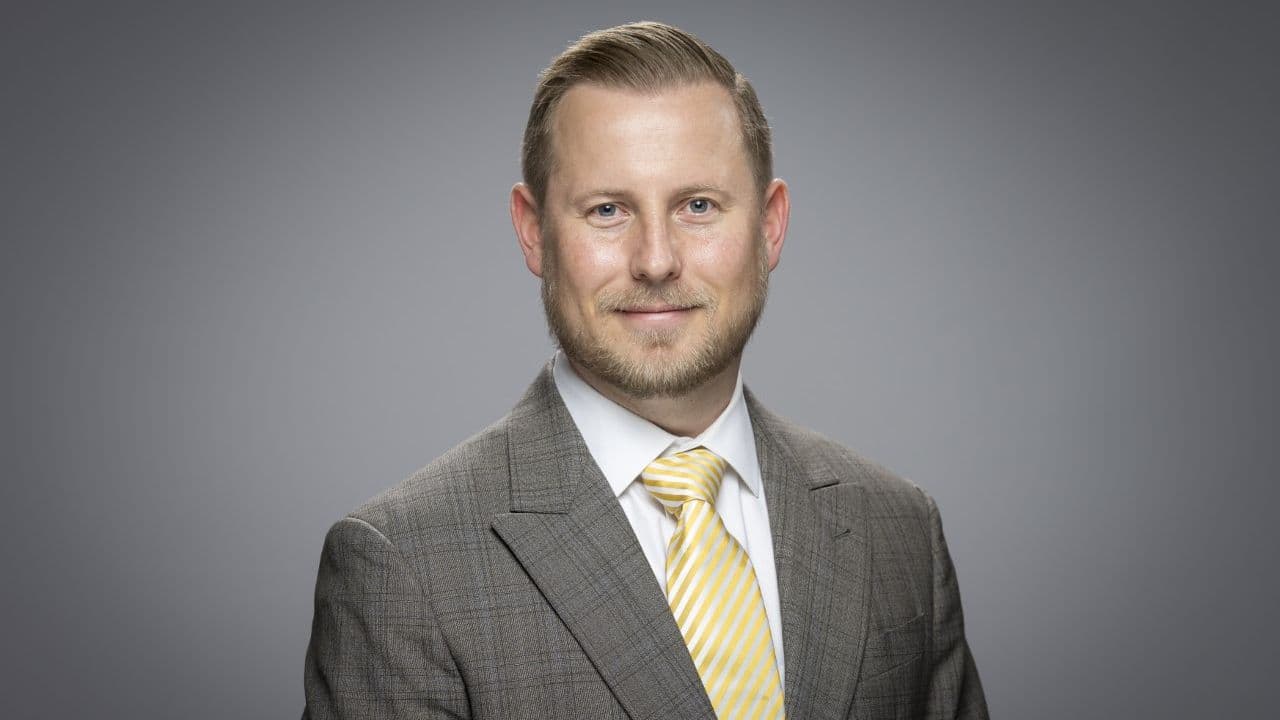
Michigan State President Kevin Guskiewicz has named Jon Palumbo the university’s interim athletic director as J Batt prepares to depart for Kentucky.Palumbo’s appointment is effective immediately. He will continue serving as CEO of Spartan Ventures while taking over leadership of the athletic department on an interim basis.“Jon has been an integral part of the innovation of MSU Athletics over the past year, and I have every confidence in his ability to maintain its positive trajectory as interim athletic director,” Guskiewicz said in a statement. “This will be a seamless transition for MSU Athletics, and we look forward to a successful start of the upcoming season for our programs and student-athletes.”“I’m honored to serve the university in this interim role, and I am grateful to President Guskiewicz for placing his trust and belief in me,” Palumbo said. “I look forward to working with our student-athletes, coaches and staff to build on the positive momentum we have established and continue to move MSU Athletics forward.”Palumbo currently serves as MSU’s executive deputy athletic director and chief operating officer. He oversees several major areas of the department, including finances, event operations, facilities, capital projects and strategic initiatives, while also serving as the primary sport administrator for football.Following the 2025 football season, Palumbo assisted with the search that led to the hiring of head coach Pat Fitzgerald.Guskiewicz said Michigan State will evaluate both internal and external candidates as it considers its long-term options for the position.“This is an exciting time for MSU Athletics, and I am happy to share this news with the Spartan community,” Guskiewicz said. “Over the coming weeks and months, I look forward to evaluating options, both internal and external, for a candidate to permanently fill the AD position.”Palumbo joined Michigan State in July 2025 after working alongside Batt at Georgia Tech. He served as the Yellow Jackets’ executive deputy athletic director and chief operating officer before being named interim athletic director following Batt’s departure for Michigan State in June 2025.At Georgia Tech, Palumbo oversaw internal operations and served as administrator for the football program. During his tenure, the Yellow Jackets made consecutive bowl appearances in 2023 and 2024, their first back-to-back bowl trips in a decade. He also helped oversee major facilities projects and initiatives involving event operations and fan engagement.Before joining Georgia Tech, Palumbo spent four years as athletic director at Texas A&M-Corpus Christi. The Islanders won a school-record seven Southland Conference championships during the 2021-22 academic year and reached the NCAA men’s basketball tournament in consecutive seasons after Palumbo hired Steve Lutz as head coach.Palumbo previously spent six years as deputy athletic director at Virginia Commonwealth University and also held positions at Maryland, American University, William & Mary and La Salle.A former La Salle baseball captain, Palumbo earned a bachelor’s degree in communication in 2001 and an MBA in 2003.
For the third time this year, I find myself adding important context to a column by Detroit News editorial page editor Nolan Finley.I have not had to do this so frequently since ESPN repeatedly conflated the crimes of Larry Nassar with Mark Dantonio, Tom Izzo, and Michigan State football and basketball. Once again, the problem is not that every question being raised is illegitimate. It is that Finley starts with a few fair questions, fills in the unanswered parts with the worst possible assumptions, and then presents his preferred version of events as though the evidence leaves no room for another conclusion.ESPN was a national organization swooping into East Lansing and trying to make sense of a complicated institution, a sprawling scandal, and years of internal history it did not fully understand.Finley does not have that excuse.He is here. He covers this state. He has access to the people involved, the documents, the public meetings, and the institutional history. He should be in a better position to separate legitimate concerns from speculation, and write with a degree of fairness that reflects the information available to him. Instead, for the third time this year, I find myself filling in pieces he either did not find or chose not to include.In his latest column for The Detroit News published online Saturday, Finley argues that President Kevin Guskiewicz returned to Michigan State with the Board of Trustees “in his pocket” and with what he describes as a guarantee that trustees will now “rubber-stamp anything he wants.” It is a sweeping conclusion that transforms an unusual presidential reversal, a revised contract, and long-running disagreements over Spartan Ventures into a story about one man manipulating an entire university governing board.The problem is not that every question Finley raises is illegitimate. The problem is that Finley repeatedly treats disagreement as evidence, unanswered questions as proof of misconduct, and his own interpretation of events as though it were the only conclusion available. He moves from uncertainty to suspicion and then from suspicion to certainty without supplying the facts necessary to support the journey.According to Finley’s version of events, Guskiewicz became angry when several trustees challenged him, went shopping for another job, used Clemson to extract more money and control, and then returned to East Lansing only after securing the loyalty of a compliant board. By the end of the column, that interpretation is no longer presented as one possible explanation. It has become a declaration that Guskiewicz played the situation “masterfully” and now effectively controls the people elected to oversee him.Getting from the facts to that conclusion requires Finley to fill in a remarkable amount of the story himself:He describes an 11% ownership interest in a commercial revenue entity as the sale of part of Michigan State’s athletic departmentHe presents assumptions about Guskiewicz’s motives as established factHe leaves important portions of the compensation timeline out of the discussionHe dismisses the very real outpouring of support that encouraged Guskiewicz and his wife, Amy, to reconsider leavingHe then treats the support of a majority of the Board of Trustees as proof that the president now owns it The problem with Finley’s latest theory is not merely that it is cynical; it is that the available evidence does not lead where he insists it does.Legitimate questions do not validate Finley’s larger narrative Under Guskiewicz’s revised agreement, his annual base salary will increase from approximately $1.03 million to $1.5 million, while his annual deferred compensation will rise from $200,000 to $250,000. The agreement extends his term through March 2031 and provides up to 10 hours each year aboard a private aircraft for personal travel by Guskiewicz, his family, or his guests.MSU has said philanthropic funding will support the salary increase and will cover the personal aircraft benefit. That arrangement deserves more explanation because private money connected directly to the compensation of the chief executive of a public university creates a level of public interest that goes beyond ordinary philanthropy.There are reasonable questions to ask here. Are the funds coming from one supporter or several? Are any conditions attached? Do any contributors have business relationships, investment interests, development proposals, contracts, or other matters before the university? Will Guskiewicz know who the donors are? What conflict-of-interest review will occur, and what happens if the private support ends before the contract does?Rather than pose those questions and press Michigan State for answers, Finley assumes the answers for himself, assigns the worst possible motives, and criticizes the people involved as though his suspicions have already been proven.Finley never explores whether the funding could be structured in a way that protects donor privacy while also limiting the potential for influence or conflicts of interest. It took me only a few calls to find out that one possible avenue under discussion is the creation of a separate fund or limited liability company to which supporters could contribute. That entity would then make an earmarked donation to the university to support the president’s compensation. The individuals contributing to the fund would be separate from the entity making the donation, and those donors could choose to remain anonymous to both the public and Guskiewicz, if they so choose.Many people donate to universities, charities, churches, and community organizations without seeking public recognition. Some prefer anonymity for personal, financial, or philosophical reasons, and the decision to remain unnamed should not automatically be treated as evidence that a donor is attempting to purchase influence.The public does not necessarily need every detail of every private gift made to Michigan State. Donor privacy has long been a normal part of university philanthropy, and institutions have legitimate reasons to protect it. At the same time, when private funds are used to support the compensation of a public university president, MSU should explain the safeguards designed to prevent donors from receiving influence, access, or preferential treatment in return.Those two principles can coexist. The university can protect the identities of people who wish to give anonymously while still explaining the structure of the fund, the conflict-of-interest protections surrounding it, whether Guskiewicz knows the identities of the contributors, and what controls are in place to ensure that no donor receives special treatment.Perhaps Finley asked those questions of MSU leadership before manufacturing suspicion about conflicts he has not identified. His column, however, gives no indication that he did.Confidentiality is not the same as secrecyFinley also returns to the dispute over trustee access to information connected to Spartan Ventures, even though that debate has already played out publicly and Spartan Ventures has now begun operations.Trustees were permitted to review certain information and could access additional proprietary records by signing nondisclosure agreements. Those requirements were designed to protect valuations, investment terms, business strategies, and other competitively sensitive information that could weaken Michigan State’s position if disclosed publicly. MSU’s position has consistently been that trustees were not denied access, but were asked to review some information under controlled conditions.Finley may believe those protections were too restrictive, but disagreement with the university’s approach does not establish that trustees lacked oversight or that the arrangement was improper. Elected trustees should receive the information necessary to govern, while MSU also has a responsibility to protect proprietary business material.By describing the NDAs as preventing trustees from discussing “university business” with voters, Finley stretches the dispute well beyond its actual scope. The agreements applied to additional Spartan Ventures-related information, not to university business generally.Spartan Ventures is not what Finley says it isFinley describes Spartan Ventures as a deal Guskiewicz directed to sell a portion of the athletic department to a private investor, without direct approval by the board. That is not an accurate description of what Michigan State created.The reported transaction involved an 11% ownership interest in Spartan Media Ventures, a revenue-focused commercial entity. It did not transfer ownership of 11% of Michigan State Athletics.The university still owns its teams, athletic programs, trademarks, facilities, academic mission, and institutional identity. Private investors did not acquire the authority to hire coaches, select athletes, establish academic policy, direct competition, or govern the athletic department.What is being monetized is future commercial revenue involving media rights, sponsorship opportunities, branding inventory, licensing opportunities, and other assets connected to Michigan State Athletics.Finley is free to question whether selling an ownership interest in a commercial affiliate is wise. He can question the valuation, governance protections, investor rights, transparency, financial assumptions, or long-term implications, and all of those would be fair subjects for scrutiny.However, an ownership stake in Spartan Media Ventures is not an ownership stake in Michigan State Athletics. Finley collapses those two concepts into one phrase because saying that MSU “sold part of its athletic department” sounds considerably more alarming than accurately describing the structure.There is also important history missing from his account.The Board of Trustees approved the broader Spartan Ventures strategy, and that authorization opened the door for university leadership to build the entities and financial structures necessary to carry it out. The broader framework ultimately included Spartan Ventures, the Spartan Athletic Foundation, and Spartan Media Ventures, with each designed to perform a different function within the effort to generate revenue and support Michigan State Athletics.Boards approve strategy and delegate execution. They do not negotiate every investor term, sponsorship agreement, capital structure, or commercial contract line by line. Trustees are responsible for setting direction, establishing guardrails, evaluating leadership, reviewing performance, and holding administrators accountable, while university leadership carries out the strategy the board approved.Expecting trustees to approve every individual step after authorizing the broader framework would not strengthen governance. At some point, it would become micromanagement. Finley largely skips over that division of responsibility because acknowledging it would complicate his narrative that Guskiewicz acted without meaningful board authority.Does Guskiewicz have the board “in his pocket”?Finley’s headline declares that Guskiewicz returned with the board “in his pocket,” while his conclusion goes even further by claiming that MSU now has a guarantee that trustees will “rubber-stamp anything he wants.” What guarantee?I’ve reviewed the contract and I've spoken with trustees this week. I can confidently tell you that there is no new rule requiring trustees to support Guskiewicz’s recommendations, no contract provision surrendering the board’s oversight authority, no agreement preventing trustees from voting against the president, and no evidence that Guskiewicz has been granted unilateral control over the university.Michigan State has eight independently elected trustees. The fact that five or six of them support the president does not mean the president owns the board. A governing-board majority having confidence in the institution’s chief executive is generally a prerequisite for functional governance.Could that majority become too deferential? Certainly.Could trustees fail to exercise enough independent oversight? Of course.Those concerns should be evaluated through decisions, votes, contracts, performance reviews, financial oversight, and specific examples of the board failing to challenge the administration when necessary.Finley offers none of that.Under Finley’s standard, a board majority supporting the president becomes proof that the president controls the board. If trustees fight with Guskiewicz, Michigan State is dysfunctional. If most trustees support him, the board is in his pocket. Either way, Finley reaches the same conclusion because the ending appears to have been written before the evidence was considered. The facts may change, but the story stays the same.There is room for skepticism about what has changed since Guskiewicz announced his departure. The board’s membership has not changed, and many of the same disagreements remain. Some trustees continue to believe recent governance reforms go too far, while others believe stronger expectations are necessary to prevent leaks, public undermining, and individual trustees from attempting to exercise authority outside the board as a whole.It is fair to ask whether recent conversations produced meaningful change or merely temporary peace. It is fair to wonder how long the current alignment will last, and it is fair to question whether the board’s revised governance expectations will improve institutional performance or suppress legitimate dissent.Those are open questions. They are not proof of a secret guarantee that trustees will approve anything Guskiewicz requests.The people Finley writes out of the storyPerhaps the most revealing part of Finley’s column is what receives almost no serious consideration: the Michigan State community.The day after Guskiewicz and his wife, Amy, returned from a family vacation, Spartans organized the “We ❤️ Kevin” and “We ❤️ Amy” campaign. Signs appeared, messages followed, and alumni, faculty members, students, staff members, donors, legislators, university leaders, and longtime Spartans shared messages of encouragement to the Guskiewiczes.Tom Izzo became one of the most prominent voices calling for change and urging the Michigan State community to stand behind a president he believed was moving the institution forward.After Guskiewicz announced his decision to remain, he did not describe one conversation, one contract provision, or one person changing his mind. Instead, he described a cumulative process involving the people who reached out, the relationships he and Amy had built, the work already underway, the leadership team around him, the conversations with Izzo, and a growing belief that Michigan State was still where they belonged.Finley reduces all of that to boosters donning “sackcloth and ashes.”That description is dismissive of the people who reached out and the genuine support that helped shape Guskiewicz’s decision.The outpouring of support does not prove Guskiewicz made the right decision or mean that every criticism of him is unfair. It also does not mean compensation played no role.A $1.5 million salary, additional deferred compensation, and personal aircraft access are substantial benefits, and it would be naïve to assume they did not matter. It is equally unsupported to assume they were the only things that mattered.Finley offers no evidence that Guskiewicz orchestrated the entire episode to enrich himself, consolidate power, or force trustees into permanent submission.He simply writes the story as though that motive has already been established.MSU deserves scrutiny – and accuracyMichigan State does not need protection from difficult questions such as these:What safeguards protect the university from donor influence when private financial support is used to fund part of the president’s compensation?How will Spartan Ventures continue to balance innovation, confidentiality, public accountability, and university oversight?What governance changes convinced Guskiewicz that Michigan State could move forward differently?Those are fair questions, and they are more than enough to justify continued scrutiny. They do not, however, justify filling every gap with the worst possible assumption.That is where Finley’s column loses its footing. Rather than follow the available evidence, he repeatedly pushes it toward the most damaging conclusion. Taken together, the result feels less like an argument built from the facts than a narrative shaped to reach an ending Finley had already chosen. Hard questions are necessary, but they must begin with accurate premises. Michigan State deserves both.Spartans Illustrated is supported by readers who value thoughtful, in-depth coverage of Michigan State. Subscribe today to support our work and gain access to all of our coverage.
Palumbo may be the right person to lead MSU Athletics, but first he must separate his own vision from the policies and relationships that defined Batt’s brief tenure
Michigan State President Kevin Guskiewicz has named Jon Palumbo the university’s interim athletic director as J Batt prepares to depart for Kentucky.Palumbo’s appointment is effective immediately. He will continue serving as CEO of Spartan Ventures while taking over leadership of the athletic department on an interim basis.“Jon has been an integral part of the innovation of MSU Athletics over the past year, and I have every confidence in his ability to maintain its positive trajectory as interim athletic director,” Guskiewicz said in a statement. “This will be a seamless transition for MSU Athletics, and we look forward to a successful start of the upcoming season for our programs and student-athletes.”“I’m honored to serve the university in this interim role, and I am grateful to President Guskiewicz for placing his trust and belief in me,” Palumbo said. “I look forward to working with our student-athletes, coaches and staff to build on the positive momentum we have established and continue to move MSU Athletics forward.”Palumbo currently serves as MSU’s executive deputy athletic director and chief operating officer. He oversees several major areas of the department, including finances, event operations, facilities, capital projects and strategic initiatives, while also serving as the primary sport administrator for football.Following the 2025 football season, Palumbo assisted with the search that led to the hiring of head coach Pat Fitzgerald.Guskiewicz said Michigan State will evaluate both internal and external candidates as it considers its long-term options for the position.“This is an exciting time for MSU Athletics, and I am happy to share this news with the Spartan community,” Guskiewicz said. “Over the coming weeks and months, I look forward to evaluating options, both internal and external, for a candidate to permanently fill the AD position.”Palumbo joined Michigan State in July 2025 after working alongside Batt at Georgia Tech. He served as the Yellow Jackets’ executive deputy athletic director and chief operating officer before being named interim athletic director following Batt’s departure for Michigan State in June 2025.At Georgia Tech, Palumbo oversaw internal operations and served as administrator for the football program. During his tenure, the Yellow Jackets made consecutive bowl appearances in 2023 and 2024, their first back-to-back bowl trips in a decade. He also helped oversee major facilities projects and initiatives involving event operations and fan engagement.Before joining Georgia Tech, Palumbo spent four years as athletic director at Texas A&M-Corpus Christi. The Islanders won a school-record seven Southland Conference championships during the 2021-22 academic year and reached the NCAA men’s basketball tournament in consecutive seasons after Palumbo hired Steve Lutz as head coach.Palumbo previously spent six years as deputy athletic director at Virginia Commonwealth University and also held positions at Maryland, American University, William & Mary and La Salle.A former La Salle baseball captain, Palumbo earned a bachelor’s degree in communication in 2001 and an MBA in 2003.
For the third time this year, I find myself adding important context to a column by Detroit News editorial page editor Nolan Finley.I have not had to do this so frequently since ESPN repeatedly conflated the crimes of Larry Nassar with Mark Dantonio, Tom Izzo, and Michigan State football and basketball. Once again, the problem is not that every question being raised is illegitimate. It is that Finley starts with a few fair questions, fills in the unanswered parts with the worst possible assumptions, and then presents his preferred version of events as though the evidence leaves no room for another conclusion.ESPN was a national organization swooping into East Lansing and trying to make sense of a complicated institution, a sprawling scandal, and years of internal history it did not fully understand.Finley does not have that excuse.He is here. He covers this state. He has access to the people involved, the documents, the public meetings, and the institutional history. He should be in a better position to separate legitimate concerns from speculation, and write with a degree of fairness that reflects the information available to him. Instead, for the third time this year, I find myself filling in pieces he either did not find or chose not to include.In his latest column for The Detroit News published online Saturday, Finley argues that President Kevin Guskiewicz returned to Michigan State with the Board of Trustees “in his pocket” and with what he describes as a guarantee that trustees will now “rubber-stamp anything he wants.” It is a sweeping conclusion that transforms an unusual presidential reversal, a revised contract, and long-running disagreements over Spartan Ventures into a story about one man manipulating an entire university governing board.The problem is not that every question Finley raises is illegitimate. The problem is that Finley repeatedly treats disagreement as evidence, unanswered questions as proof of misconduct, and his own interpretation of events as though it were the only conclusion available. He moves from uncertainty to suspicion and then from suspicion to certainty without supplying the facts necessary to support the journey.According to Finley’s version of events, Guskiewicz became angry when several trustees challenged him, went shopping for another job, used Clemson to extract more money and control, and then returned to East Lansing only after securing the loyalty of a compliant board. By the end of the column, that interpretation is no longer presented as one possible explanation. It has become a declaration that Guskiewicz played the situation “masterfully” and now effectively controls the people elected to oversee him.Getting from the facts to that conclusion requires Finley to fill in a remarkable amount of the story himself:He describes an 11% ownership interest in a commercial revenue entity as the sale of part of Michigan State’s athletic departmentHe presents assumptions about Guskiewicz’s motives as established factHe leaves important portions of the compensation timeline out of the discussionHe dismisses the very real outpouring of support that encouraged Guskiewicz and his wife, Amy, to reconsider leavingHe then treats the support of a majority of the Board of Trustees as proof that the president now owns it The problem with Finley’s latest theory is not merely that it is cynical; it is that the available evidence does not lead where he insists it does.Legitimate questions do not validate Finley’s larger narrative Under Guskiewicz’s revised agreement, his annual base salary will increase from approximately $1.03 million to $1.5 million, while his annual deferred compensation will rise from $200,000 to $250,000. The agreement extends his term through March 2031 and provides up to 10 hours each year aboard a private aircraft for personal travel by Guskiewicz, his family, or his guests.MSU has said philanthropic funding will support the salary increase and will cover the personal aircraft benefit. That arrangement deserves more explanation because private money connected directly to the compensation of the chief executive of a public university creates a level of public interest that goes beyond ordinary philanthropy.There are reasonable questions to ask here. Are the funds coming from one supporter or several? Are any conditions attached? Do any contributors have business relationships, investment interests, development proposals, contracts, or other matters before the university? Will Guskiewicz know who the donors are? What conflict-of-interest review will occur, and what happens if the private support ends before the contract does?Rather than pose those questions and press Michigan State for answers, Finley assumes the answers for himself, assigns the worst possible motives, and criticizes the people involved as though his suspicions have already been proven.Finley never explores whether the funding could be structured in a way that protects donor privacy while also limiting the potential for influence or conflicts of interest. It took me only a few calls to find out that one possible avenue under discussion is the creation of a separate fund or limited liability company to which supporters could contribute. That entity would then make an earmarked donation to the university to support the president’s compensation. The individuals contributing to the fund would be separate from the entity making the donation, and those donors could choose to remain anonymous to both the public and Guskiewicz, if they so choose.Many people donate to universities, charities, churches, and community organizations without seeking public recognition. Some prefer anonymity for personal, financial, or philosophical reasons, and the decision to remain unnamed should not automatically be treated as evidence that a donor is attempting to purchase influence.The public does not necessarily need every detail of every private gift made to Michigan State. Donor privacy has long been a normal part of university philanthropy, and institutions have legitimate reasons to protect it. At the same time, when private funds are used to support the compensation of a public university president, MSU should explain the safeguards designed to prevent donors from receiving influence, access, or preferential treatment in return.Those two principles can coexist. The university can protect the identities of people who wish to give anonymously while still explaining the structure of the fund, the conflict-of-interest protections surrounding it, whether Guskiewicz knows the identities of the contributors, and what controls are in place to ensure that no donor receives special treatment.Perhaps Finley asked those questions of MSU leadership before manufacturing suspicion about conflicts he has not identified. His column, however, gives no indication that he did.Confidentiality is not the same as secrecyFinley also returns to the dispute over trustee access to information connected to Spartan Ventures, even though that debate has already played out publicly and Spartan Ventures has now begun operations.Trustees were permitted to review certain information and could access additional proprietary records by signing nondisclosure agreements. Those requirements were designed to protect valuations, investment terms, business strategies, and other competitively sensitive information that could weaken Michigan State’s position if disclosed publicly. MSU’s position has consistently been that trustees were not denied access, but were asked to review some information under controlled conditions.Finley may believe those protections were too restrictive, but disagreement with the university’s approach does not establish that trustees lacked oversight or that the arrangement was improper. Elected trustees should receive the information necessary to govern, while MSU also has a responsibility to protect proprietary business material.By describing the NDAs as preventing trustees from discussing “university business” with voters, Finley stretches the dispute well beyond its actual scope. The agreements applied to additional Spartan Ventures-related information, not to university business generally.Spartan Ventures is not what Finley says it isFinley describes Spartan Ventures as a deal Guskiewicz directed to sell a portion of the athletic department to a private investor, without direct approval by the board. That is not an accurate description of what Michigan State created.The reported transaction involved an 11% ownership interest in Spartan Media Ventures, a revenue-focused commercial entity. It did not transfer ownership of 11% of Michigan State Athletics.The university still owns its teams, athletic programs, trademarks, facilities, academic mission, and institutional identity. Private investors did not acquire the authority to hire coaches, select athletes, establish academic policy, direct competition, or govern the athletic department.What is being monetized is future commercial revenue involving media rights, sponsorship opportunities, branding inventory, licensing opportunities, and other assets connected to Michigan State Athletics.Finley is free to question whether selling an ownership interest in a commercial affiliate is wise. He can question the valuation, governance protections, investor rights, transparency, financial assumptions, or long-term implications, and all of those would be fair subjects for scrutiny.However, an ownership stake in Spartan Media Ventures is not an ownership stake in Michigan State Athletics. Finley collapses those two concepts into one phrase because saying that MSU “sold part of its athletic department” sounds considerably more alarming than accurately describing the structure.There is also important history missing from his account.The Board of Trustees approved the broader Spartan Ventures strategy, and that authorization opened the door for university leadership to build the entities and financial structures necessary to carry it out. The broader framework ultimately included Spartan Ventures, the Spartan Athletic Foundation, and Spartan Media Ventures, with each designed to perform a different function within the effort to generate revenue and support Michigan State Athletics.Boards approve strategy and delegate execution. They do not negotiate every investor term, sponsorship agreement, capital structure, or commercial contract line by line. Trustees are responsible for setting direction, establishing guardrails, evaluating leadership, reviewing performance, and holding administrators accountable, while university leadership carries out the strategy the board approved.Expecting trustees to approve every individual step after authorizing the broader framework would not strengthen governance. At some point, it would become micromanagement. Finley largely skips over that division of responsibility because acknowledging it would complicate his narrative that Guskiewicz acted without meaningful board authority.Does Guskiewicz have the board “in his pocket”?Finley’s headline declares that Guskiewicz returned with the board “in his pocket,” while his conclusion goes even further by claiming that MSU now has a guarantee that trustees will “rubber-stamp anything he wants.” What guarantee?I’ve reviewed the contract and I've spoken with trustees this week. I can confidently tell you that there is no new rule requiring trustees to support Guskiewicz’s recommendations, no contract provision surrendering the board’s oversight authority, no agreement preventing trustees from voting against the president, and no evidence that Guskiewicz has been granted unilateral control over the university.Michigan State has eight independently elected trustees. The fact that five or six of them support the president does not mean the president owns the board. A governing-board majority having confidence in the institution’s chief executive is generally a prerequisite for functional governance.Could that majority become too deferential? Certainly.Could trustees fail to exercise enough independent oversight? Of course.Those concerns should be evaluated through decisions, votes, contracts, performance reviews, financial oversight, and specific examples of the board failing to challenge the administration when necessary.Finley offers none of that.Under Finley’s standard, a board majority supporting the president becomes proof that the president controls the board. If trustees fight with Guskiewicz, Michigan State is dysfunctional. If most trustees support him, the board is in his pocket. Either way, Finley reaches the same conclusion because the ending appears to have been written before the evidence was considered. The facts may change, but the story stays the same.There is room for skepticism about what has changed since Guskiewicz announced his departure. The board’s membership has not changed, and many of the same disagreements remain. Some trustees continue to believe recent governance reforms go too far, while others believe stronger expectations are necessary to prevent leaks, public undermining, and individual trustees from attempting to exercise authority outside the board as a whole.It is fair to ask whether recent conversations produced meaningful change or merely temporary peace. It is fair to wonder how long the current alignment will last, and it is fair to question whether the board’s revised governance expectations will improve institutional performance or suppress legitimate dissent.Those are open questions. They are not proof of a secret guarantee that trustees will approve anything Guskiewicz requests.The people Finley writes out of the storyPerhaps the most revealing part of Finley’s column is what receives almost no serious consideration: the Michigan State community.The day after Guskiewicz and his wife, Amy, returned from a family vacation, Spartans organized the “We ❤️ Kevin” and “We ❤️ Amy” campaign. Signs appeared, messages followed, and alumni, faculty members, students, staff members, donors, legislators, university leaders, and longtime Spartans shared messages of encouragement to the Guskiewiczes.Tom Izzo became one of the most prominent voices calling for change and urging the Michigan State community to stand behind a president he believed was moving the institution forward.After Guskiewicz announced his decision to remain, he did not describe one conversation, one contract provision, or one person changing his mind. Instead, he described a cumulative process involving the people who reached out, the relationships he and Amy had built, the work already underway, the leadership team around him, the conversations with Izzo, and a growing belief that Michigan State was still where they belonged.Finley reduces all of that to boosters donning “sackcloth and ashes.”That description is dismissive of the people who reached out and the genuine support that helped shape Guskiewicz’s decision.The outpouring of support does not prove Guskiewicz made the right decision or mean that every criticism of him is unfair. It also does not mean compensation played no role.A $1.5 million salary, additional deferred compensation, and personal aircraft access are substantial benefits, and it would be naïve to assume they did not matter. It is equally unsupported to assume they were the only things that mattered.Finley offers no evidence that Guskiewicz orchestrated the entire episode to enrich himself, consolidate power, or force trustees into permanent submission.He simply writes the story as though that motive has already been established.MSU deserves scrutiny – and accuracyMichigan State does not need protection from difficult questions such as these:What safeguards protect the university from donor influence when private financial support is used to fund part of the president’s compensation?How will Spartan Ventures continue to balance innovation, confidentiality, public accountability, and university oversight?What governance changes convinced Guskiewicz that Michigan State could move forward differently?Those are fair questions, and they are more than enough to justify continued scrutiny. They do not, however, justify filling every gap with the worst possible assumption.That is where Finley’s column loses its footing. Rather than follow the available evidence, he repeatedly pushes it toward the most damaging conclusion. Taken together, the result feels less like an argument built from the facts than a narrative shaped to reach an ending Finley had already chosen. Hard questions are necessary, but they must begin with accurate premises. Michigan State deserves both.Spartans Illustrated is supported by readers who value thoughtful, in-depth coverage of Michigan State. Subscribe today to support our work and gain access to all of our coverage.
Palumbo may be the right person to lead MSU Athletics, but first he must separate his own vision from the policies and relationships that defined Batt’s brief tenure
Michigan State President Kevin Guskiewicz has named Jon Palumbo the university’s interim athletic director as J Batt prepares to depart for Kentucky.Palumbo’s appointment is effective immediately. He will continue serving as CEO of Spartan Ventures while taking over leadership of the athletic department on an interim basis.“Jon has been an integral part of the innovation of MSU Athletics over the past year, and I have every confidence in his ability to maintain its positive trajectory as interim athletic director,” Guskiewicz said in a statement. “This will be a seamless transition for MSU Athletics, and we look forward to a successful start of the upcoming season for our programs and student-athletes.”“I’m honored to serve the university in this interim role, and I am grateful to President Guskiewicz for placing his trust and belief in me,” Palumbo said. “I look forward to working with our student-athletes, coaches and staff to build on the positive momentum we have established and continue to move MSU Athletics forward.”Palumbo currently serves as MSU’s executive deputy athletic director and chief operating officer. He oversees several major areas of the department, including finances, event operations, facilities, capital projects and strategic initiatives, while also serving as the primary sport administrator for football.Following the 2025 football season, Palumbo assisted with the search that led to the hiring of head coach Pat Fitzgerald.Guskiewicz said Michigan State will evaluate both internal and external candidates as it considers its long-term options for the position.“This is an exciting time for MSU Athletics, and I am happy to share this news with the Spartan community,” Guskiewicz said. “Over the coming weeks and months, I look forward to evaluating options, both internal and external, for a candidate to permanently fill the AD position.”Palumbo joined Michigan State in July 2025 after working alongside Batt at Georgia Tech. He served as the Yellow Jackets’ executive deputy athletic director and chief operating officer before being named interim athletic director following Batt’s departure for Michigan State in June 2025.At Georgia Tech, Palumbo oversaw internal operations and served as administrator for the football program. During his tenure, the Yellow Jackets made consecutive bowl appearances in 2023 and 2024, their first back-to-back bowl trips in a decade. He also helped oversee major facilities projects and initiatives involving event operations and fan engagement.Before joining Georgia Tech, Palumbo spent four years as athletic director at Texas A&M-Corpus Christi. The Islanders won a school-record seven Southland Conference championships during the 2021-22 academic year and reached the NCAA men’s basketball tournament in consecutive seasons after Palumbo hired Steve Lutz as head coach.Palumbo previously spent six years as deputy athletic director at Virginia Commonwealth University and also held positions at Maryland, American University, William & Mary and La Salle.A former La Salle baseball captain, Palumbo earned a bachelor’s degree in communication in 2001 and an MBA in 2003.
After a very unusual leadership reversal, MSU's president reflects on the weeks that changed everything, the role Tom Izzo played, and what the future of the athletic director position at MSU might hold
With Guskiewicz staying, the balance of leverage has shifted dramatically in the university’s favor
When Michigan State athletic director J Batt announced he was leaving for Kentucky, Mark Hollis’ phone began filling with messages from influential donors, former colleagues, athletic directors, former Big Ten commissioner Jim Delany, and longtime Michigan State supporters asking the same basic question.Would you do it?For most of the past eight years, Hollis says, that answer would not have required much thought.“I’ve never thought about even getting back into college sports until just recently,” Hollis told Spartans Illustrated. “A lot of significant donors, a lot of folks that are part of the strategies that are going on up there in the athletic department right now reached out and just said, ‘Would you be willing to help? Would you even consider it? Would you come back?’”Hollis says he is willing to answer that question in the affirmative.“I am very comfortable with myself in that I could deliver high value in where they’re headed,” Hollis said. “It could be anything. It could be anything from consultant to jumping back into the role of AD.”That answer lands at a complicated moment for Michigan State.There are times when a university searches for a new leader. Then there are times when it searches for a new direction.Michigan State is currently attempting to do both.Its president has accepted another job. As has its athletic director. A new commercial model has been launched through Spartan Ventures. Donors are being asked to embrace a different vision for the future. Coaches are recruiting through uncertainty. Trustees continue to battle over the university’s direction. Fans are trying to understand who is actually in charge. And through all of it, the university is still attempting to project stability while so much of the ground beneath it continues to shift.The result is a university caught between eras. The old leadership has not fully exited. The next leadership has not arrived. And the people who care most about Michigan State are left staring at a vacuum.Hollis sees it from the outside now, but he does not sound detached from it.“As an outsider who has no knowledge or who has no ability to directly impact other than listening to Tom (Izzo), or encouraging Pat (Fitzgerald), Adam (Nightingale) - and some of the other coaches who reach out quite often - you just want positivity and you want forward movement,” Hollis said. “And you can’t move forward when you’re treading water the way we are right now.” That sentence may be the clearest description of Michigan State’s current position.It is treading water.Nearly eight and a half years after he walked away from Michigan State, Hollis finds himself in an unexpected place – willing to come back to East Lansing if he is asked to do so, but also careful not to campaign for a job he does not control.That is why, on Independence Day Weekend 2026, Hollis took an hour to sit down with Spartans Illustrated for a wide-ranging conversation about why he is open to helping Michigan State again, what his years in Detroit taught him about leadership, how he views Spartan Ventures, NIL, donor confidence, and the future of college athletics - and how he reflects on the chapter that ended his time in East Lansing.For many younger Spartan fans, Hollis is remembered primarily as the athletic director who resigned during the darkest chapter in university history. For others, he remains the visionary who transformed Michigan State athletics through ideas nobody else would attempt – staging hockey games in football stadiums, putting basketball aboard an aircraft carrier, moving football to Ford Field, aggressively partnering with television networks, and convincing the rest of college athletics that Michigan State could become one of the industry’s most innovative brands. Both versions of Mark Hollis exist.Neither fully explains the person sitting in downtown Detroit today.When Hollis left Michigan State in January 2018, he was an emotional leader, an institutional loyalist, and a highly creative athletic director who took things personally. He admits that now. He says he absorbed criticism too deeply, carried too much internally, and tried too hard to please too many people.Detroit changed some of that.After leaving Michigan State, Hollis stepped into one of the most ambitious private redevelopment efforts in America, joining businessman Dan Gilbert as Detroit attempted to reinvent itself. What began as a consulting role evolved into something much larger, placing Hollis at the center of projects ranging from the NFL Draft and the NCAA Men’s Final Four to downtown entertainment districts, corporate development, and civic partnerships.If his years at Michigan State taught him how to operate inside college athletics, Detroit forced him to think beyond it.“Dan Gilbert didn’t bring me down here just to do sports,” Hollis said. “He brought me down here to revitalize what’s going on in Detroit.”The projects became increasingly diverse.One day it meant helping land national sporting events. Another day it meant coordinating COVID-era manufacturing efforts to produce masks for health systems. Another involved collaborating with professional sports franchises, developers, and city officials on entertainment districts and economic development. Eventually, the work stretched into the NFL Draft, the Final Four, PGA Tour projects, Cosm, entertainment venues, and downtown activation projects that all carried a similar underlying purpose: bring people together, create something that did not previously exist, and use the event to change how people see a place.Looking back, Hollis believes those experiences changed him as a leader in ways college athletics never could.(courtesy photo)“(Things would be different coming in) with the knowledge of the university, the way it works, the importance of certain colleges and the academic side and how important that is,” Hollis said. "I also have been working for a guy that is a multi-billionaire and he expects good decision making, expects it now. And if it’s not done, you make changes, and you get better.”That is the central argument for Hollis.Not that he once knew Michigan State. Not that he once built memorable events. Not that he once had relationships with donors, coaches, and alumni. Those things are true, but they are not enough by themselves.The argument is that he knows Michigan State and has spent the last eight years outside of it, learning how to move faster, communicate more directly, make harder decisions, and operate in a more business-driven sports environment.“In my time as MSU’s AD, I was very deliberate in decision-making,” Hollis said. “I wanted to make sure things were perfect. I’ve learned now that things are never going to be perfect. You have to make a decision and get going.”That philosophy came directly from Gilbert, whose management style challenged many of Hollis’ long-held instincts.At Michigan State, Hollis often viewed every decision through the lens of every possible constituency. Students. Faculty. Coaches. Donors. Sponsors. Alumni. He even kept a chart listing roughly 40 different stakeholder groups and mentally worked through how each might react before making major decisions.Today, he still believes in listening. He simply no longer believes listening requires paralysis.“I took every word to heart at MSU,” Hollis admitted. “I’m a very emotional guy. That’s probably what really hurt me."(courtesy photo)Age helped. Experience helped. Detroit helped even more.Working for Gilbert meant operating inside an environment where difficult decisions were expected rather than avoided. Hollis recalls one exchange shortly after Detroit failed in an early bid to land a Final Four in the city. Gilbert blasted him in a group text, reminding him he had been hired to bring major events to Detroit.Years earlier, Hollis admits, he probably would have internalized the criticism. Instead, he replied with a simple request.“Build me some hotel rooms,” he told Gilbert.Gilbert answered just as simply.“Okay. Let’s get after it.”To Hollis, that brief exchange became symbolic of an entirely different leadership philosophy. Less worrying about criticism, more solving problems.“(In the past), I was always trying to find a way to say yes to everybody,” Hollis said. “Now I’m much more direct. I’m not worrying about having to please every person that I come into contact with.”That evolution may explain why Hollis sounds different today than the athletic director Michigan State fans remember from 2018.He seems less interested in defending his resume than explaining what he has learned since building it. Perhaps most notably, he repeatedly returns to one word throughout nearly an hour of conversation: listen.Not because listening avoids difficult decisions, but because listening leads to better ones.“I think people need to listen more than talk right now in order to take action,” Hollis said.That is the framework he would bring back to East Lansing if Michigan State ever asked.What exactly that role might look like remains unclear.Hollis says he has advised university leaders informally over the past several years and insists he is open to whatever role the institution believes would create the most value. That could mean consulting. It could mean advising. It could even mean serving as athletic director again.“It really comes down to what does the school want, need, and who’s going to be doing the asking,” he said.He is careful not to campaign.In fact, throughout the interview, Hollis repeatedly resists opportunities to make the conversation only about himself. Asked what Michigan State needs from its next generation of leadership, he answers by discussing donor confidence, institutional relationships, the future of NIL, expanding the university’s fundraising footprint beyond its traditional base, and helping the average Spartan understand where college athletics is headed.The answers sound less like someone seeking a position than someone who has spent years thinking about Michigan State’s challenges from the outside.Whether Michigan State ultimately calls him or not, Hollis no longer views himself as someone whose relationship with the university ended in 2018.Instead, he sees himself as someone who spent the last eight years preparing differently than he ever expected.And before anyone can fairly judge whether that preparation matters, Hollis believes they first have to understand the experiences that reshaped him after leaving Michigan State.If there is one theme that runs through nearly every answer Hollis gives, it is not innovation. It is not fundraising. It is not even college athletics.It is trust.For all of the discussion surrounding Michigan State’s next athletic director, NIL, conference realignment and the business of college sports, Hollis repeatedly comes back to something much simpler. Institutions function best when the people who care about them believe in them.That belief, he argues, has to be earned.“The one that jumps to the front,” Hollis said of Michigan State’s immediate priorities, “is reassuring that group of donors and supporters.”But he is equally quick to point out that reassurance alone is not a long-term strategy.Michigan State cannot continue asking the same people to carry increasingly larger financial burdens.“You can only go back to certain donors so many times before it wears thin,” he said. “Having a bigger pool ... that’s where the future is.”To Hollis, that means looking well beyond East Lansing. Well beyond Michigan. Even well outside the Midwest.Michigan State graduates live in New York. Dallas. Atlanta. Florida. California. Every corner of the country where Spartan alumni built careers and businesses. He believes the university has only begun to tap that network.He talks about turning “the marginal Spartan” into “an enthusiastic Spartan.”He understands there are Spartans with capacity who are not yet emotionally activated, not because they do not care, but because nobody has explained the vision in a way that makes them want to join. That is a leadership challenge. It is also a communication challenge.Michigan State does not just need someone to raise money. It needs someone who can explain why the money matters, where it is going, how it fits into the university’s mission, and why people should trust the people managing it.That philosophy reflects perhaps the biggest difference between the administrator who left Michigan State in 2018 and the executive who now works in Detroit.College athletics once represented the center of Hollis’ professional universe. Today, it is one part of a much broader ecosystem. His conversations no longer revolve exclusively around television contracts and coaching searches. They involve private investment, downtown redevelopment, professional sports franchises, technology companies, and civic partnerships.He has spent years watching how large-scale organizations attract capital, communicate vision, and convince people to invest in projects whose returns are measured over decades rather than seasons.Those experiences inevitably shape how he views Michigan State’s future.One example is Spartan Ventures.Since the university announced its new commercial structure, reactions have ranged from excitement to skepticism. Some see it as an overdue modernization. Others remain uncertain about exactly what it is designed to accomplish.Hollis falls somewhere between those positions.He likes the model. He believes the people building it are capable. He also believes Michigan State has not adequately explained it.“I think there’s some very good components to it,” Hollis said. “The people that are there on that board from Phil Hickey all through are very good thinkers, very good business people, and they haven’t built a bad model.”He points to the business leaders involved on the board of directors and says the overall structure resembles models that have existed successfully elsewhere, particularly in the Southeastern Conference, where commercial partnerships and private fundraising have long played a larger role than they traditionally have in the Big Ten.“The model works,” he said.But successful models still require public understanding.“The chatter that’s going on at Michigan State right now ... it’s been the issue that’s divided the school in a way,” Hollis said. “Part of that is because publicly, nobody really knows what it’s about.”He pauses before describing the perception problem.“People are told, ‘It’s Spartan Ventures. It’s going to raise a lot of money. It’s going to make us successful.’ Well ... what is it?” he said.He makes it clear that his criticism is not aimed at the concept itself. It is aimed at the communication surrounding it.“When things appear to be under cloak and dagger, it’s not a very attractive thing for folks to want to donate to.”The solution, in his mind, is remarkably straightforward: explain it.Not with slogans. Not with assumptions. With education.“It needs to be a little bit better known what the Spartan Ventures strategies are all about,” Hollis said. “Then people can decide if it’s a good business decision. If it’s a good donation decision.”That observation reaches beyond Spartan Ventures. It reflects Hollis’ broader philosophy about leadership.(courtesy photo)Throughout the interview, he drew a distinction between selling and explaining. Selling asks people to trust leadership, while explaining gives them reasons to. That distinction becomes especially important as college athletics continues evolving at breakneck speed.Spartan Ventures may ultimately prove to be one of the most important structural changes Michigan State athletics has made in years. But it has arrived during a leadership vacuum, amid donor questions, board tension, and public confusion. To many fans, it still sounds like a phrase rather than a plan.That does not mean every detail should be public. Donor strategy is sensitive. Business structures require discretion. Competitive advantages should be protected. But Hollis is right when he says that mystery carries a cost. When people do not understand a model, they fill in the blanks themselves.The same need for clarity applies to NIL, revenue sharing, and the broader future of college athletics.Michigan State’s next athletic director, whether interim or permanent, will inherit a job that barely resembles the one Hollis left. NIL has changed everything. Revenue sharing is changing everything again. The transfer portal has changed roster management. Donor strategy has become more complex. The Big Ten has expanded coast to coast. Football and basketball remain the financial engines, but Olympic sports are now fighting for relevance and resources in a more ruthless economic structure.Hollis is not pretending the job is the same.“The game’s changed since I stepped away significantly,” he said. “I mean, that’s an understatement.”But he pushes back on the idea that he would be outdated.One criticism occasionally directed toward older athletic administrators is that they simply do not understand today’s environment. Hollis rejects that notion almost immediately.“I kind of argue I was on the front end of all of it,” he said.He points to his involvement with Score, an NIL platform he has helped advise since its founding, and says the industry still has not settled on what the future should look like.“We’ve kind of gone from nothing to everything,” Hollis said. “I think it’s going to come back into some sort of a leveling.”That uncertainty, he argues, is precisely why experienced leadership still matters.College athletics has become increasingly transactional. Roster turnover accelerates every offseason. Revenue sharing is reshaping athletic department budgets. Players have unprecedented freedom. Schools are adapting almost in real time.Hollis does not oppose those changes. In many ways, he welcomes them. Years before NIL became reality, he publicly supported greater opportunities for student-athletes to benefit from their own value.But he worries about the shape of the industry, too. He speaks about college athletics almost the way longtime commissioners once did – less concerned with quarterly wins than with preserving the health of the enterprise.“I just think we need to keep working on it,” Hollis said. “And the industry needs leaders in this area to help get it to where it needs to be.”That philosophy also informs how he thinks about Michigan State’s athletic department.Asked what he would do differently if he became an athletic director today, Hollis does not begin with facilities or fundraising.He begins with people.When he first became athletic director in 2008, nearly everyone around him had already been a colleague. Many were friends. Rather than making immediate personnel changes, he chose continuity.Looking back, he believes that instinct may have been one of his biggest mistakes.“I took an approach that everybody who was there was going to stay there,” Hollis said. “In hindsight, I wish I had made some moves in some of those areas.”Today’s Hollis would begin with a comprehensive assessment. Listen. Evaluate. Determine whether everyone shares the same vision. And if they do not, make difficult decisions more quickly.“I’m better prepared to make those today than I was when I stepped in there in 2008,” he said.It is a striking admission. Not because Hollis is criticizing his younger self. Because he is acknowledging that leadership itself evolves. The administrator who once measured every decision against dozens of possible stakeholder reactions now believes decisiveness is just as important as consensus. The executive who once struggled to separate professional criticism from personal criticism now views difficult conversations as part of the job.Hollis also remains a broad-based athletics believer.Revenue sharing and NIL will place even more pressure on athletic departments to prioritize football and men’s basketball. That is unavoidable. Football drives the bus. Men’s basketball matters enormously. The money has to work. But Hollis said he still believes the value of college athletics is tied to opportunity across sports.“I’m a broad-based program guy,” Hollis said. “It’s how I grew up. It’s where I believe the value is in sport.”That will matter in the next era.Michigan State’s next athletic director will have to make hard decisions about resources. The job will require business instincts, donor relationships, media understanding, facility strategy, coach management, and political awareness. It will also require someone who can explain why the athletic department exists inside a university, not above it.Hollis praised Kevin Guskiewicz on that front, saying he viewed athletics as a tool to strengthen the school. Hollis said that once athletics stops being a successful tool and becomes too big for itself, it can become destructive quickly.That is the line Michigan State has to walk.Spartan Ventures cannot look like athletics separating itself from the university. The athletic department cannot become a private kingdom. Donor strategy cannot become a mystery club. The university cannot treat fans and alumni as people who should simply trust whatever comes next. There has to be a voice. There has to be explanation. There has to be leadership.The athletic director once celebrated primarily for creativity now speaks just as passionately about organizational clarity, communication, and institutional trust. Those lessons, he believes, have made him more prepared than ever to lead.Whether Michigan State ultimately agrees remains an unanswered question.But before that question can even be asked, it is worth remembering that Hollis’ creativity was never really about spectacle in the first place.One of the biggest misconceptions about Mark Hollis is that he spent his career chasing big ideas. He insists that is not actually true.The outdoor hockey game at Spartan Stadium. Basketball aboard the USS Carl Vinson. Football at Ford Field. The television partnerships. The aggressive push to make Michigan State visible in ways other schools had not tried. Looking back, those moments can appear to be a collection of disconnected spectacles, each remembered for its novelty more than its purpose.Hollis sees them differently.To him, they were all answers to the same question, one he began asking himself years before he ever occupied the athletic director’s office.How does Michigan State become impossible to ignore?“When I took the job, we were surrounded by Michigan, Ohio State, and Notre Dame,” Hollis said.He was not talking just about geography. He was talking about identity.Michigan State occupied one of the most difficult positions in college athletics. It shared a region with three of the biggest brands in the sport, institutions whose traditions had been built over generations and whose names already carried enormous national weight. During his years as an assistant athletic director, Hollis heard the same conversations repeated over and over again.Michigan has this. Ohio State has that. We need one too.To him, that line of thinking guaranteed Michigan State would always be chasing someone else’s standard. The moment he became athletic director, he decided that had to change.“One of my lines was, ‘Be aware, but don’t compare,’” he recalled.It became more than a slogan. It became the philosophy that shaped nearly every significant decision he made.Michigan State was not going to out-Michigan Michigan. It was not going to out-Notre Dame Notre Dame. It was not going to out-Ohio State Ohio State. If those schools owned tradition, Michigan State needed to own something else. It needed to become the school willing to imagine ideas nobody else was attempting, because originality had a way of creating attention that money and history sometimes could not.That philosophy explains why Hollis smiles when people remember the events themselves.To him, the events were never the point.“The overarching theme was an assessment of where we were geographically and what we were surrounded by,” Hollis said. “We wanted people to notice us that otherwise wouldn’t.”Viewed through that lens, the outdoor hockey game was not really about hockey. The Carrier Classic was not really about basketball. Each became another opportunity to place Michigan State at the center of a national conversation that otherwise might have revolved around someone else.Those moments generated headlines, but Hollis was always thinking about what happened after the headlines disappeared.Would television executives remember Michigan State differently? Would recruits? Would corporate partners? Would alumni? Would people who otherwise never paid attention begin associating Michigan State with creativity?That was the real objective.“We wanted to be relevant at something,” Hollis said. “Because if you don’t, you become irrelevant again.”That sentence may explain his tenure better than any championship banner hanging inside Spartan Stadium or the Breslin Center.Hollis points to the university’s evolving relationships with television partners as an example. Michigan State invested heavily in relationships with ESPN during a period when the network was becoming the unquestioned leader in college sports. Later, as media rights shifted, Michigan State aligned itself with Fox at precisely the moment Fox was expanding its commitment to the Big Ten. At a time when radio really mattered, the Spartan brand took over the “Great Voice of the Great Lakes” – WJR 760 radio in Detroit.Those were not isolated business decisions. They were extensions of the same philosophy: Relationships create opportunities; attention creates relationships; originality creates attention.“We built a relationship with ESPN that was second to none,” Hollis said. “When we sold our multimedia rights, we sold them to Fox. Fox happened to own the Big Ten Network. Fox happened to be getting the Big Ten rights. By us being a partner ... it helped the school dramatically.”He is careful not to suggest Michigan State received favorable treatment because of those relationships. Instead, he describes something subtler and perhaps more important. When organizations consistently bring value to a partnership, people remember.It is a lesson he says extends far beyond television.Throughout the interview, Hollis returns repeatedly to the idea that successful leadership is built less on individual brilliance than on assembling people who can accomplish more together than separately. Whether discussing downtown Detroit, the NFL Draft, the Final Four, or Michigan State athletics, he rarely describes himself as the architect. More often, he describes himself as the person asking questions long enough to figure out how someone else’s idea could actually become reality.“What I love is it’s not me,” Hollis said. “Many of the ideas aren’t my ideas. It’s my drive to try and bring them to life.”He offers the outdoor hockey game as an example.The original concept belonged to longtime Michigan State hockey administrator Dave McAuliffe. Hollis’ contribution, he says, was the relentless pursuit of making it possible. If the question became whether ice could survive inside a football stadium, the next question became where the refrigeration equipment would come from. If logistics became the obstacle, then the next conversation centered on solving logistics.Every problem simply led to another question.“Can we do it? Can we get ice? Where do we get a freezer? How do we ... ?” Hollis' voice trails off. The questions never really stopped. Neither did the listening.That may be the most surprising aspect of hearing Hollis describe his leadership philosophy. Despite a reputation built on boldness, his own description of success rarely begins with vision. It begins with curiosity.Listen first. Understand the problem completely. Then gather the people capable of solving it.That approach followed him to Detroit, where projects often involved dozens of stakeholders whose interests do not naturally align. It also shapes how he views Michigan State’s future. The irony, he believes, is that college athletics once again finds itself in a period where everyone is chasing the same things. Every school is trying to maximize NIL. Every school is pursuing new revenue streams. Every school is building premium seating. Every school is exploring private investment.Those initiatives matter, of course, but none of them, by themselves, create identity.Michigan State, he believes, still faces essentially the same challenge it did when he became athletic director nearly two decades ago. The names of the competitors have changed. The financial models have changed. The business has changed. The fundamental question has not: how does Michigan State separate itself?For Hollis, the answer has never been to imitate institutions with more resources or longer traditions. It has been to understand what makes Michigan State different, embrace it unapologetically, and then build around that identity with enough confidence that the rest of the country has no choice but to notice.“Innovation is what Michigan State’s known for,” Hollis said. “Then family.”That second word can be overused. At Michigan State, it can also be real. Hollis points to relationships with former athletes such as Kirk Cousins, Draymond Green, Steve Smith, and Anson Carter as examples of connections that lasted beyond wins, losses, and job titles. He talks about MSU people as family, not as a slogan but as a lived network.The institution still has passionate alumni. It still has elite coaches. It still has major donors. It still has national relevance. But the connectedness has been weakened by scandal, governance battles, leadership turnover, public mistrust, and too many moments where the people in charge seemed disconnected from the people who care most.Hollis’ case, at its strongest, is that he knows how to rebuild that connectedness. He understands the emotional language of Michigan State in a way an outsider would not. He also now works in a business environment where urgency, development, entertainment, major events, and private capital are daily realities.That does not make him the obvious answer. It does make him relevant to the conversation. Because there remains another chapter neither Hollis nor Michigan State can avoid. It is the chapter that continues to define public perception of his tenure, even as he insists it does not define the entirety of his career.There is one subject Hollis knows he cannot discuss without first acknowledging the weight it still carries: January 2018.Even now, closing in on a decade later, the conversation physically changes when it arrives.His cadence slows. His answers become more deliberate. For much of the interview, Hollis speaks comfortably about leadership, innovation, and the future. Here, he chooses every sentence carefully, not because the memories have faded, but because they have not.“I think people love to shorten down challenges as much as they can and then (form) an opinion,” Hollis said. “It was horrific. There’s no question.”Not only because of what happened to the survivors. Not only because of what happened to Michigan State. But because, in his view, an unimaginably complex institutional failure gradually became distilled into a series of assumptions that many people still hold today.Chief among them, he says, is the belief that Larry Nassar was an athletic department doctor.“He wasn’t a sports doctor,” Hollis said. “He wasn't. But that became the moniker.”He wanted to push back on that narrative, but he says the university’s legal team would not allow it. Hollis explained that under Big Ten policy - and Michigan State’s organizational structure at the time - sports medicine operated separately from athletics. It was required, he said. Nassar, he said, was not an athletic department employee, and Hollis insists he never met him, never spoke with him, and never even laid eyes on him.“The Big Ten was very strict in separation of the medical area in athletics,” Hollis said.As allegations expanded and investigations intensified, the phrase “Michigan State athletic department doctor” became deeply embedded in the national narrative.For Hollis, there was little opportunity to push back. Not because he wanted to avoid accountability, he says, but because he was repeatedly told he could not speak. That frustration remains evident.“It was quickly something that you couldn’t touch in any way,” Hollis said. “(In my job), I was driven to make people happy, to have good lives, to have great opportunities. And all of a sudden you’re put into a box for a long period of time where you can’t do that. I was so stressed about the inability to do anything during those times.”He is careful to explain what he means.Not the inability to defend himself. The inability to communicate. The inability to answer questions. The inability to reach people.“The inability to explain what was being done,” Hollis said.That admission becomes central to how he now reflects on Michigan State’s institutional response. Unlike some former leaders who defend every decision made during that period, Hollis offers a more nuanced assessment.He believes the university often made decisions based on the information available at a particular moment. He also believes those decisions frequently failed to account for the human side of the crisis. His biggest complaint at the time was that legal strategy won out over common sense and compassion.It is one of the strongest statements he made during the interview. Not because he criticizes the legal strategy itself. Because he believes compassion should never have been secondary to it.Hollis believed negotiating a legal settlement was worthless if the institution lost its heart in the process - and that perspective has only strengthened with time.Hollis repeatedly returned to the survivors throughout the conversation. He says he wished he could have spoken with more of them. He wished he could have listened. He wished he could have understood more fully what they experienced.There is no attempt to equate his own suffering with theirs. In fact, he does the opposite.“But that doesn’t come close to the experiences that not only the survivors, but their families ... went through,” Hollis said.Still, he acknowledges that the experience permanently altered his own life.“It changed my life in many, many ways,” he said.One of those changes, he says, involved learning to accept that history often remembers people through a single defining event.For years afterward, nearly every article mentioning his name contained some variation of the same description: the athletic director who resigned in the wake of Larry Nassar.“I’ve learned that’s going to be attached to anybody that was in a leadership role on that campus,” Hollis said.He no longer fights that reality. What he hopes people will understand, however, is that the public narrative and the lived experience were not always the same thing.“There were a lot of really good people at Michigan State that got hurt through that whole process,” Hollis said. “I don’t believe anybody was trying to cover anything up.”Instead, he believes leaders were reacting to an avalanche of new information as events rapidly unfolded. Hollis says he learned about the university’s 2014 Title IX investigation involving Nassar only after it became public years later. Because Nassar was not within the athletic department reporting structure, Hollis says those matters never came to his office.Whether that organizational separation was itself appropriate has been debated extensively over the years. Hollis does not attempt to relitigate those questions. Instead, he returns once again to leadership.If there is one lesson he believes institutions should take from that period, it is that legal strategy cannot become institutional identity. Organizations have lawyers. Organizations also have hearts. Lose the second while protecting the first, he argues, and trust disappears.That lesson informs much of how Hollis now thinks about leadership generally.Whether discussing the Nassar crisis, Spartan Ventures, or the future of college athletics, he consistently argues that leaders must explain difficult decisions rather than simply expect people to accept them. Transparency builds trust, he says, and silence breeds suspicion.The irony, of course, is that Hollis now finds himself discussing these issues at precisely the moment Michigan State once again finds itself navigating extraordinary institutional uncertainty.A departing president. A departing athletic director. An evolving business model. A divided Board of Trustees. Anxious donors. Restless fans.It is a university once again searching for stable ground.Perhaps that is why conversations about Hollis have resurfaced with surprising speed. Not everyone believes he should return. Many undoubtedly never will.The events of 2018 remain too painful, too consequential, and too deeply embedded in Michigan State’s history for universal consensus ever to emerge.Hollis appears to understand that. At no point during the interview does he ask for forgiveness. He never argues that people should forget. He never suggests history should be rewritten. Instead, he offers something much simpler.The opportunity to judge him as the person he has become, not only the moment in which his Michigan State career ended.“I know who I am,” Hollis said.It is no doubt tempting to read this interview as an argument for Mark Hollis to become Michigan State’s next athletic director.It is not that.At no point in the conversation does Hollis campaign for the position. He never criticizes those currently leading the university. He never suggests Michigan State owes him another opportunity. Hollis does not speak like someone trying to convince people he deserves another chance. He speaks like someone who has spent the better part of a decade rediscovering who he is after the most difficult chapter of his professional life.Detroit gave him a different perspective. Time softened some of the sharpest edges of 2018 without diminishing the pain of it. Experience taught him to make decisions more quickly, to absorb criticism differently and, perhaps most importantly, to separate his identity from the position he once held.The result is a version of Mark Hollis that feels simultaneously familiar and different.The creativity remains. The optimism remains. The instinct to bring people together remains. But the urgency has changed. The need to prove something has given way to a desire simply to be useful.Michigan State is asking very different questions today than it was when Hollis first became athletic director. Back then, the challenge was how to elevate Michigan State into the national conversation. The university wanted to compete with larger brands, attract greater attention, and establish itself among the country’s elite athletic departments. Success was measured in championships, facilities, fundraising campaigns, and moments that captured national headlines.Today’s challenge is different.Michigan State is trying to restore stability during one of the most consequential leadership transitions in modern university history. Those challenges cannot be solved by a clever marketing campaign or another signature event. They require trust. They require communication. They require leadership.Whether Mark Hollis is the right person to provide that leadership is a question only Michigan State can answer. Reasonable people might reach very different conclusions.For some, the events of 2018 will always make a return impossible. Others will look at the accomplishments that preceded that moment, the lessons that followed it and conclude that experience should not be discarded simply because it was forged during difficult circumstances.Hollis appears to understand both perspectives. He does not ask Spartans to forget. He does not ask them to rewrite history. He simply asks to be evaluated as the person he is today.Perhaps that is why one answer from early in the interview continued to echo long after the conversation ended.When Batt’s move to Kentucky became public and Hollis began receiving calls and text messages from people across the Michigan State community asking whether he would ever consider helping again, he realized that he wanted to do what he could.“The more I hear,” Hollis said, “the more I want to help.”Whether that help ever comes as Michigan State’s athletic director, an adviser, a consultant, or simply a trusted voice behind the scenes remains to be seen.Perhaps it never happens at all.But after this conversation, one conclusion becomes difficult to escape.Eight years ago, Mark Hollis left Michigan State carrying the weight of one of the darkest periods in the university’s history. Today, he is no longer asking people only to remember what he accomplished before he left. He is asking a much simpler question.Can the lessons learned after leaving still be valuable to the university he never stopped calling home?That question now belongs to Michigan State.And regardless of how it is answered, he believes it is a conversation worth having.
Five future Spartans heard their names called in the first round as Michigan State set a program record for NHL Draft selections

It was a contested recruitment, but Michigan State is keeping 2027 three-star Detroit safety/athlete Don Spillers III in the Great Lakes State, as he announced his commitment to the Spartans on Monday.MSU has pursued the Martin Luther King Jr. Senior High School (Detroit, Michigan) standout for quite some time. The Spartans originally offered him a scholarship in June of 2025 as a wide receiver under then-head coach Jonathan Smith and wide receivers coach Courtney Hawkins after an impressive performance at Michigan State's 7-on-7 event. Following the transition from Smith (who was fired after the 2025 season) to Pat Fitzgerald now running the program in 2026, Michigan State quickly re-offered Spillers in December of 2025 and he remained a priority for the Spartans. However, MSU eventually started primarily recruiting him on the defensive side of the ball as a safety under Fitzgerald, defensive coordinator Joe Rossi, safeties coach James Adams and the rest of the staff. Of note, Fitzgerald retained Hawkins on his 2026 staff from Smith’s staff (same with Rossi and Adams) and Spillers remains close with the wide receivers coach as well. The door is still somewhat open for Spillers to play wideout.Spillers took his official visit to Michigan State during the weekend of May 29 through May 31, and he has taken several unofficial visits to East Lansing throughout his recruitment as well. He also took an official visit to Illinois during the weekend of June 5 through June 7. Spillers was originally planning to officially visit Louisville as well, but ultimately opted not to take that trip. Sources tell Spartans Illustrated that Spillers returned to Michigan State for an unofficial visit on June 12. He was also in East Lansing on June 14 while MSU hosted a 7-on-7 event. Spillers committed to the Spartans shortly after those trips.The Fighting Illini were considered the Spartans' biggest threat. Illinois and head coach Bret Bielema were recruiting Spillers as a wide receiver, but it was his relationship with defensive backs coach Corey Parker, a fellow Detroit native, that was driving things for the Illini. However, Spillers has even stronger bonds with the MSU coaches and has decided to pledge to the Spartans. In addition to Michigan State, Illinois and Louisville, Spillers earned scholarship offers from Michigan, Maryland, Missouri, Pittsburgh, Purdue, Southern Mississippi, Western Michigan, Eastern Michigan, Toledo, Bowling Green, Miami (OH), Ohio, Massachusetts and others.Spillers ranks as the No. 881 prospect overall, No. 63 athlete and No. 14 recruit in the state of Michigan in the 2027 class, according to the 247Sports Composite rankings.Meanwhile, according to the Rivals/On3 Industry rankings, Spillers ranks as the No. 1,044 prospect nationally, No. 139 wide receiver and No. 19 player in Michigan in the 2027 cycle.https://www.instagram.com/p/DZAcjUzkQ1m/?img_index=1At 6-foot-2 and 195 pounds, Spillers is a versatile athlete who could play on either side of the ball at the college level. However, as mentioned, Spillers is expected to line up in the defensive backfield for the Spartans as a safety. With that said, Spillers could line up on offense at times we well.With Spillers now committed, MSU's 2027 recruiting class currently includes 15 total scholarship pledges. Spillers teams up with fellow three-star prospect Ty'ire Clark as the two safeties in the group. The Spartans also have 2027 commitments from four-star offensive lineman Caleb Johnson, four-star defensive end Ohimai Ozolu, three-star offensive tackle Jack Carlson, three-star interior offensive lineman Grant Adloff, three-star wide receiver Zach Forbish, three-star EDGE Lawrence Kanneh, three-star EDGE/defensive lineman Jack Schuler, three-star cornerback Cordaro Parham, three-star linebacker Henry Sakalas, three-star linebacker Matthew Brady, three-star quarterback Eli Stumpf and three-star running back Savior Owens. Additionally, Michigan State has a commitment from preferred walk-on wide receiver Brendan Fitzgerald. He is the son of MSU head coach Pat Fitzgerald.
Michigan State has received a verbal commitment from highly-coveted class of 2027 four-star offensive lineman, and top-250 prospect nationally, Caleb Johnson. He is a top priority recruit for the Spartans. https://www.instagram.com/p/DZh7p6EuZ1I/?igsh=Z2p2OXdjZmZmb2xuJohnson currently attends Noblesville High School in Noblesville, Indiana. He took an official visit to MSU during the weekend of May 29 through May 31. Johnson also took official visits to Indiana — the defending national champion and his in-state program — from May 15 through May 17, and Iowa from June 5 through June 7. He was also expected to take an official visit to Missouri for the current weekend of June 12 through June 14 as well, but he opted not to take that trip. Johnson also took unofficial visits to East Lansing on Jan. 30 for a junior day and on March 21 to watch Michigan State participate in a spring practice. Ultimately, the Spartans were able to win out in Johnson’s highly-contested recruitment. His multiple trips to East Lansing and relationships with head coach Pat Fitzgerald, offensive line coach Nick Tabacca, offensive coordinator Nick Sheridan and assistant offensive line coach Colin Johnson, among others, proved to be pivotal for the Green and White. “What stood out to me in the visit was the brotherhood between the team in the short amount of time that Coach Fitzgerald has been there,” Johnson told Spartans Illustrated following the official visit. “It really impressed me and is something I would definitely want to be a part of. But also what stood out is their vision for me and their belief in me as a player.”According to the 247Sports Composite rankings. Johnson currently ranks as the No. 245 player nationally, No. 11 interior offensive lineman and No. 3 player in the state of Indiana for the 2027 recruiting cycle. Comparatively, Johnson ranks as the No. 211 prospect overall, No. 17 offensive tackle and No. 2 recruit in Indiana in the Rivals/On3 Industry rankings. The 6-foot-5, 275-pound Johnson has positional flexibility along the offensive line, as the four-star prospect can play as a tackle or in the interior as a guard. In addition to Michigan State, Indiana, Iowa and Missouri, Johnson earned scholarship offers from Auburn, Colorado, Illinois, Kentucky, Minnesota, North Carolina, Oklahoma State, Purdue, UCLA, Oregon State and several other programs. https://www.instagram.com/p/DZAi_yUG3hG/?img_index=1While nothing is final until the Spartans receive Johnson's signature during the early signing period in December (or regular signing period in February), Johnson's verbal commitment to Michigan State is considered by many to be a monumental victory on the recruiting trail as things currently stand. MSU's 2027 class now sits at 14 total scholarship pledges as of press time. Johnson is the third offensive line prospect to commit to the Spartans, joining three-star offensive tackle Jack Carlson and three-star interior offensive lineman Grant Adloff.The Spartans also have 2027 commitments from four-star defensive end Ohimai Ozolu, three-star wide receiver Zach Forbish, three-star EDGE Lawrence Kanneh, three-star EDGE/defensive lineman Jack Schuler, three-star cornerback Cordaro Parham, three-star linebacker Henry Sakalas, three-star linebacker Matthew Brady, three-star quarterback Eli Stumpf, three-star safety Ty'ire Clark and three-star running back Savior Owens. Keep in mind, Michigan State also has a preferred walk-on pledge from 2027 wide receiver Brendan Fitzgerald, who is the son of head coach Pat Fitzgerald.
In the first two parts of this series we have taken a look at Michigan State head coach Tom Izzo's accomplishments in the Big Ten and in key March Madness performance measures such as total wins, Sweet 16s, Final Fours, wins as the lower seed, and wins on a two-day prep.The data presented clearly demonstrates Izzo's historical dominance. But as mentioned previously, not all NCAA Tournament paths are created equally. Fortunately, there are more advanced ways to level the playing field by looking at metrics that measure performance compared to expectation.In total, there are five performance-versus-expectation metrics that I tabulate for the NCAA Tournament. Two of these metrics are commonly used by others, two of them I created myself, and one is a simple accounting stat. PASE (performance against seed expectation):PASE is the "original" advanced NCAA Tournament metric. It measures the number of wins for each coach or team relative to the historical total number of wins per tournament for teams with a given seed. For example, No. 1 seeds have historically won 3.34 games per tournament since 1985. In order for a No. 1 seed to overachieve with a positive PASE score, they need to win four games and advance at least to the Final Four.PARIS (performance against round-independent seed):PARIS is a metric that I created that measures almost the same thing as PASE. The difference is that I consider the historical win percentage for each seed in each round separately and not for the tournament as a whole. PAD (performance against exact seed differential):PAD is a variation on PARIS that I created which takes into account the seed of the opponent for each tournament game. For example, playing a No. 15 seed in the second round is quite a bit easier than facing a No. 2 seed. PAD accounts for this difference, while PASE and PARIS do not.PAKE (performance against Kenpom expectation):PAKE is the other commonly-used metric that is similar to my PAD metric. PAKE accounts for the true strength of each opponent in each tournament game, regardless of seed, based on Kenpom efficiencies. However, reliable Kenpom data - and therefore this metric - only goes back in time as far as 2002.Chalk (+/-)This is a simple accounting stat that measures the total number of games won by a coach or team relative to the situation where the higher seeds win all tournament games up to the Final Four rounds. Chalk and PASE give similar information.In order to get a sense of the range and distribution of the PASE metric, Figure 1 gives the current PASE score for all 720 coaches who have appeared in an NCAA Tournament game since 1979 sorted from high to low.Figure 1: PASE metric for all NCAA Tournament coaches from 1979 through 2026The values range from +17.10 down to -8.58. Moreover, note that the highest data point are the far left of the figure sticks up considerably farther than even the second place coach.That data point at the far left belongs to Tom Izzo.Izzo's current PASE value of +17.10 is a full 4.54 points ahead of the coach in second place (Louisville legend Denny Crum) and 5.57 points ahead of Rick Pitino (who has coached at Providence, Kentucky, Louisville, and Saint John's) the active coach with the next highest score.Izzo's current score is not only the top score of 2026. It is also the highest score recorded by any coach at any point in the history of the NCAA Tournament. Duke legend Mike Krzyewski had a PASE of +16.05 following his National Championship in 2001 but retired after the 2022 season with a PASE of +11.63. Crum maxed out in 1998 with a PASE of +14.33. Pitino's PASE has been as high as +13.68 after the 2015 season. John Calipari reached a maximum of +11.49 in 2019 and Roy Williams was at +11.29 after winning a title in 2017. Billy Donovan had a PASE of +10.58 in 2014 before moving on to the NBA.Villanova legend Rollie Massimino has a PASE of +10.76 in 1989 and John Beilein had his PASE as high as +10.87 in 2018. Former Michigan coach Steve Fisher had a PASE of +10.09 in 1994 with a team full of ineligible players. No other coach in history has topped a PASE of +10 at any point in their career.The story is the same for most of the other metrics. Tom Izzo also owns the all-time best score in my PARIS metric (+9.89), PAD metric (+9.86) as well as the Chalk metric (+14). The only other coach in history with a double-digit Chalk score is Massimino (+12). The next highest active coaches are UConn's Danny Hurley and Oregon's Dana Altman with +7.The only metric where Izzo does not currently own first place is the PAKE metric. Izzo's PAKE of +5.83 is currently third place behind Syracuse's Jim Boeheim (+6.79) and Roy Williams (+6.26). The next highest active coach is Hurley at +5.01.But keep in mind that my tabulated PAKE only goes back to 2002. So even when Izzo's national title and first three Final Fours are not considered, he is still in the top three all time for performance relative to Kenpom efficiency.Beyond simply the raw numbers, the metrics can be compared in unique ways. For example, the PARIS and PAD metrics have certain mathematical properties which allow us to extract some additional interesting information. Specifically, the PARIS metric compares performance per round to the historically average performance for every team of the same seed in that round. The PAD metric is very similar, but it references the specific seed of each opponent and is therefore a more accurate measure of the true difficultly of each tournament gameBecause of this difference, when each team's PAD score is subtracted from its PARIS score, the value represents the amount of "luck" that a team or coach has had in the opponents that they have faced relative to average. Positive luck means that coach has drawn an easier than average set of tournament paths. This effect is best shown below in Figure 2.Figure 2: Comparison of NCAA Tournament luck (as measured by the difference between PARIS and PAD) and true NCAA tournament performance relative to expectation (PAD).Figure 2 compares the "luck score" (PAD subtracted from PARIS) to the PAD metric, which is indicative of the "true" performance versus expectation in NCAA Tournament play. Figure 1 includes data from all 720 head coaches who have appeared on the sidelines of at least one NCAA Tournament game. The vast majority of these data points are clustered near the origin. However, several notable coaches appear in the area outside of this middle region. Each coach's position on the graph gives information about the relative impact of "luck" on their tournament performance relative to expectation.The upper right-hand corner of the graph highlights coaches with both positive PAD and luck. In other words, on average, these coaches have been both lucky and good. Most notable in this section of the graph are Krzyzewski, Beilein, Boeheim, UConn's Jim Calhoun, Dusty May and the all-time king of NCAA Tournament luck, former Florida coach Bill Donovan. Donovan's example helps to illustrate the meaning of the luck metric. A No. 15 seed has defeated a No. 2 seed in the first round a total of 11 times in Tournament history. Naturally, this upset will usually favor the remaining teams in that half of the bracket, as the nominally "strong" No. 2 seed has been eliminated. While at Florida, Billy Donovan benefited from this type of upset of a No.2 seed in both the 2012 tournament (as a No. 7 seed) and in the 2013 tournament (as a No. 3 seed).While Donovan certainly enjoyed a lot of tournament success, his performance relative to expectation was certainly padded later in his career due to some fortunate upsets in his part of the bracket. Similarly, Krzyewski, Beilein, and Boeheim have been similarly "lucky" compared to the average NCAA Tournament coach. The lower right-hand corner of the graph is home to coaches who have been successful relative to expectation despite some below-average tournament luck. The notable coaches here are Roy Williams, Maryland's Gary Williams, Sean Miller, Rick Majerus, Chris Beard and Rollie Massimino.Tom Izzo's position in Figure 2 is relatively unique. Not only is his PAD score significantly larger than any other coach in history, Izzo also accomplished accomplished this feat with historically average luck.Figure 2 also identifies the most unlucky coach as all time, Arizona's Lute Olson. He had his share of big wins and terrible losses, but in a total of 73 tournament games, Olson only faced six opponents which were more than one seed line below the "chalk" value for that round. By comparison, Donovan faced 15 opponents more than one seed line below the "chalk" value in just 47 NCAA Tournament games. Dusty May already has three such opponents in just 15 total games.The upper left-hand side of the figure displays coaches who have had below average performance relative to expectation, but who have been a bit lucky with their tournament draws. The notable coaches here are Bob Huggins and Bill Self.Figure 2 also highlights some of the biggest underachievers in tournament history on the far left side of the graph. Virginia's Tony Bennett has the third lowest PAD (-4.22) and second lowest PASE (-8.50) on record, but he was slightly lucky on balance.Rick Barnes (PAD of -4.81), Gene Keady (-4.21), and Jamie Dixon (-3.35) are the other notable coaches who historically bring up the rear in tournament performance relative to expectation.For the final comparison for today, Figure 3 compares the PAKE metric to the PAD metric, as calculated since 2002.Figure 3: Comparison of the PAKE metric to the PAD metric since 2002 for all NCAA Tournament coaches.As expected, these two metrics are closely correlated. Both metrics are attempting to measure the number of actual wins compared to the number of expected tournament wins.PAKE measures expected tournament wins based on the victory probability derived from Kenpom efficiency data (which correlates very strongly to Las Vegas betting lines). The seeds of the teams do not factor in at all. This is likely the most accurate way to measure performance versus expectation, but the data set is limited.PAD measures expected tournament wins based on the historical data correlating win probability to the combinations of seeds playing in each game. In a perfect world - where seeding is an accurate reflection of teams' strength - PAD and PAKE would be perfected correlated.Most of the data points in Figure 3 fall on or near the trendline. What is interesting about Figure 3 are the coaches whose data deviates noticeably from that line. Izzo, for example, has a higher PAD score than his PAKE score. Mark Few and Bo Ryan similarly appear above the trendline in Figure 3, while Boeheim, Roy Williams, and Self all fall below the line.I interpret this deviation as related to the accuracy of the seeding by the NCAA Tournament Selection Committee. If a coach has a lower PAD than PAKE (below the line in Figure 3), that implies that a coach has fewer expected wins than is implied based on the seed combinations. This suggests that a coach, historically, has been given a higher seed than they deserve. Boeheim, Roy Williams, and Self are the notable coaches in this part of the figure.The opposite is also true. If a coach has a higher PAD than PAKE (above the line) that coach's team, on average, has been better than their seeds imply (and/or their opponents have, on average, been worse). In other words, on average, that coach has been historically under-seeded. Coaches Izzo, Few, and Ryan fall into this category. In part this helps explain how Izzo was able to overachieve so frequently. More often than not, his Spartan teams have been given too low of a seed. According to Figure 3, the difference between Izzo's PAD and PAKE is roughly 2.0. However, as Figure 2 shows, Izzo's PAD is well over 2.0 points ahead of the coach with the next highest value. Even if this potential correction is taken into account, Tom Izzo is still the best NCAA Tournament coach of all time, and he isn't done yet.PREVIOUS: PART ONEPREVIOUS: PART TWO
In Part One of this three-part series, we reviewed some of Michigan State head basketball coach Tom Izzo's many records and accolades in the Big Ten. In addition, we counted up and summarized his win totals and accomplishments in each round of the NCAA Tournament.While the raw numbers are impressive, they only tell a part of the story. Not all NCAA Tournament paths are the same. It is significantly easier to advance in the tournament as a high seed and harder as a lower seed.Izzo has shown that he can do both.Another record that he currently holds is the total number of tournament wins as the lower seed (17). The only other coaches in history with more than 10 "seed upset wins" are former Syracuse coach Jim Boeheim (15), Arizona's Lute Olson (11), and Villanova legend Rollie Massimino (11). The active coach with the next highest number of upset wins is Gonzaga's Mark Few with nine.To put this into perspective, Izzo has as many or more upset wins in the NCAA Tournament than several other legendary coaches have total tournament games played as the lower seed. This includes Duke's Mike Krzyewski (12 total games as the underdog out of 132 total games), Roy Williams (15), Rick Pitino (17), John Calipari (17), Bill Self (9), Florida's Billy Donovan (9), North Carolina's Dean Smith (8), just to name a few.Figure 1 below visualizes this performance by plotting the winning percentages for roughly the top 50 NCAA Tournament coaches of all time. This group loosely contains all coaches with at least 20 tournament wins in the modern era, or active coaches with at least 10 wins.The x-axis shows the winning percentage for each coach as the seed favorite. The y-axis shows the winning percentage for each coach as the underdog. The numbers in parentheses give the total number of tournament games each coach has played as either the favorite or the underdog.Figure 1: Winning percentages for the top 56 all-time NCAA tournament coaches divided up by wins as the favorite (x-axis) and as the underdog (y-axis). The numbers in parentheses give the total number of tournament games each coach has played as either the favorite or the underdog.The green square in Figure 1 maps out the area where Izzo has a better win percentage both as the favorite and as the underdog. Only 14 total coaches fall outside of this area.There are only eight total coaches in this group that have a better win percentage as the favorite than Izzo and only four have played more than eight games as the higher seed. Izzo has coached in 52 games as the higher seed.The four coaches with that higher volume are UConn's Boddy Hurley (16-2 as the favorite), Louisville legend Denny Crum (28-4), Utah and St. Louis' Rick Majerus (14-2), and former West Virginia and Michigan coach John Beilein (17-3). These coaches all edge Tom Izzo's 44-8 record and 84.6% win percentage as a favorite.Note that Chris Beard (7-0), Brad Stevens (6-0), Massimino (7-0) are all undefeated as the higher seed, but on fairly low volume. Dusty May's 7-1 record as the favorite is also notable.There are a total of eight coaches in this group with a higher win percentage than Izzo as the underdog. Only three of them have more than 10 games as the lower seed. This list includes former Florida State coach Lennard Hamilton (6-5), former Xavier and Louisville coach Chris Mack (5-4), former Miami coach Jim Laranaga (9-8), former Ohio State coach Thad Matta (5-4), Donovan (6-3), and former Kansas and SMU coach Larry Brown (7-3).May (4-2) and Massimino (11-9) are the only coaches on this list with a better win percentage than Izzo as both the higher and lower seed.Izzo is also know for his skill in preparing his team for the second game of the weekend. His teams have a reputation for strong play after a "two-day prep." Quantitatively, Figure 2 below compares the performance of the same group of coaches as Figure 1. In this case the x-axis shows the win percentage on the first game of the weekend. The y-axis shows the win percentage for the second games where the two-day prep is needed.Figure 2: Winning percentages for the top 56 all-time NCAA tournament coaches divided up by wins on the first day of the weekend (x-axis) and wins on the second day (y-axis) where a two-day prep is needed. The numbers in parentheses give the total number of tournament games each coach has played as in both scenarios.On the first day of the weekend, Izzo's record of 35-17 (67%) is one of the few fairly pedestrian NCAA Tournament stats on his resume. It is good for just 26th place among this group of 56 coaches.But Figure 2 does bolster the idea that he has a special ability to prepare his team on a limited timeline. Only six coaches own a better second day win percentage then Tom Izzo at 26-9 (74%) and only three of those coaches have done it having played more than six games.The only high volume coaches on this list are Larranaga (7-2, 78%), Crum (18-4, 82%), and Krzyewski (44-14, 76%). The other three coaches are Iowa State's T.J. Otzelberger (3-1, 75%), Arizona's Tommy Llyod (5-0, 100%), and May (6-0, 100%). In both Figures 1 and 2, it is important to note that having a reasonable sample size is important. For example, after just his sixth year as a head coach, Tom Izzo was 16-3 (84%) in NCAA Tournament play with a National Title and two additional Final Fours and a Sweet 16 appearance in four tournaments.Over this span, he was 16-1 (94%) as the higher seed and 0-1 as the underdog. Izzo was also 8-3 (73%) on the first day of the weekend and a perfect 8-0 on the second day. With the exception of upset wins, Izzo had an even more impressive position on both figures with these statistics after just his sixth year at the helm in East Lansing.It is even more impressive that he accomplished these feats without the use of the transfer portal or an NIL sugar daddy. But it is also a reminder that the true proficiency of a head coach cannot be judged just on a handful of NCAA Tournament appearances. Technically, former UConn coach Kevin Ollie (7-1, .875) and former Kansas State coach Jerome Tang (3-1, 0.750) have two of the highest NCAA Tournament win percentages in history. Ollie has a National Title and Tang appeared in the Elite Eight. But both coaches were fired from their respective universities and neither can be considered as an elite college basketball coach. One or two NCAA Tournament runs are nice, but consistent NCAA Tournament performance is far more rare and far more special.PREVIOUS: PART ONENEXT: PART THREE (coming soon)
It has been over a month since Tom Izzo and the Michigan State Spartans were eliminated from the NCAA Tournament by the UConn Huskies in the Sweet 16. It will also be approximately six months before next year's team takes to the court again. With the commitment of Anton Bonke on April 22 and the departure of guard Divine Ugochukwu via the transfer portal, it will now likely be a quiet summer in East Lansing on the basketball front.But one thing that Spartan fans can count on is that one of the best coaches in the history of the game will once again be patrolling the sidelines next season in the Breslin Center. As summer beckons, it is a good time to look back and reflect on the amazing career - so far - of Tom Izzo.Today kicks off the first installment of a three-part series on Izzo's many achievements to date.First, we will review Izzo's dominance over the Big Ten Conference, as well as some of his raw statistics and accomplishments in the Big Dance.In part two of this series, we will take a closer look at two NCAA Tournament factors where Izzo especially shines: wins as the lower seed and wins on a two-day prep. Finally, in part three, we will dig into some more advanced NCAA Tournament performance metrics and learn exactly how unique Izzo's accomplishments are relative to expectation and relative to every coach in the modern history of the Big Dance.Big Ten DominanceTom Izzo is currently the winningest coach in the history of the Big Ten Conference. He will likely hold onto this title for the foreseeable future.As of the end of the 2026 season, he currently holds the record for both total wins at a Big Ten school (764) and total Big Ten conference wins (375).Izzo's total win count exceeds second place (Indiana legend Bob Knight, 659 wins) by over 100 wins and the next highest active coach (Matt Painter of Purdue, 501) by over 250 wins. Knight is also currently in second place in all-time Big Ten wins with 353. Painter is sitting at fourth place (251 wins) just behind his predecessor, Gene Keady (265 wins).In 2025, Izzo tied the record for the most regular season Big Ten Titles (11). Knight and Purdue's Ward Lambert (1919-1946) also both have 11 titles.Izzo also owns the record for the most Big Ten Tournament titles at six. Former Ohio State coach Thad Matta is in second place with four titles. Painter and former Wisconsin coach Bo Ryan each have three titles. NCAA Tournament PerformanceWhile Tom Izzo's dominance over Big Ten opponents is remarkable, college basketball fans across the country will always remember Izzo as "Mr. March" for his consistent excellence in the Big Dance.Going forward, note that all NCAA Tournament stats and metrics are from the current modern era of the tournament, which I define as starting in 1979. This is the first year when teams were seeded and it is was the first time the tournament included more than 32 teams. Most fans are aware of Izzo's current record of 28 consecutive NCAA Tournament appearances. Mark Few and Gonzaga are right on the Spartans' heels with 27 consecutive appearances. But the next closest active steak is Purdue with 11, thanks, in part, to the fact that Kansas and Bill Self's 2018 tournament appearance was vacated.But Izzo's March accomplishments go far beyond simple staying power.As of 2026, he has 61 NCAA Tournament wins, which places him in a three-way tie all time with former Syracuse coach Jim Boeheim and John Calipari, who has coaches at UMass, Memphis, Kentucky, and Arkansas. Only Duke legend Mike Krzyewski (101 wins) and North Carolina's Roy Williams (79) have more.Izzo's overall tournament record of 61-27 (0.693) places him clearly in the top 20 all-time in the modern era for coaches with more than two appearances.He has advanced to the Sweet 16 a total of 17 times which equates to 61% of his total tournament appearances. Izzo's 17 appearances is tied with Calipari and only behind Boeheim (19), Williams (19), and Krzyewski (26) in the modern era.Note that, since 1998, Coach K (18) is the only coach with more Sweet 16 appearances than Izzo. Furthermore, there are only eight other programs total that have more than 17 Sweet Sixteen appearances since 1979 (Duke, North Carolina, Kentucky, Kansas, Arizona, Louisville, UCLA, and Syracuse). Izzo has more Sweet 16 appearances than Washington, Minnesota, USC, Nebraska, Penn State, Rutgers, and Northwestern combined (15) since 1979.He has advanced to the Elite Eight a total of 11 times (39% of appearances). This total is tied with Self for fifth place behind current Saint John's coach Rick Pitino (12), Calipari (12), Williams (13), and Krzyewski (17). Self is the only other coach with at least 11 regional final appearances since 1998. As programs, only Duke, North Carolina, Kentucky, Kansas, and UConn have more Elite Eight appearances in the modern era than Izzo. He also has more Elite Eight appearances than half of the Big Ten combined.Izzo has been to the Final Four a total of eight times (29% of all appearances), which trails only Williams (nine) and Krzyewski (13). Only North Carolina, Duke, Kansas, and Kentucky, as programs, have more Final Fours in the modern era than Izzo. No other coach has more than seven Final Fours since 1998. Izzo also has at least twice as many Final Fours as all Big Ten teams in the modern era except UCLA, not counting vacated appearances.UP NEXT: PART TWO
Spartans jump out to 7-0 lead, ride dominant outing from Aidan Donovan into Wednesday matchup with Iowa in Omaha
The Spartans are trying to hold on to the last spot in the Big Ten Tournament in Omaha
Michigan State women's basketball fans finally received its home and away pairings for the 2026-2027 Big Ten conference season. The men's were announced by the league on May 12.The Spartans will once again face an 18-game schedule for the sixth-straight season and eight of the last nine dating back to 2018-2019. The conference implemented a 20-game schedule, the same as the men play each year, for the 2020-2021 season.The annual rivalry against Michigan results in the Spartans-Wolverines matchup being the only opponent MSU will face twice this season, playing both in Ann Arbor and East Lansing. The Spartans will look to reverse their fortunes next season after being swept by the Wolverines this past season. MSU will host Indiana, Iowa, Minnesota, Oregon, Penn State, Purdue, Washington, and Wisconsin at the Breslin Center this upcoming season.On the road, the Spartans will take on Illinois, Maryland, Nebraska, Northwestern, Ohio State, Rutgers, UCLA, and USC. The complete schedule with game dates and broadcast/streaming information will be announced at a later date.Last season, MSU went 23-9, advancing to the second round of the NCAA Tournament before falling to district site host Oklahoma. The Spartans earned a No. 5 seed, which was its highest seed since the 2015-2016 season. A late season slide in league play prevented the Spartans from hosting the initial weekend after being ranked inside the top-16 to open March. The opportunity to host would have helped increase the chances of making the program's first Sweet 16 appearance since 2009.MSU returns a pair of All-Big Ten honorees in graduate guard Theryn Hallock and redshirt-junior guard Kennedy Blair. The Spartans will look to replace several departed players, including former forward Grace VanSlooten who was drafted No. 39 overall in the WNBA Draft by the Seattle Storm this year (ninth pick of the third round). MSU was one of three Big Ten schools to have players drafted along with UCLA and OSU. VanSlooten was the first-ever Spartan taken by the Storm and seventh Big Ten player overall.
The MSU women's basketball team had a valiant effort against OU, but fell short. Full recap here.
Finley once again turns legitimate questions into sweeping conclusions while leaving out the context that complicates his preferred narrative
MSU President Kevin M. Guskiewicz has named Palumbo as interim athletic director following the impending departure of J. Batt. More here.